National Dish Lebanon: Manakish Zaatar (Recipe)
In this article
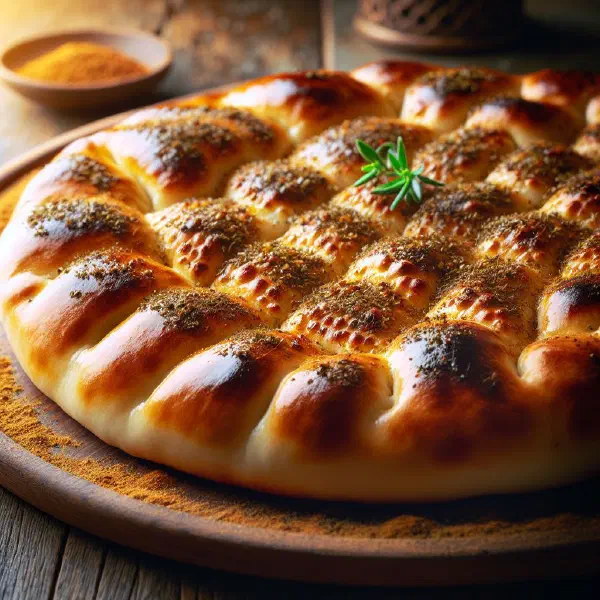
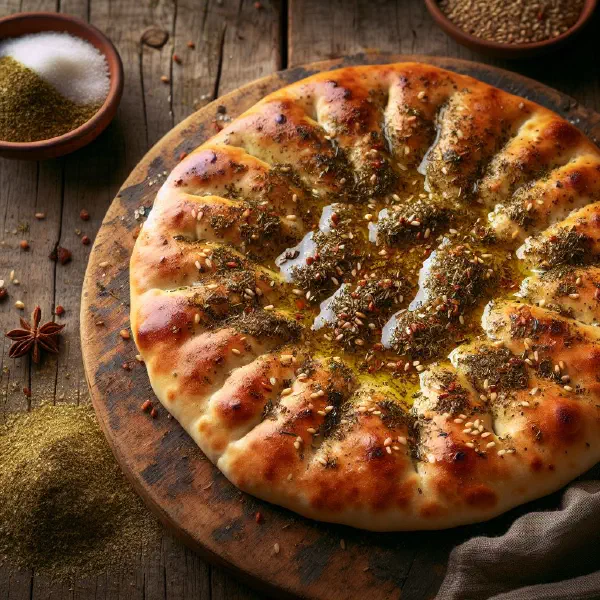
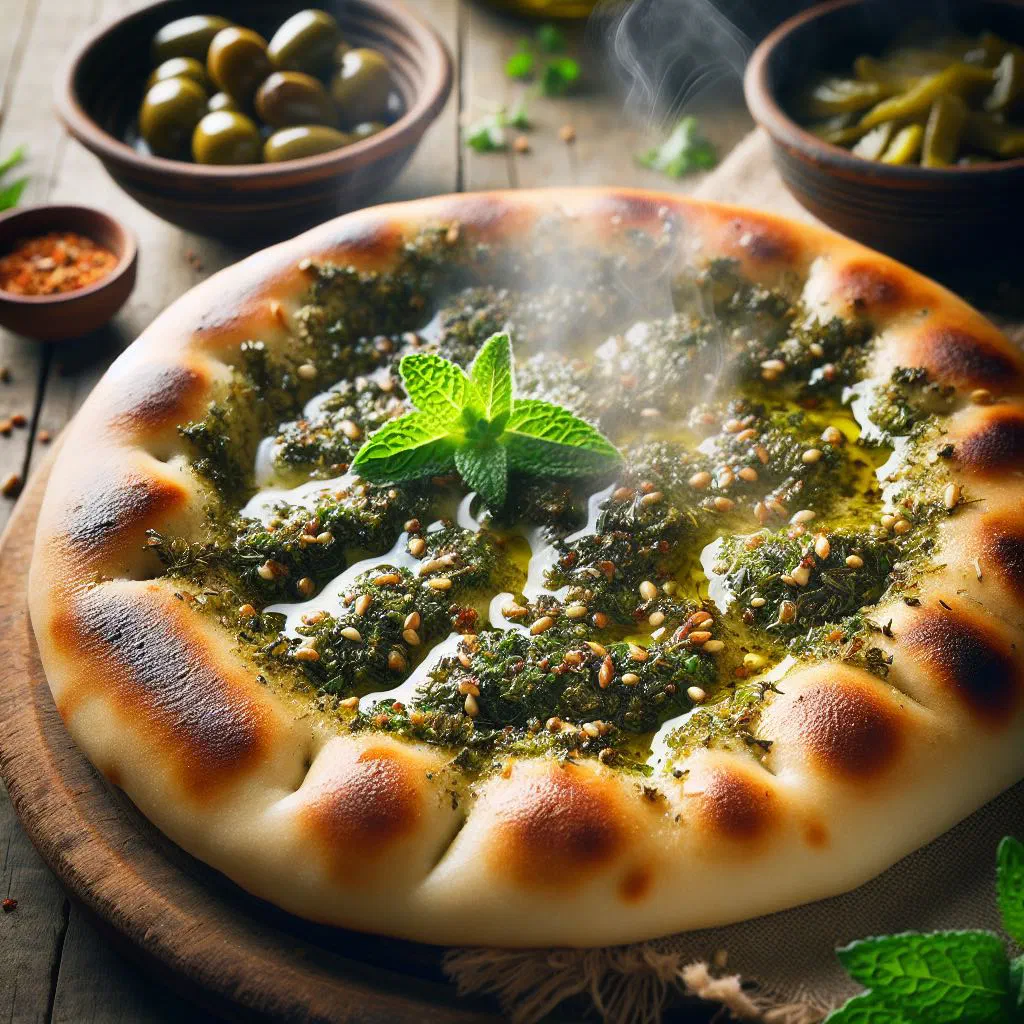
Say hello to Manakish Zaatar, the savoury flatbread that countless Lebanese households wake up to. A soft, hand-rolled dough is brushed with a fragrant blend of zaatar loosened with olive oil, then baked until the edges turn crisp and golden. Earthy thyme, nutty sesame and a whisper of sea salt fill the kitchen as it bakes. Simple, endlessly adaptable and brilliant at any time of day, it brings the flavours of the Middle East straight to your table.
About Manakish Zaatar
Manakish Zaatar is a traditional Lebanese dish built around a savoury flatbread spread with a special blend of zaatar. Zaatar is an aromatic seasoning that combines thyme, sesame and sea salt, lending the dish its unmistakable flavour. These delicious flatbreads are easy to make and wonderfully versatile, working equally well for breakfast, as a snack or as a light main course. A bite of Manakish Zaatar carries the warm, herby aromas of the Middle East into your own kitchen.
Ingredients (serves 1–2)
- 250 g plain flour
- 150 ml water
- 1 tablespoon olive oil
- 1 teaspoon salt
- 3 tablespoons zaatar
- 2 tablespoons water (for the zaatar mixture)
Shopping for the ingredients
The ingredients for Manakish Zaatar are available in most supermarkets as well as in Asian or international grocery shops. Pay particular attention to the quality of the zaatar, as it has a marked effect on the flavour of the finished dish. Fresh herbs are ideal, but dried ones work well too. Once you have gathered everything together, you have taken the first step towards preparing this delicious snack, much like sourcing good burghul for a Tabbouleh bi Burghul.
Preparing the dish
Before you start baking, set yourself up with a clear, tidy work surface. Measure out all the ingredients and have any tools you might need to hand, such as a dough board and a rolling pin. Tip the flour into a large bowl and combine it with the water and olive oil to form a smooth, even mixture. Let the dough rest for a few minutes so it reaches the right consistency and becomes easier to work with.
Step-by-step instructions
- Combine the flour with the water, olive oil and salt in a bowl and knead until you have a smooth dough.
- Place the dough in a bowl, cover it and leave it to rest in a warm spot for about 30 minutes.
- After resting, roll the dough out thinly on a floured surface.
- Stir together the zaatar mixture from the zaatar and water, then spread it evenly over the flatbread.
- Lay the bread on a baking tray and bake in a preheated oven at 220 °C for around 10–15 minutes, until golden brown.
Gluten-free / lactose-free version
For a gluten-free version of Manakish Zaatar, swap the wheat flour for rice flour or a gluten-free flour blend. Make sure any raising agent you use is gluten-free as well. For a lactose-free preparation, simply rely on the plant-based olive oil and avoid any other ingredients that contain lactose. That way, people with food intolerances can enjoy this delicious dish too.
Tips for vegans and vegetarians
Manakish Zaatar is naturally a vegan dish, as it contains no animal products at all. It is ideal for vegans looking for a healthy and tasty snack. You can enrich the dough with various plant-based toppings such as fresh vegetables or olives to create different flavour experiences. This makes the dish even more versatile and nourishing, a fine partner to other meat-free favourites like Loubiyeh bil Zeit.
More tips and tricks
For the best result, take care not to roll the dough too thinly, so it keeps a pleasant texture during baking. Baking on a piping-hot preheated tray also ensures the underside of the bread crisps up nicely. If you enjoy experimenting, you can try this technique with other spices or flavourings, such as feta or extra olive oil. In this way you turn a simple recipe into a whole range of delicious variations.
Adapting the recipe to your taste
The recipe for Manakish Zaatar is very flexible and easy to adapt to personal preference. You can vary the zaatar mixture to your liking by adding more sesame or other herbs. The flatbread itself can also be refined with different seasonings. Play around with the proportions to find your ultimate flavour combination.
Ingredient substitutions
If you do not have access to zaatar, you can make your own blend from thyme, oregano and sesame. These alternatives give the dish an equally delicious flavour. Beyond that, the flour can be replaced with wholemeal flour for a more nutritious option. Be creative and let the aromas of the Middle East inspire you, just as a generous drizzle of olive oil lifts a Baba Ghanouj bi Lahme.
Drink pairing ideas
Manakish Zaatar pairs beautifully with a range of drinks. Traditionally these flatbreads are often served with yoghurt drinks or tea. A refreshing hibiscus lemonade offers a lovely contrast to the savoury flavours of the dish. A good, strong coffee can also complement the flavours wonderfully.
Serving and presentation ideas
As with any dish, presentation plays an important part. Serve the warm Manakish Zaatar on a large plate, garnished with fresh herbs such as parsley or mint. Alongside, you can offer small bowls of dipping sauces such as yoghurt or hummus. An attractive presentation turns every meal into a special occasion and whets the appetite.
A bit of history
Manakish Zaatar has its roots in Arabic cuisine and is an emblem of Lebanese gastronomy. Originally enjoyed as a breakfast dish, it has become popular right across the Middle East, with each region developing its own variations. The dish reflects cultural diversity and the importance of fresh ingredients in Mediterranean eating. Manakish Zaatar is therefore a tasty snack and part of a rich culinary tradition within Lebanese cuisine.
More recipe ideas
Summary: Manakish Zaatar
Manakish Zaatar is a delicious and versatile dish that brings the flavours of Lebanon to your plate. With its simple preparation and fresh ingredients, it is ideal for any occasion, whether for breakfast, as a snack or as a main course. The ease of adapting the recipe to your own preferences makes it a true highlight in the kitchen. Enjoy a journey through Mediterranean cooking with this authentic Lebanese dish.