National Dish Lebanon: Tabbouleh (Recipe)
In this article
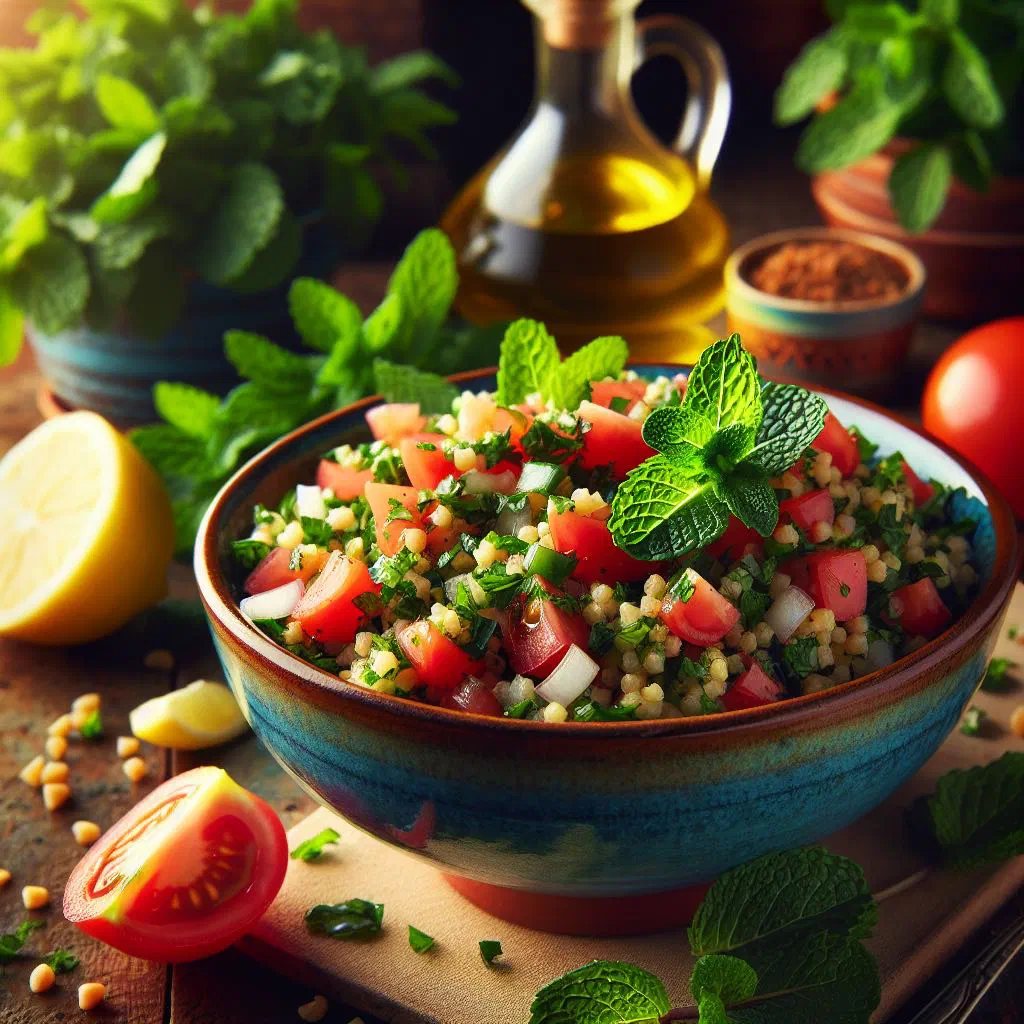
Meet Tabbouleh, one of Lebanon’s most refreshing and bright dishes. This bright herb salad brings together a generous handful of parsley, juicy tomatoes, nutty bulgur and plenty of zesty lemon. Light, healthy and bursting with the flavours of the Mediterranean, it works beautifully as a side or as a meal in its own right, especially on warm days when you want something crisp and revitalising. Bring a little taste of Beirut straight to your own table.
About Tabbouleh
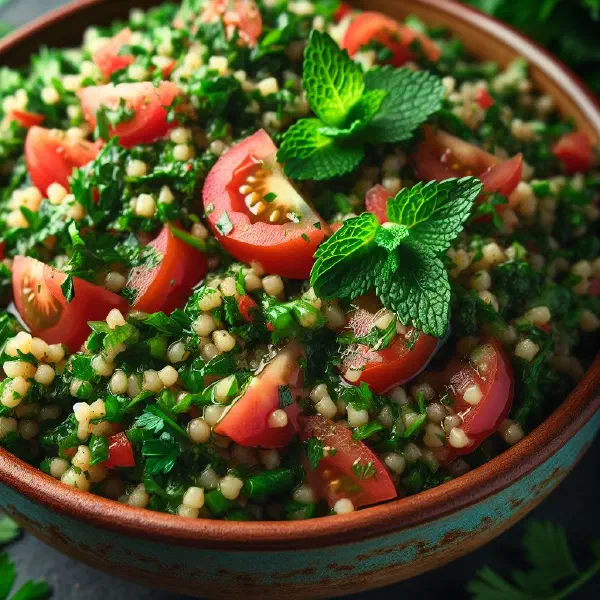
Lebanese Tabbouleh is a refreshing, wholesome dish built around a handful of fresh, simple ingredients. Parsley, tomatoes, bulgur and lemon juice form the heart of the recipe, giving it that unmistakable bright, herby flavour. It is often served as a side alongside other dishes or enjoyed as a main course in its own right, particularly when the weather turns warm. The salad captures the spirit of the Mediterranean, striking a perfect balance between freshness and zing.
Ingredients (serves 1–2)
- 1 bunch fresh parsley
- 2 medium tomatoes
- 100 g bulgur
- 1 small onion
- Juice of 1 lemon
- 2–3 tablespoons olive oil
- Salt and pepper, to taste
Shopping for the ingredients
To make a truly delicious Tabbouleh, it pays to choose the right ingredients. Head to a local market or a shop that stocks plenty of fresh produce. Pay particular attention to the quality of the parsley and tomatoes, as these shape the flavour of the dish more than anything else. The olive oil matters too, since it carries a large part of the taste, so reach for a good one. The same care with fresh produce rewards you in any Lebanese cuisine classic.
Preparing the dish
Getting ready to make Tabbouleh is quick and straightforward. Start by washing the parsley and tomatoes thoroughly, then patting them dry. The parsley needs to be finely chopped, which is key to the texture of the finished salad. The bulgur should be soaked according to the packet instructions, usually in warm water, to make the rest of the preparation easy.
Step-by-step instructions
- Finely chop the parsley and tip it into a large bowl.
- Deseed the tomatoes, dice them small, then add them to the parsley.
- Stir in the pre-soaked bulgur.
- Finely chop the onion and mix it through as well.
- Season with salt, pepper, lemon juice and olive oil, then toss everything together well.
- Chill the Tabbouleh in the fridge for at least 30 minutes so the flavours have time to develop.
Gluten-free / lactose-free version
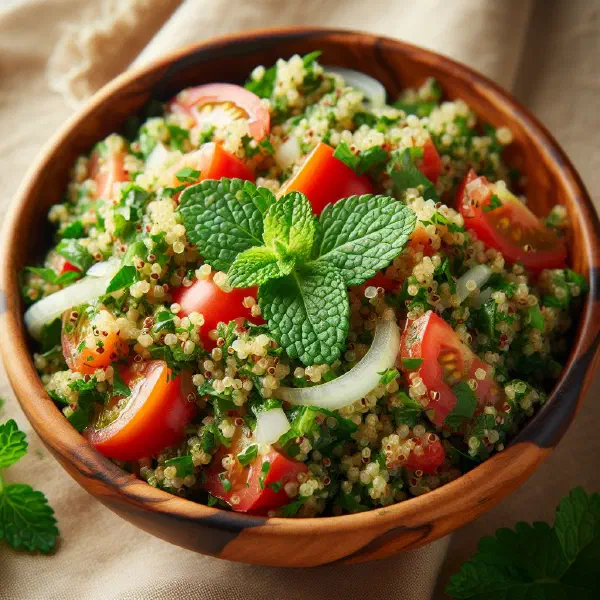
If you would rather avoid gluten, you can swap the bulgur for quinoa. Quinoa is a brilliant gluten-free alternative and just as nourishing. The method stays the same, though the quinoa should be cooked in water beforehand. No further changes are needed for a lactose-free version, as traditional tabbouleh contains no dairy in the first place.
Tips for vegans and vegetarians
Tabbouleh is naturally vegan, packed with fresh and healthy ingredients from start to finish. For a more filling salad, you can stir in chickpeas or a little mashed avocado. This makes the dish more satisfying and adds an extra source of protein. A scattering of toasted nuts or seeds is another lovely touch that enriches both the flavour and the texture.
More tips and tricks
To make your Tabbouleh even more aromatic, let it rest in the fridge for a few hours before serving. The flavours mingle and deepen as it sits. Be generous with the seasoning so the juicy notes of lemon and olive oil really come through. If you are making it for a special occasion, consider serving it in a beautiful bowl to show off its colours and freshness, much as you would a bright Rahib.
Adapting the recipe to your taste
Tabbouleh is easy to adjust to suit your own preferences. You might use less parsley, or add extra tomatoes if you love their flavour. For a bit of heat, stir in some chopped chilli. Another lovely variation is to use different herbs such as mint in place of parsley, which lends the salad a fresh, cooling note.
Ingredient substitutions
For an interesting twist on Tabbouleh, try farro or kamut instead of bulgur, its closest relative being Tabbouleh bi Burghul. These alternatives bring different textures and flavours that pair well with the fresh ingredients. If you are not keen on onion, spring onions or shallots make a milder option. Experiment with the recipe to find the combinations that work best for you.
Drink pairing ideas
A fresh Tabbouleh goes wonderfully with ice-cold lemonade or almond milk. A good, dry white wine can also be a lovely match. For an alcohol-free option, mint water is an excellent choice that echoes the herby flavours of the dish.
Serving and presentation ideas
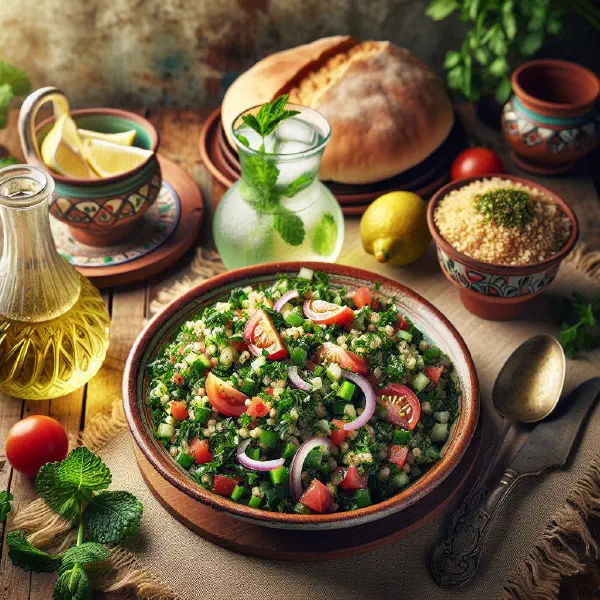
An attractive presentation can really lift the Tabbouleh experience. Serve it on a large, shallow plate so the colours of the fresh ingredients shine. A generous garnish of parsley or mint on top adds extra visual appeal. You can also offer bottles of oil and vinegar on the side so guests can adjust the seasoning to their own taste, a welcoming touch on any mezze spread that might also feature Sambousek or Baba Ghanouj bi Lahme.
A bit of history
The roots of Tabbouleh reach deep into Lebanese and Arabic cuisine. Originally known as a kind of herb salad, it has grown over the years into a popular dish prized across many cultures. In antiquity it was eaten as a nutritious snack, and today it is a fixture of Mediterranean eating in countless countries. Tabbouleh is delicious and embodies the important role that fresh vegetables play in health-conscious cooking.
More recipe ideas
Summary: Tabbouleh
Lebanese Tabbouleh is more than a festive salad. It is a refreshing side that appeals to with healthy, fresh ingredients. With its crisp texture and the lively tang of lemon and olive oil, it is the perfect partner to all sorts of dishes. Whether as a light lunch or as part of a feast, Tabbouleh brings the flavours of the Mediterranean to your table. Give the recipe a try and bring a little piece of Lebanon into your own kitchen.