National Dish Libya: Omek Houria (Recipe)
In this article
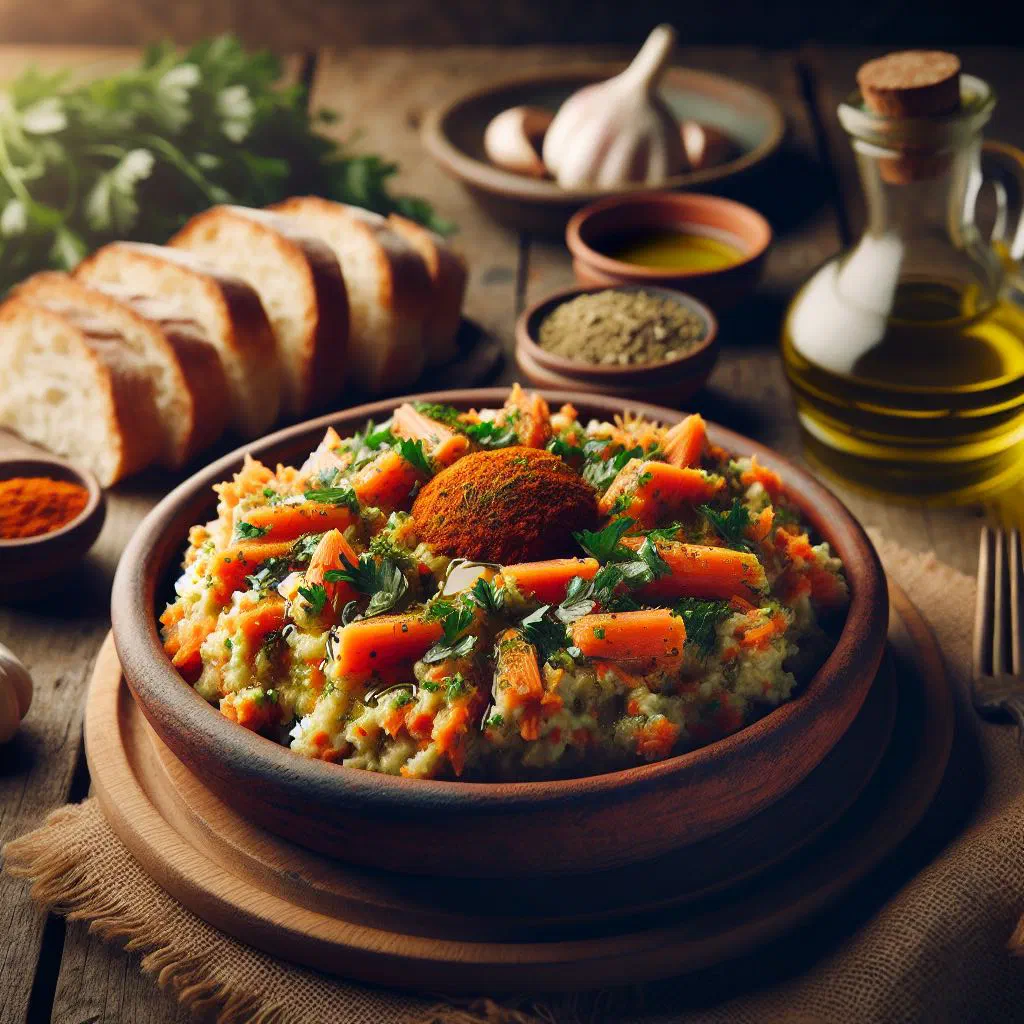
Omek Houria is the carrot dip that makes people reconsider carrots entirely: boiled until soft, mashed with garlic and cumin, then fired up with harissa and finished with olive oil and lemon. It is a staple of the Libyan and Tunisian meze table, deceptively simple and genuinely addictive with warm flatbread.
About Omek Houria
Omek Houria is Libya’s spiced carrot dip. Mashed carrots meet garlic, cumin and a solid dose of chilli or harissa, producing a creamy, fiery starter that is very good with fresh flatbread. It belongs to the most popular Libyan meze and is missing from very few households, the name translates roughly as “your mother’s freedom”, a phrase whose origins are debated but whose dish is not.
Ingredients (serves 1–2)
- 300 g carrots, peeled and cut into pieces
- 2 garlic cloves
- 1 teaspoon ground cumin
- 1 teaspoon sweet paprika
- 1–2 teaspoons harissa (or ground chilli, to taste)
- 2 tablespoons olive oil
- 1 tablespoon lemon juice
- Salt, to taste
- Flatbread, to serve
Shopping for the ingredients
Sweet, fresh carrots make a noticeable difference, since they are the entire body of the dish, old, woody ones give a fibrous result. Harissa varies enormously in heat and quality; a good North African brand or a homemade paste is worth seeking out. Use a fruity olive oil, as it goes in raw at the end.
Preparing the dish
Cut the carrots into even pieces so they cook uniformly, and boil the garlic cloves with them. This softens the garlic and takes the raw edge off. Have the spices measured and the lemon squeezed, since the dish comes together in a couple of minutes once the carrots are drained.
Step-by-step instructions
- Boil the carrots and whole garlic cloves in salted water until very soft, 15–20 minutes.
- Drain well and let the steam escape for a minute.
- Mash with a fork or potato masher — leave some texture rather than puréeing.
- Stir in the cumin, paprika and harissa while still warm.
- Add the olive oil and lemon juice and mix thoroughly.
- Season with salt and taste, adjusting the harissa.
- Spread into a shallow dish, drizzle with more oil and serve with flatbread.
Gluten-free / lactose-free version
The dip is naturally free from both gluten and lactose. Only the bread served alongside needs attention. Use a gluten-free flatbread, or serve it with raw vegetables for dipping, which works very well.
Tips for vegans and vegetarians
Omek Houria is vegan exactly as written: carrots, garlic, spices, oil and lemon. Some versions are topped with crumbled feta or a boiled egg, so simply leave those off. It is one of the most reliable plant-based dishes on any North African table.
More tips and tricks
Mash rather than blend, a food processor turns it into baby food and loses all the character. Season while the carrots are warm so the spices bloom. And be bolder with the harissa than feels comfortable, since the sweetness of the carrots absorbs a surprising amount of heat.
Adapting the recipe to your taste
Caraway is a very common addition in Libya and Tunisia and suits it beautifully. Some cooks add a spoonful of tomato paste for depth and colour. Topping with olives, capers or crumbled cheese is standard practice on a meze table.
Ingredient substitutions
Pumpkin or sweet potato can replace some of the carrot for a sweeter dip. Chilli paste, sambal or even sriracha substitute for harissa in a pinch. Lime works in place of lemon, and cumin seeds toasted and ground beat pre-ground every time.
Drink pairing ideas
Mint tea is the traditional North African partner and cuts the chilli heat well. Sparkling water with lemon is the simplest option. As part of a larger meze, a light beer works if alcohol is appropriate.
Serving and presentation ideas
Serve omek houria in a shallow bowl, spread flat with the back of a spoon, with a well of olive oil in the middle and a scattering of olives or a dusting of paprika. Warm flatbread torn into pieces is the only utensil needed. It sits well among other meze and improves after an hour’s rest.
A bit of history
The dish is shared between Libya and Tunisia, where it is equally beloved, and it belongs to the North African tradition of vegetable-based mezze built on abundant local produce and the region’s chilli paste. Its curious name has several competing folk explanations, none of them settled, which has done nothing to slow its popularity. It offers a genuine window onto Libyan cuisine.
More recipe ideas
Summary: Omek Houria
Omek Houria is boiled carrots mashed with garlic, cumin and harissa and finished with olive oil and lemon. Twenty minutes, one pan, and a fiery, creamy dip that disappears faster than any bowl of hummus.