National Dish Madagascar: Masombika (Recipe)
In this article
Meet Masombika, a sweet Malagasy treat that turns two humble store-cupboard staples into something quietly special. Built around cassava flour and creamy coconut milk, this baked pleasure carries the warm, gentle sweetness that Madagascar loves to serve at celebrations and family gatherings alike. It is naturally vegan and gluten-free, easy to put together, and every bit as welcome after a weeknight supper as it is at a festive table. Bring a taste of the island straight into your own kitchen.
About Masombika
Masombika is more than just a dish. It is a small piece of Madagascar’s cultural identity. Made from cassava flour and coconut milk, it has earned its place as a beloved national favourite, often enriched with a handful of warming spices and fresh touches. At celebrations and festive occasions it is an absolute classic, one that brings people together around the table. It captures the variety and richness of Malagasy cooking, and it thoroughly deserves a place in your baking repertoire.
Ingredients (serves 1–2)
- 200 g cassava flour
- 400 ml coconut milk
- 100 g sugar (to taste)
- A pinch of salt
- Optional: spices such as cinnamon or vanilla
Shopping for the ingredients
The key ingredients for Masombika can be found in most well-stocked supermarkets or in speciality shops for international cooking. Cassava flour is the most important element, and it is worth buying an organic-quality one to get the very best flavour. The coconut milk should be a good, full-fat variety too, so the finished cake takes on its lovely creaminess. Do not forget the optional spices, which add depth and lift the whole eating experience.
Preparing the dish
To get the most out of your ingredients, a little careful preparation goes a long way. Start by mixing the cassava flour with a pinch of salt so the seasoning is evenly distributed. The coconut milk should be gently warmed but never boiled, which helps the ingredients come together more smoothly. It is also worth weighing out and setting aside your spices in advance, so the mixing and baking run without a hitch.
Step-by-step instructions
- Tip the cassava flour into a large bowl.
- Slowly pour in the warmed coconut milk, stirring well until you have a smooth, even batter.
- Add the sugar to taste and mix through once more.
- Pour the batter into a greased tin and bake in a preheated oven at 180°C for around 30–40 minutes.
- The surface should be golden brown; let the cake cool a little before serving.
Gluten-free / lactose-free version
A great advantage of Masombika is that it is naturally gluten-free and lactose-free. That makes it suitable for many people who live with coeliac disease or lactose intolerance. Just take care that every ingredient you use, the coconut milk in particular, is genuinely free from lactose.
Tips for vegans and vegetarians
Since Masombika is already vegan, you can rest assured it will please friends and family who follow a plant-based way of eating. If you would like to make it even more interesting, add extra plant-based ingredients such as fresh fruit or nuts. These boost the nutritional value and bring more texture to each bite. Just balance your spices carefully to keep the overall flavour harmonious, much as the cooks behind Godrogodro do with their coconut sweets.
More tips and tricks
A few simple pointers can make your Masombika even more delicious. Experiment with different spices and additions to fine-tune the dish to your liking. You might also fold in fresh herbs such as mint or coriander, which not only sharpen the flavour but look appealing too. And do serve it warm, so the aromas are at their most inviting.
Adapting the recipe to your taste
Tailoring the Masombika recipe to your own preferences is always possible. Prefer it sweeter? Simply increase the sugar and add a touch more coconut milk to reach the result you want.
Ingredient substitutions
If you are missing some of the ingredients for Masombika, there are plenty of versatile alternatives. In place of cassava flour, for instance, you could use rice flour for a similar result, the same grain that gives Koba its character. As for the coconut milk, almond milk or oat milk are both options that keep the dish dairy-free. Experiment with your favourite ingredients to create new variations.
Drink pairing ideas
A refreshing fruit juice or a simple glass of water with lemon pairs beautifully with Masombika and highlights the flavours of the dish. For a special touch, whip up a coconut smoothie that echoes the coconut notes in the cake. Alternatively, a light wheat beer or a fruity wine makes a great choice to round off the experience.
Serving and presentation ideas
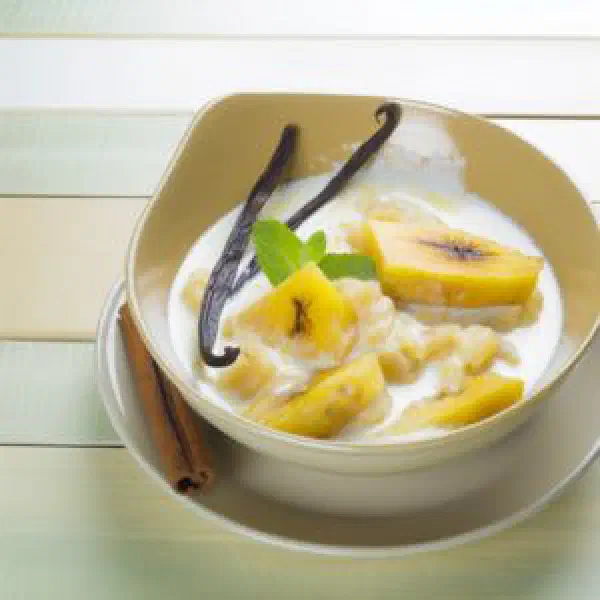
The way you present Masombika can do a lot to whet your guests’ appetite and anticipation. Serve it in a decorative bowl and garnish with fresh fruit or herbs. Edible flowers can add a creative flourish and make the dish look even more inviting. And do not forget to complete the picture with an attractive table setting.
A bit of history
Masombika has a long history and is deeply rooted in the traditions of Madagascar. It is often served at important festivals and gatherings, which underlines its role in Malagasy culture. The pairing of cassava and coconut milk reflects the island’s natural resources and is a symbol of the variety found across its regional Malagasy cuisine. Making it is a small journey into the history and traditions of Madagascar.
More recipe ideas
Summary: Masombika
In short, Masombika is an exquisite treat that reflects the cultural variety of Madagascar. Its simple ingredients and easy preparation make it a perfect choice for any occasion. Dive into the flavours and traditions of Madagascar and savour every forkful of this delicious sweet.