National Dish Madagascar: Romazava (Recipe)
In this article
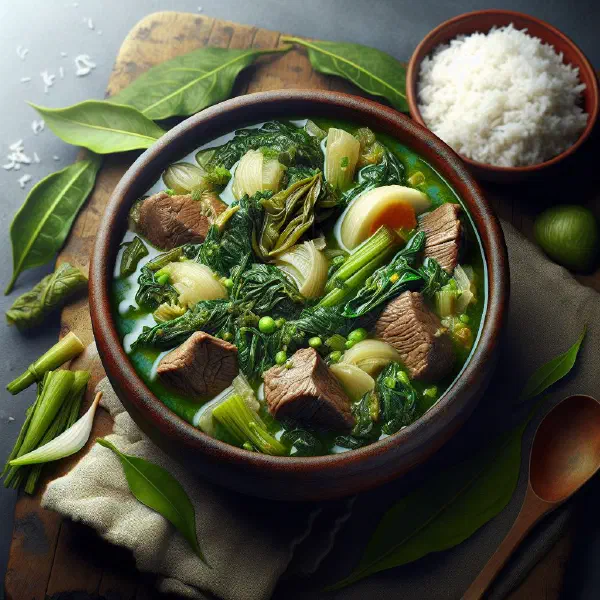
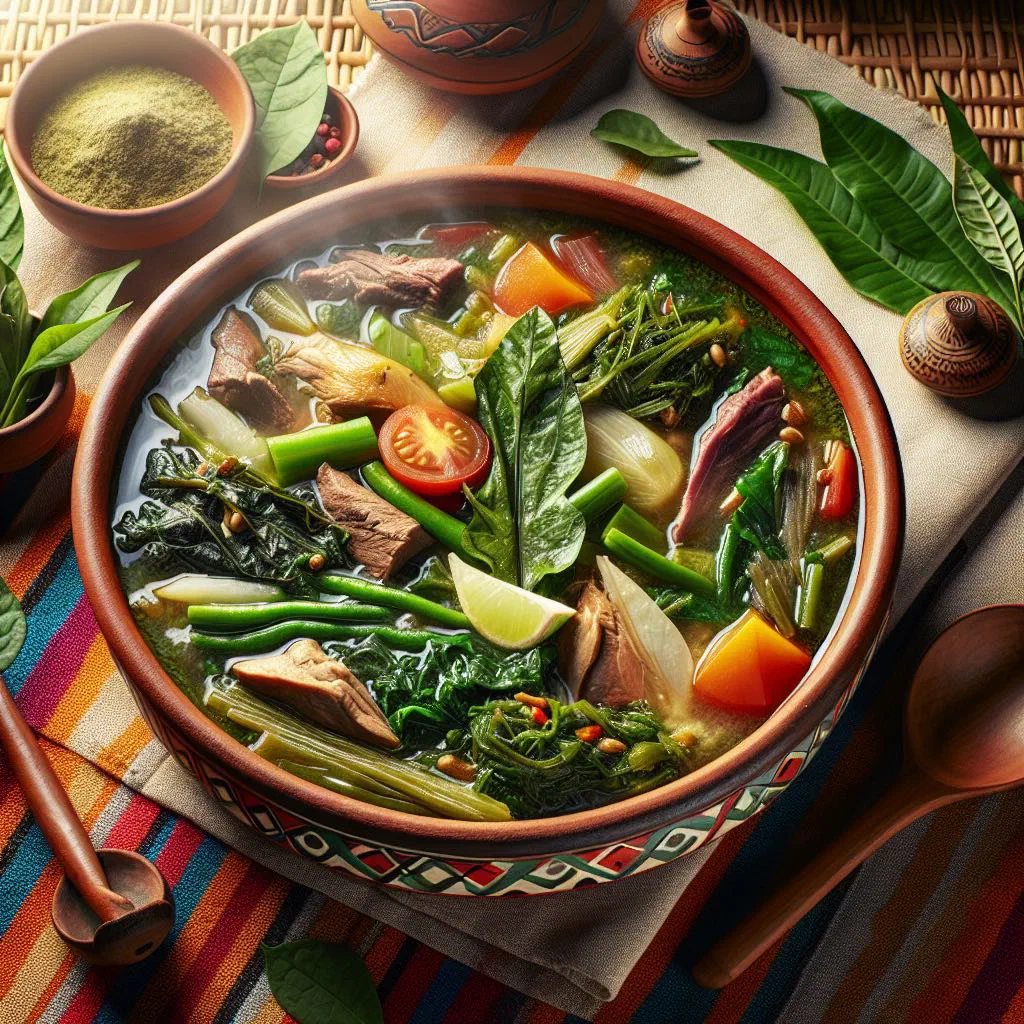
Romazava is beef and leafy greens in a clear broth, and the leaves that make it Malagasy are anamalaho, a variety of paracress that produces a mild tingling numbness on the tongue. Without it the dish is a decent beef and greens soup; with it, it is something else.
About Romazava
Romazava is Madagascar’s national dish. Beef, sometimes with pork, simmers with ginger, garlic and tomato, and several kinds of leaf go in at the end: mustard greens, watercress and, ideally, anamalaho. It is served with rice, which Malagasy eat three times a day.
The name means something like clear broth, and the broth is meant to stay clear.
Ingredients (serves 1–2)
- 300g beef, cut into cubes
- 2 bunches of green leaves (such as anamamy or watercress)
- 2 tomatoes, diced
- 1 large onion, chopped
- 3 cloves garlic, crushed
- 1 piece of ginger, finely grated
- 1 tablespoon vegetable oil
- 1 litre beef stock or water
- Salt and pepper to taste
Shopping for the ingredients
Anamalaho is hard to find outside Madagascar; watercress and mustard greens together are the practical substitute and give the peppery note if not the tingle. Beef shin or chuck. Ginger by the thumb-sized piece, grated fresh.
Preparing the dish
Cut the beef into large cubes. Wash the greens well and chop them roughly. Everything else is straightforward; the dish is essentially a long simmer followed by a short one.
Step-by-step instructions
- Heat the oil in a large pot and brown the meat on all sides.
- Add the onions, garlic and ginger, and sauté until the onions turn translucent.
- Stir in the tomatoes and cook until they soften.
- Pour in the stock or water and bring the mixture to the boil.
- Let the meat simmer for about an hour, until tender.
- Add the leafy greens and cook until they wilt but still hold their fresh green colour.
- Season with salt and pepper, then serve.
Gluten-free / lactose-free version
Romazava contains no gluten and no dairy. Served with rice, the whole meal is suitable without adaptation.
Tips for vegans and vegetarians
The ginger and greens broth works without meat, and vary amin’anana, rice cooked with greens, is the everyday Malagasy dish that needs no meat at all. Add beans or voanjobory, the bambara groundnuts, for substance.
More tips and tricks
Add the greens at the very end and cook them briefly. Overcooked greens turn grey and the broth muddies. Skim the pot during the first hour to keep it clear. And use more ginger than the recipe suggests; it is the backbone of Malagasy seasoning.
Adapting the recipe to your taste
Pork alongside the beef is traditional and gives a fuller broth. Ravitoto, pounded cassava leaves with pork, is the other great Malagasy dish. Sakay, the chilli paste, goes on the table.
Ingredient substitutions
Watercress, mustard greens, spinach and Chinese leaf all work, ideally in combination. Zebu is the Malagasy beef; any beef substitutes. Chicken or pork replace it entirely.
Drink pairing ideas
Ranovola, the toasted rice water made from the crust at the bottom of the rice pot, is the everyday Malagasy drink and is drunk with meals. Three Horses Beer is the local lager. Water otherwise.
Serving and presentation ideas
Serve it in bowls with a large mound of plain rice, and sakay on the side. The rice is the meal and the romazava is the accompaniment, which is the Malagasy proportion rather than the European one.
A bit of history
Madagascar was settled from Borneo around 1,500 years ago and later from East Africa, and the language, the rice-centred diet and the cooking all reflect that Austronesian origin more than the African mainland. Romazava anchors Malagasy cuisine.
More recipe ideas
Summary: Romazava
Romazava is beef simmered with ginger and tomato, finished with several kinds of leafy green. Keep the broth clear, add the greens last, and serve it with a lot of rice.