National Dish Malawi: Mkhwani (Recipe)
In this article
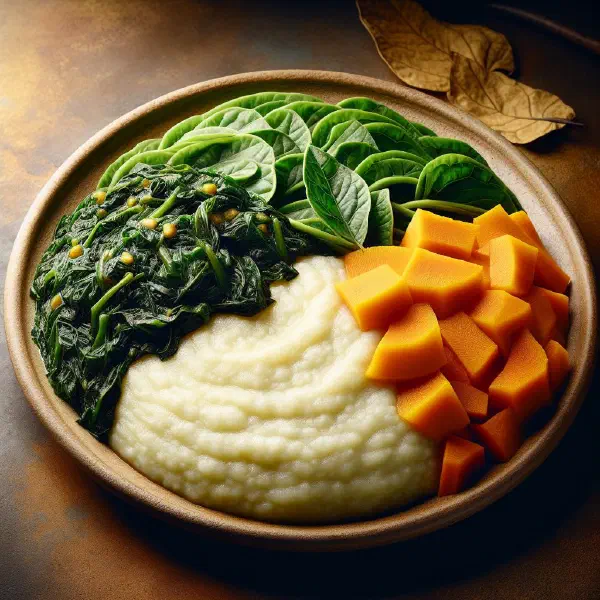
Mkhwani is the dish that sits beside nsima on Malawian tables almost every day: tender pumpkin leaves, softened with onion and tomato and thickened with ground roasted peanuts until the whole thing turns rich and nutty. It costs almost nothing, uses the part of the pumpkin plant most cuisines throw away, and tastes far better than that description suggests.
About Mkhwani
Mkhwani is a traditional vegetable dish from Malawi, made from the tender leaves of the pumpkin plant and known for its earthy, faintly bitter flavour, which the roasted peanuts round out beautifully. It is eaten almost daily as an accompaniment to the maize porridge nsima and reflects the country’s resourceful, plant-forward cooking. Fresh pumpkin leaves are the essential ingredient, prepared with slightly different seasonings from region to region, and the dish occupies a place on the Malawian menu that is hard to overstate.
Ingredients (serves 1–2)
- 300 g fresh pumpkin leaves (young spinach or chard as a substitute)
- 2 tablespoons peanut butter, or finely ground roasted peanuts
- 1 onion, finely chopped
- 1 tomato, diced
- 1 tablespoon vegetable oil
- 100 ml water
- Salt, to taste
Shopping for the ingredients
Fresh pumpkin leaves turn up at African and Asian grocers, usually tied in bundles, choose young, soft leaves rather than large tough ones. Where they are unavailable, young spinach or Swiss chard stands in perfectly well. For the peanuts, use unsweetened, unsalted peanut butter or grind roasted peanuts yourself for the best texture.
Preparing the dish
Pumpkin leaves need a little preparation: strip the stringy fibres from the stalks and the leaf backs, much as you would with rhubarb, then wash the leaves thoroughly and shred them roughly. Chop the onion and tomato, and if you are grinding your own peanuts, do that before you start cooking, the dish comes together quickly once the pan is hot.
Step-by-step instructions
- Strip the fibres from the pumpkin leaves, wash well and shred roughly.
- Heat the oil in a pan and soften the onion for 3–4 minutes.
- Add the diced tomato and cook until it breaks down.
- Add the shredded leaves and the water; cover and simmer 8–10 minutes until tender.
- Stir the peanut butter into a little of the hot cooking liquid, then add it to the pan.
- Simmer uncovered for a further 3–5 minutes until thickened and glossy.
- Season with salt and serve hot with nsima.
Gluten-free / lactose-free version
Mkhwani is naturally free from both gluten and lactose. It contains nothing but vegetables, peanuts, oil and salt. Served with nsima, which is made from maize flour, the entire meal remains suitable for both intolerances.
Tips for vegans and vegetarians
The dish is vegan exactly as written and is one of the mainstays of a largely plant-based everyday diet in Malawi. Peanuts supply both protein and richness, so it stands up as a light main course over rice as readily as it works as a side. A handful of chopped roasted peanuts scattered over at the end adds welcome texture.
More tips and tricks
Do not skip the de-stringing, the fibres are tough and spoil the texture. Dissolve the peanut butter in hot liquid before it goes into the pan, or it will clump. And keep the simmer gentle after adding it, since peanut sauces catch and scorch on the base of the pan very easily.
Adapting the recipe to your taste
Many Malawian cooks add a chopped chilli or a pinch of curry powder. Bicarbonate of soda, a small pinch, is a traditional trick to keep the greens vividly green and to soften tougher leaves. A little tomato paste deepens the colour and flavour if your tomatoes are pale.
Ingredient substitutions
Sweet potato leaves, cassava leaves, spinach, chard and kale all work in place of pumpkin leaves, with cooking times adjusted to how tough they are. Tahini or ground sunflower seeds substitute for the peanuts in case of allergy, giving a similar richness. Any neutral oil is fine.
Drink pairing ideas
In Malawi the everyday accompaniment is water or a locally brewed maize drink such as thobwa, lightly sweet and slightly fermented. Sweet black tea is common too. A cold lager works well with the nutty richness if you want something stronger.
Serving and presentation ideas
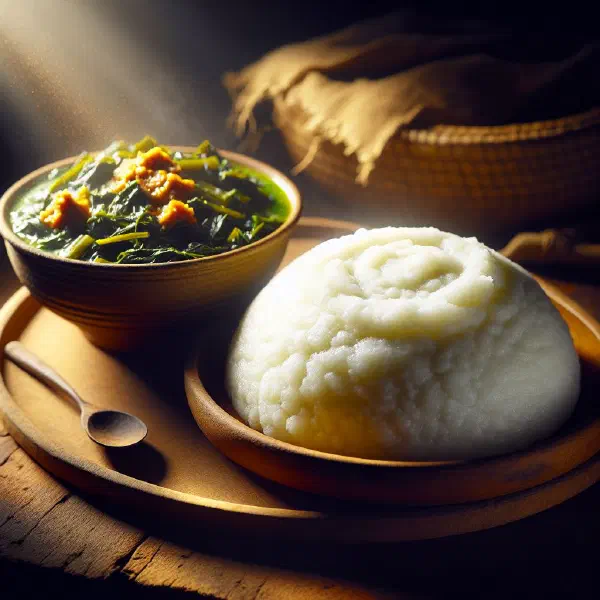
Serve mkhwani in a bowl beside a mound of freshly made nsima, which is eaten with the right hand, a piece is pinched off, rolled, dented with the thumb and used to scoop the greens. A piece of grilled chambo fish alongside makes it a full Malawian meal.
A bit of history
Pumpkin is grown across Malawi as much for its leaves as for its fruit, and cooking greens with groundnut paste is a technique found throughout southern and central Africa. Mkhwani belongs to a family of ndiwo, the relishes that accompany nsima and carry most of the flavour of a meal. It offers a genuine window onto Malawian cuisine and its deep reliance on what the garden provides.
More recipe ideas
Summary: Mkhwani
Mkhwani is pumpkin leaves simmered with onion, tomato and ground peanuts, a daily staple in Malawi and a genuinely excellent way to cook greens anywhere. It takes twenty minutes, costs very little and turns a plate of nsima into a proper meal.