
National Dish Malaysia: Bihun Goreng (Recipe)
In this article
Discover Bihun Goreng, Malaysia’s beloved stir-fried rice noodle dish. This simple recipe brings together bold flavours and fresh ingredients in one sizzling wok, a real treat for noodle lovers. Quick to cook, endlessly adaptable and packed with the bright tastes of a Malaysian night market, it is guaranteed to become a weeknight favourite.
About Bihun Goreng
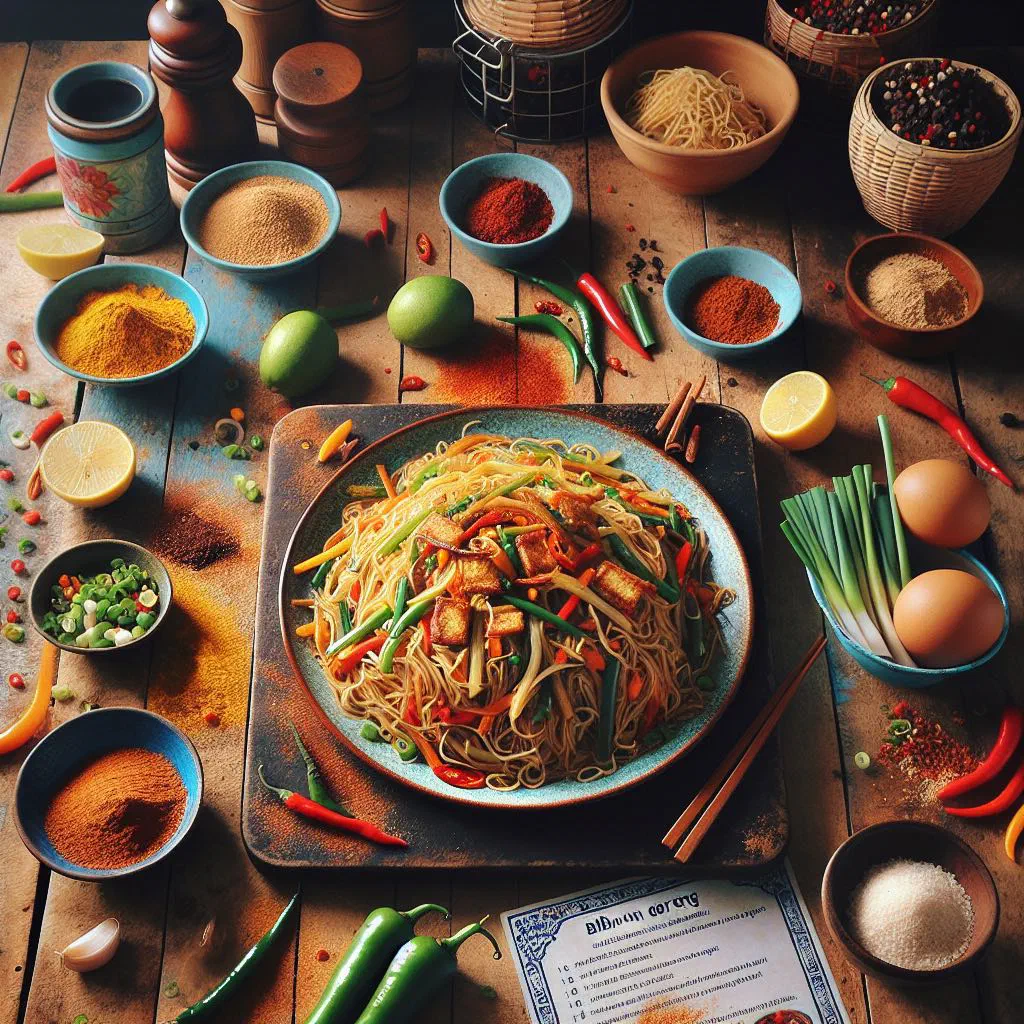
Bihun Goreng is a classic of Malaysian cooking, found everywhere from street festivals to restaurants. The rice noodles are simply stir-fried, which gives them their distinctive texture and characteristic flavour. Fresh vegetables and aromatic spices ensure that every plate tastes unique. Bihun Goreng is wonderfully easy to adapt, much like its noodle cousin Mee Goreng Mamak.
Ingredients (serves 1–2)
- 200 g bihun (rice vermicelli)
- 100 g chicken or tofu
- 1 onion
- 1 carrot
- 1 pepper
- 2 spring onions
- 3–4 tablespoons soy sauce
- 2 tablespoons oil (e.g. groundnut oil)
- 1 teaspoon sambal oelek (to taste)
- Salt and pepper
Shopping for the ingredients
The ingredients for Bihun Goreng are easy to find in most Asian grocery shops. When buying the rice noodles, look for good quality to achieve the best result. With the vegetables you can be creative, choose fresh, seasonal produce to maximise both flavour and nutrients. It is also worth considering organic produce for an even better eating experience.
Preparing the dish
Before you start cooking, the rice noodles should be cooked according to the packet instructions and left to cool. The vegetables are best cut into even, small pieces so they cook uniformly and look appealing in the wok. If you are using chicken, cut it into fine strips or cubes as well. Tofu can be diced and pre-fried in a little oil to give it a lovely crispy texture.
Step-by-step instructions
- Heat the oil in a large frying pan or wok.
- Add the onion and fry until translucent.
- Add the chicken or tofu and fry until cooked through.
- Add the chopped vegetables and stir-fry everything for about 3–4 minutes.
- Add the pre-cooked bihun and the soy sauce to the pan and toss everything together well.
- Taste the dish and add sambal oelek, salt and pepper as needed.
- Serve the Bihun Goreng hot, garnished with spring onions and fresh herbs if you like.
Gluten-free / lactose-free version
For a gluten-free version, simply use gluten-free soy sauce or tamari in place of regular soy sauce. The rice noodles are naturally gluten-free, which makes this dish an excellent choice for anyone with a gluten intolerance. No special adjustments are needed for a lactose-free version, as the recipe contains no dairy. Just double-check that any sauces and seasonings you use are lactose-free too.
Tips for vegans and vegetarians
If you would like to make a vegan version of Bihun Goreng, use vegetable stock instead of chicken stock and add tofu to boost the protein content. You can also swap fish sauce for soy sauce to keep the characteristic savoury depth. Add extra vegetables such as broccoli or pak choi to increase the nutrients. These tweaks make the dish suitable for vegans and give it a lovely fresh flavour.
More tips and tricks
To intensify the flavours even further, add a mix of garlic and ginger before stir-frying. These two ingredients lend the dish extra depth. Where possible, use fresh spices rather than dried ones, as they are more intense and aromatic. Cooking in smaller batches is also a good idea, as it keeps the heat in the wok high and ensures a better result when frying.
Adapting the recipe to your taste
The beauty of Bihun Goreng lies in its versatility. You can vary the proteins, vegetables and seasonings to suit your personal taste. Experiment with other vegetables such as courgette or green beans, and try different seasonings like chilli paste or a peanut sauce like the one served with Satay. Fans of spicier food can simply increase the amount of sambal oelek.
Ingredient substitutions
If you cannot find a particular ingredient or simply do not like it, there are plenty of tasty alternatives. Instead of chicken, for example, you can use prawns or other seafood. For vegetarians, Quorn or seitan make good meat substitutes. If soy sauce is not your thing, try miso paste or tamari to achieve that savoury umami note. With these swaps, Bihun Goreng is always a pleasure to eat.
Drink pairing ideas
A range of drinks pairs beautifully with Bihun Goreng. A cool Asian lager complements the flavours of the dish wonderfully. Unsweetened green tea is another excellent choice, as it underlines the food’s aromas, or try Malaysia’s famous pulled milk tea, Teh Tarik. For an alcohol-free option, fresh mango or pineapple juice brings a fruity note and refreshes the palate.
Serving and presentation ideas
An attractive presentation can lift the whole dining experience. Serve the Bihun Goreng in a deep bowl and decorate it with fresh herbs such as coriander or mint. A few lime wedges on the side let your guests brighten the dish to their liking. Use appealing crockery and cutlery to show the dish off in style and convey a real sense of authenticity.
A bit of history
Bihun Goreng has its roots in Malaysia’s richly diverse culture, shaped by Chinese, Indian and Malay influences. These influences are reflected in both the ingredients and the cooking methods, and the many regional variations of the dish make it a fascinating part of Malaysian cuisine. Today Bihun Goreng is hugely popular both in home kitchens and in restaurants across the country.
More recipe ideas
Summary: Bihun Goreng
In short, Bihun Goreng is delicious and an incredibly versatile dish that adapts easily to all kinds of preferences. Tofu or just vegetables, it offers healthy, aromatic options for every taste. Prepare it with fresh ingredients and you will be rewarded with a wonderful flavour experience that captures the food culture of Malaysia. Give this recipe a try and enjoy the tastes of the Malaysian kitchen.


