
National Dish Malaysia: Nasi Lemak (Recipe)
In this article
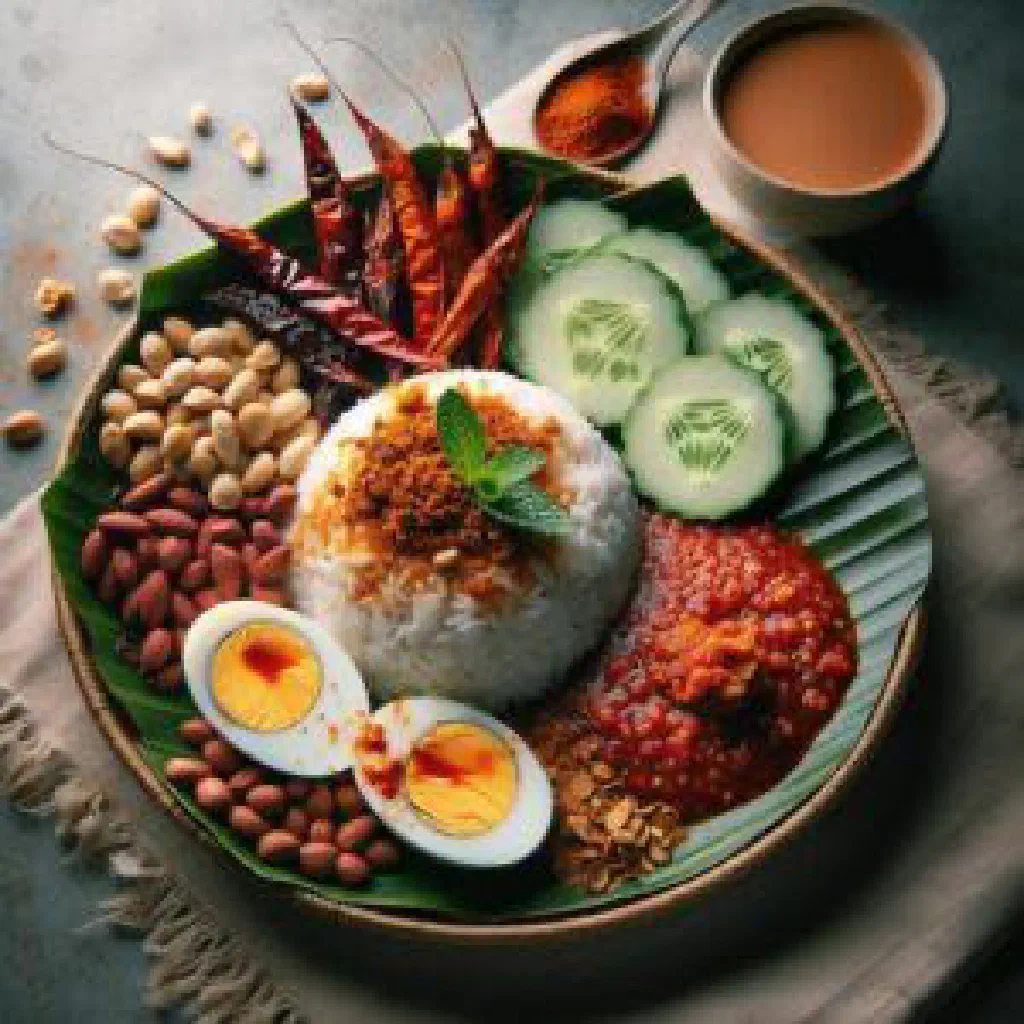
Nasi Lemak is rice steamed in coconut milk with a knotted pandan leaf, and everything else on the plate is an accompaniment: sambal, fried anchovies, peanuts, cucumber, boiled egg. Malaysians eat it for breakfast, wrapped in banana leaf, from a stall.
About Nasi Lemak
Lemak means rich or creamy, and refers to the coconut milk in the rice. The rice should smell of coconut and pandan and taste faintly sweet, so that the sambal beside it has something to work against.
The sambal is the other half. A good nasi lemak is judged by it: caramelised onion, chilli, tamarind and dried shrimp paste, cooked down until dark and thick.
Ingredients (serves 1–2)
- 1 cup long-grain rice
- 1 cup coconut milk
- 1/2 teaspoon salt
- 1 knotted pandan leaf
- 1 thumb-sized piece of ginger, sliced
- For the sambal: 1/2 onion, finely chopped
- 2 garlic cloves, finely chopped
- 4 dried chillies, soaked and blended
- 1 teaspoon shrimp paste (belacan)
- 1 tablespoon tamarind paste
- 1 teaspoon sugar
- 2 tablespoons oil
- To serve: roasted peanuts, fried anchovies (ikan bilis), cucumber slices, 2 boiled or fried eggs
Shopping for the ingredients
Pandan leaves are sold frozen in Asian shops and are what makes the rice smell right. Belacan, the fermented shrimp paste, is pungent and essential to a proper sambal. Ikan bilis, dried anchovies, are fried until crisp and are not optional in Malaysian eyes.
Preparing the dish
Rinse the rice until the water runs clear. Steam it in coconut milk rather than boiling it hard, with the knotted pandan leaf and a few slices of ginger buried in it. Make the sambal separately and cook it far longer than seems necessary, until it darkens.
Step-by-step instructions
- Rinse the rice until the water runs clear and drain it.
- Put it in a pan with the coconut milk, an equal amount of water, the salt, the knotted pandan leaf and the ginger.
- Bring to a boil, then cover and cook on the lowest heat for 15 minutes; rest 10 minutes off the heat.
- For the sambal, fry the onion and garlic in the oil until soft and golden.
- Add the blended chillies and the belacan and fry for 10 minutes until the oil separates and the paste darkens.
- Stir in the tamarind and sugar and cook 5 minutes more; season with salt.
- Fry the anchovies and peanuts separately until crisp.
- Fluff the rice with a fork and serve with sambal, anchovies, peanuts, cucumber and egg.
Gluten-free / lactose-free version
The rice and sambal contain no gluten and no dairy. Check the shrimp paste and any bottled sambal. Otherwise nasi lemak is naturally suitable for both.
Tips for vegans and vegetarians
Leave out the belacan and anchovies and use a mushroom-based sambal with a little miso for depth. The rice itself is vegan. Fried tofu or tempeh replace the anchovies. This version is widely available in Malaysia and is not a compromise.
More tips and tricks
Do not boil the coconut milk hard; it splits and the rice goes greasy. Cook the sambal until the oil visibly separates, which takes fifteen minutes and is the marker of a finished sambal. And knot the pandan leaf so it is easy to remove.
Adapting the recipe to your taste
Fried chicken, rendang or curry turn it into a full meal rather than a breakfast. Nasi kerabu, the blue rice version from Kelantan, is the regional variant worth knowing. More sambal is always the right answer.
Ingredient substitutions
Fresh red chillies can replace dried, giving a brighter sambal. Lime juice substitutes for tamarind. Coconut cream makes richer rice.
Drink pairing ideas
Teh tarik, the pulled milk tea, is the standard breakfast pairing. Iced kopi. Fresh coconut water works against the chilli.
Serving and presentation ideas
Traditionally wrapped in a banana leaf as a cone, which perfumes the rice and is the best version. On a plate, mound the rice in the centre and arrange sambal, anchovies, peanuts, cucumber and egg around it. Eaten with the right hand.
A bit of history
Nasi lemak was farmer’s and fisherman’s breakfast food, cheap and portable, and became the national dish through sheer ubiquity. It crosses Malaysia’s ethnic lines, eaten by Malay, Chinese and Indian Malaysians alike, which is part of why it works as a national symbol. It anchors Malaysian cuisine.
More recipe ideas
Summary: Nasi Lemak
Nasi lemak is rice steamed in coconut milk with pandan, served with sambal, fried anchovies, peanuts, cucumber and egg. Do not boil the coconut milk, and cook the sambal until the oil separates.


