National Dish Mexico: Cochinita Pibil (Recipe)
In this article
Step into the kitchens of the Yucatán with Cochinita Pibil, Mexico’s gloriously fiery slow-roasted pork. Tender shoulder is steeped in a deep marinade of achiote, citrus and warm spices, then wrapped in banana leaves and cooked low and slow until it falls apart at the touch of a fork. It is a dish steeped in Mayan tradition, yet wonderfully achievable in a home oven. Bring the bold, smoky flavours of southern Mexico straight to your table.
About Cochinita Pibil
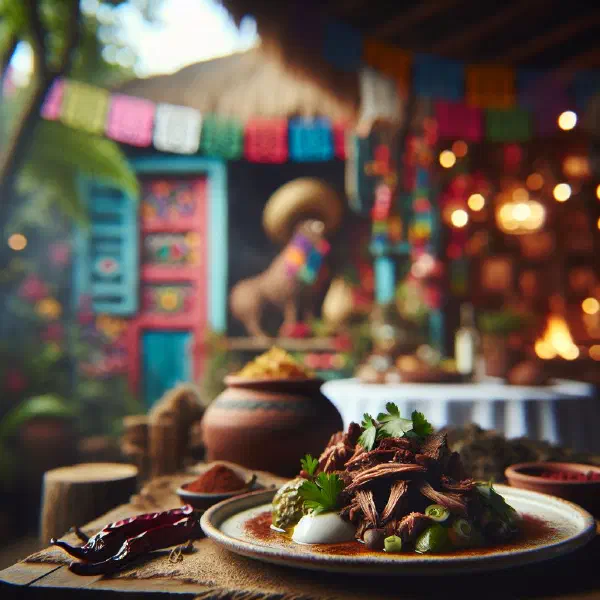
Cochinita Pibil is far more than a meal; it is a piece of Mexican heritage, set apart by its singular flavour and its time-honoured method of preparation. Hailing from the Yucatán, this dish takes a pork shoulder and cooks it slowly until meltingly tender, marinated in a rich blend of achiote, orange juice and spices, then wrapped in banana leaves and traditionally cooked in an earth oven known as a pib. The result is a depth of flavour that is hard to match anywhere else.
Ingredients (serves 1–2)
- 500 g pork shoulder
- 2 teaspoons achiote paste
- 100 ml orange juice
- 30 ml white wine vinegar
- 1 clove garlic
- 1 teaspoon salt
- ½ teaspoon ground cumin
- 1 pinch dried oregano
- Banana leaves
Shopping for the ingredients
Achiote paste is the heart of this recipe and can be found in Latin American grocers or specialist online shops. Banana leaves are usually available in Asian or Latin American markets. Always choose fresh, good-quality pork shoulder for the very best results, as the cut does so much of the work in this slow-cooked dish.
Preparing the dish
Make the marinade the day before so the meat has time to steep overnight. Take care to warm the banana leaves briefly over a flame until they turn supple and pliable, which makes them far easier to fold around the pork without tearing.
Step-by-step instructions
- Blend the achiote paste, orange juice, vinegar, crushed garlic, salt, cumin and oregano into a smooth marinade.
- Rub the marinade thoroughly into the meat and leave it to steep in the fridge overnight.
- Preheat the oven to 160 °C. Wrap the marinated meat in banana leaves and place it in an ovenproof dish.
- Cook the meat covered for around 3 hours, until it is beautifully tender.
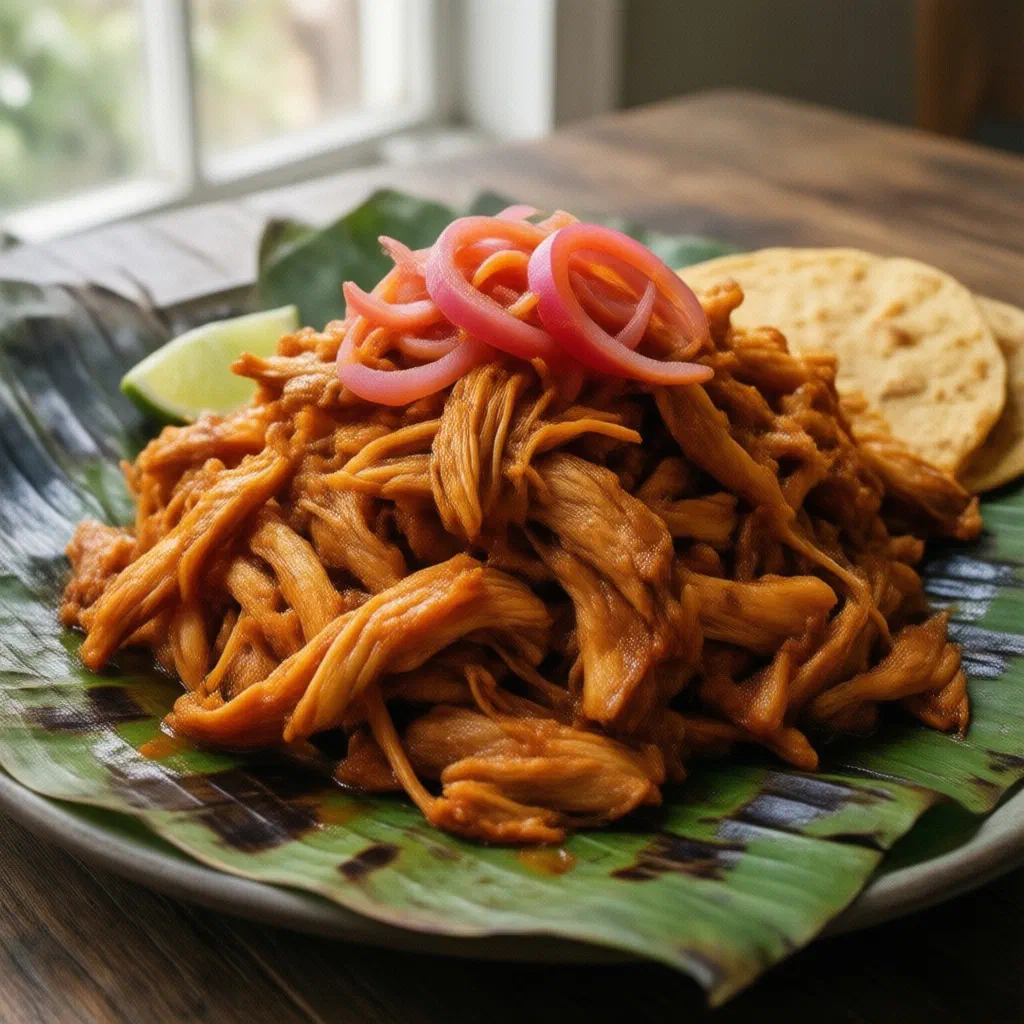
- Serve the meat shredded, scattered with fresh red onions and a squeeze of lime juice.
Gluten-free / lactose-free version
Cochinita Pibil is naturally gluten-free and lactose-free, which makes it an easy choice for those with dietary needs. Simply check that your achiote paste contains no hidden wheat fillers, and serve the pork with corn tortillas rather than wheat ones. There is no dairy in the traditional recipe, so it suits a lactose-free table without any changes at all.
Tips for vegans and vegetarians
For a plant-based take, swap the pork shoulder for jackfruit, which shreds beautifully and takes on the marinade in much the same way. Young, unripe jackfruit gives the closest texture to the original. Marinate and cook it just as you would the meat, allowing a little less time in the oven, and you will have a satisfying vegan version that loses none of the dish’s character.
More tips and tricks
If you do not have access to an earth oven, Cochinita Pibil cooks beautifully in an ordinary household oven. To deepen the flavour, marinate the meat for as long as you can, overnight is good, but a full day is better. Keeping the dish tightly covered while it cooks traps the steam and keeps the pork from drying out.
Adapting the recipe to your taste
This recipe is easy to tailor to your own palate. If you prefer things milder, simply hold back on the spices. If you like a bit of heat, stir in some finely chopped chillies, or serve the pork with a spoonful of fiery Xnipec, the classic Yucatecan habanero salsa, for a bright, blistering kick.
Ingredient substitutions
If certain ingredients are not to hand, there are plenty of workable alternatives. Bitter Seville orange is the most traditional citrus, but a mix of regular orange and a little lime juice stands in nicely. Should achiote paste prove hard to find, a blend of paprika and a pinch of turmeric will lend a similar earthy colour, much as you might improvise the seasoning in a comforting plate of Tinga de Cerdo.
Drink pairing ideas
A cooling agua de Jamaica (hibiscus iced tea) or a creamy Horchata are traditional drinks that pair wonderfully with Cochinita Pibil and round off the meal beautifully. Both offer a refreshing counterpoint to the rich, spiced pork. For something lightly tangy, a chilled Tepache made from fermented pineapple is another lovely match.
Serving and presentation ideas
Serve the Cochinita Pibil on a warm tortilla with pickled red onions and fresh coriander, finished with a wedge of lime for a bright, fresh accent. Pile the shredded pork generously and let everyone build their own. A little dish of Frijoles Refritos on the side turns it into a proper feast and adds to both the look and the flavour of the table.
A bit of history
Cochinita Pibil dates back to pre-Columbian times, when the Mayan people of the Yucatán used the pib, an underground oven, to cook this iconic dish. It is closely tied to celebrations and religious ceremonies, and remains a centrepiece of festive cooking in the region. Its enduring popularity makes it one of the finest examples of Mexican cuisine.
More recipe ideas
Summary: Cochinita Pibil
Cochinita Pibil embodies the rich culture and tradition of Mexican cooking. It is a dish full of history, made for special occasions or simply out of a love of good food. Follow the recipe and invite the flavours of Mexico into your own home, tender, fragrant pork that captures the soul of the Yucatán in every bite.