National Dish Micronesia: Roasted Taro with Coconut Cream (Recipe)
In this article
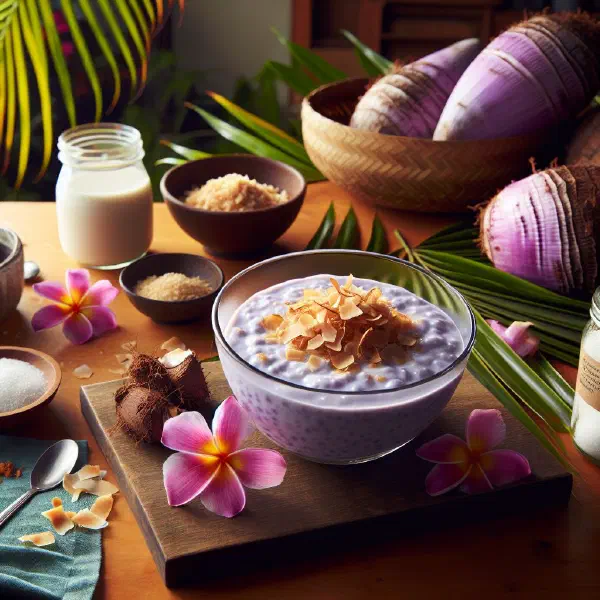
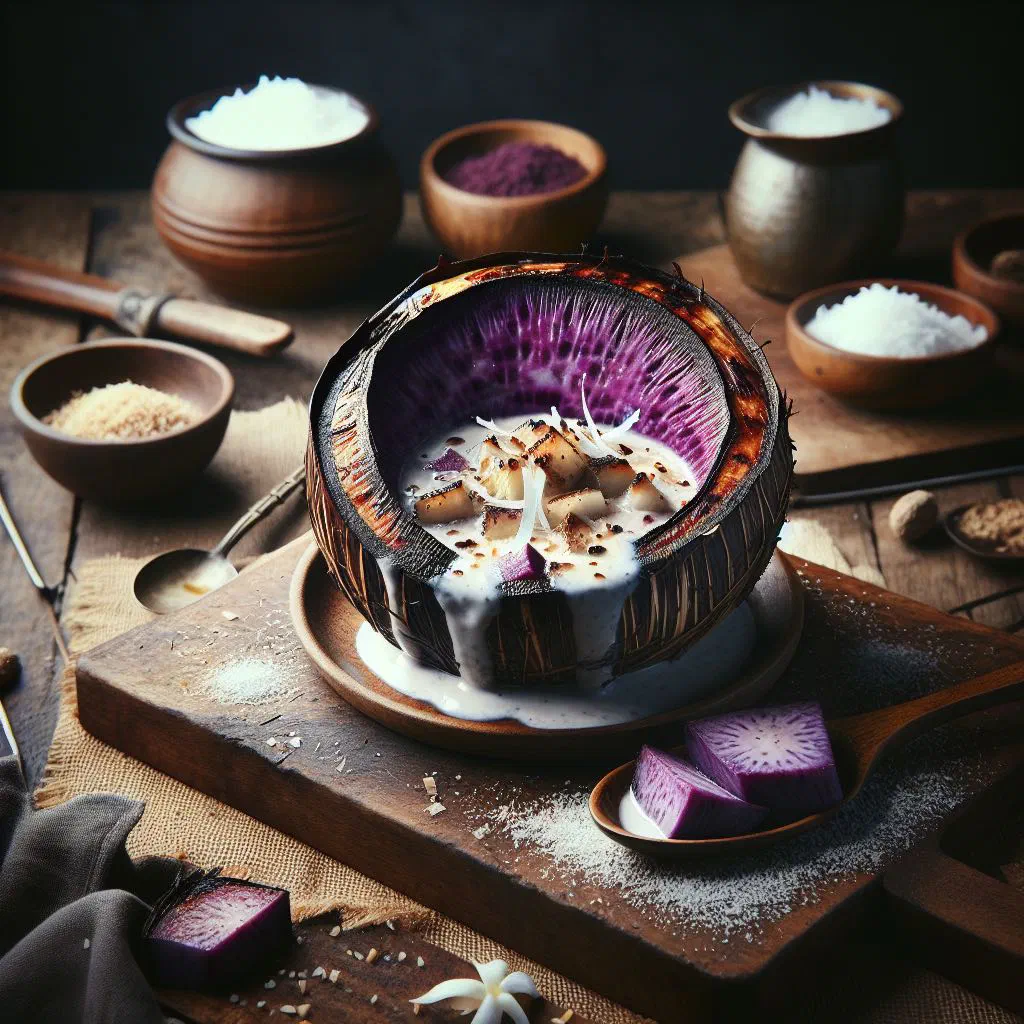
Meet Roasted Taro with Coconut Cream, a wonderfully simple treat from the islands of Micronesia. Earthy taro is roasted until tender and golden, then bathed in a lightly sweetened coconut sauce that turns a humble root into something quietly luxurious. It can be served as a savoury side or as a dessert, and it needs very little more than an oven and a good tin of coconut milk. One bowl, and the Pacific feels a little closer.
About Roasted Taro with Coconut Cream
Roasted Taro with Coconut Cream is a traditional dish of Micronesian cooking that works equally well savoury or sweet. Taro is a starchy tuber grown widely across the tropical Pacific, prized for its gently nutty flavour and its soft, floury texture once cooked. Pairing it with coconut milk brings a creamy richness and a light sweetness that makes the dish a genuine pleasure. It is easy to prepare, and a lovely way to experience the range of Micronesian island cooking.
Ingredients (serves 1–2)
- 2 cups taro, peeled and diced
- 1 cup coconut milk
- 1 tablespoon sugar or honey, to taste
- A pinch of salt
- Fresh grated coconut, to decorate (optional)
Shopping for the ingredients
When shopping for roasted taro with coconut cream, look for firm, fresh taro with no soft or shrivelled patches. Asian and international grocers usually stock it, and larger supermarkets increasingly do too. Alongside the taro, good-quality coconut milk makes all the difference, choose a tin with a high coconut content rather than a watery one. The sugar or honey should be as unrefined as possible so it supports rather than masks the flavour of the dish.
Preparing the dish
Getting ready for roasted taro with coconut cream is refreshingly straightforward. Peel the taro thoroughly and cut it into even cubes so that everything roasts at the same rate. Take care to trim away any dark or discoloured spots, as these can taste bitter. It is worth wearing gloves while peeling, since raw taro can irritate the skin. With the tuber prepped and the remaining ingredients measured out, the cooking itself moves along quickly.
Step-by-step instructions
- Preheat the oven to 200°C.
- Tip the diced taro into a baking dish and sprinkle over a little water.
- Roast for 30–35 minutes, until the cubes are tender and lightly golden.
- Meanwhile, whisk the coconut milk with the sugar or honey and a pinch of salt in a separate bowl.
- Lift the roasted taro out of the oven, arrange on a plate and pour the coconut mixture over the top.
- Scatter with fresh grated coconut if you like, and serve straight away.
Gluten-free / lactose-free version
Roasted taro with coconut cream is naturally gluten-free and lactose-free, since it contains neither wheat products nor dairy. The coconut milk makes it an excellent choice for anyone avoiding lactose, and it delivers all the creaminess you could want without a drop of cream. If cross-contamination is a concern, simply check that your tinned coconut milk and sweetener carry certified gluten-free labelling. With those small precautions, this dish suits almost every table.
Tips for vegans and vegetarians
For vegans and vegetarians, roasted taro with coconut cream is an easy win: it contains no animal products at all in its standard form. If you want to keep it strictly plant-based, swap the honey for maple syrup or agave nectar. Extra tropical fruit, mango, papaya or pineapple, makes a colourful and nutritious topping, much as it does in a bowl of Coconut Rice. The dish takes to these additions happily without losing its character.
More tips and tricks
A few small habits get the best out of this recipe. Roasting time varies with the size of your taro cubes, so check them regularly rather than trusting the clock. If you want a more pronounced coconut flavour, warm the coconut milk gently before pouring it over the hot taro, the aroma opens up noticeably. Buying the freshest tuber you can find also pays dividends, as older taro turns woody and loses its sweetness.
Adapting the recipe to your taste
Everyone eats differently, and roasted taro with coconut cream adapts without complaint. A pinch of vanilla or cinnamon lends a warmer, more dessert-like character, while a squeeze of lime pulls the dish in a fresher direction. Play with the sweetness until it suits you: reduce the sugar or honey for a gentler version, or leave it out entirely and add a little more salt for a savoury side dish alongside grilled fish.
Ingredient substitutions
If the ingredients for roasted taro with coconut cream are not all to hand, there are good alternatives. Similar tubers such as yam or ordinary potatoes stand in perfectly well, though the flavour shifts a little, sweet potato in particular brings its own sweetness, as you find in Yam and Coconut Bake. The coconut milk can be replaced with oat milk or almond milk for a lighter, differently flavoured but still delicious result.
Drink pairing ideas
Certain drinks flatter this dish especially well. A fresh fruit juice such as pineapple picks up the tropical notes beautifully, while Pandanus Juice offers something more distinctly local. Coconut water or a cooling mint infusion make refreshing, unfussy partners. For adult diners, a fruity cocktail with rum and lime echoes the sweetness of the coconut cream without overwhelming it.
Serving and presentation ideas
Presentation matters when serving roasted taro with coconut cream. Arranging the cubes generously on a large plate and finishing with fresh herbs such as mint or lemon balm lifts the whole thing visually. Brightly coloured fruit or edible flowers add further accents and turn a modest dish into a centrepiece. Decorative bowls or patterned plates make the experience feel that bit more special, particularly when the dish is served warm.
A bit of history
Roasted taro with coconut cream has deep roots in Micronesian culture and traces the culinary traditions of the region. Taro is one of the oldest cultivated crops on earth and has been grown across the Pacific for thousands of years, carried between islands by voyaging communities. The dish reflects the use of local produce and the tradition of eating together as a family. With its blend of nutty and sweet notes, it is a fine emblem of the hospitality and cultural variety of Micronesian cuisine.
More recipe ideas
Summary: Roasted Taro with Coconut Cream
In short, roasted taro with coconut cream is not merely a simple dish but a genuinely delicious one, reflecting the tropical abundance of Micronesia in the loveliest way. With its nutty flavours and sweet coconut sauce, it can appear as a main course or as a dessert, depending on how you season it. This recipe is bound to charm. Give it a try and bring a touch of the Pacific into your own kitchen.