National Dish Micronesia: Taro Leaf Stew (Recipe)
In this article
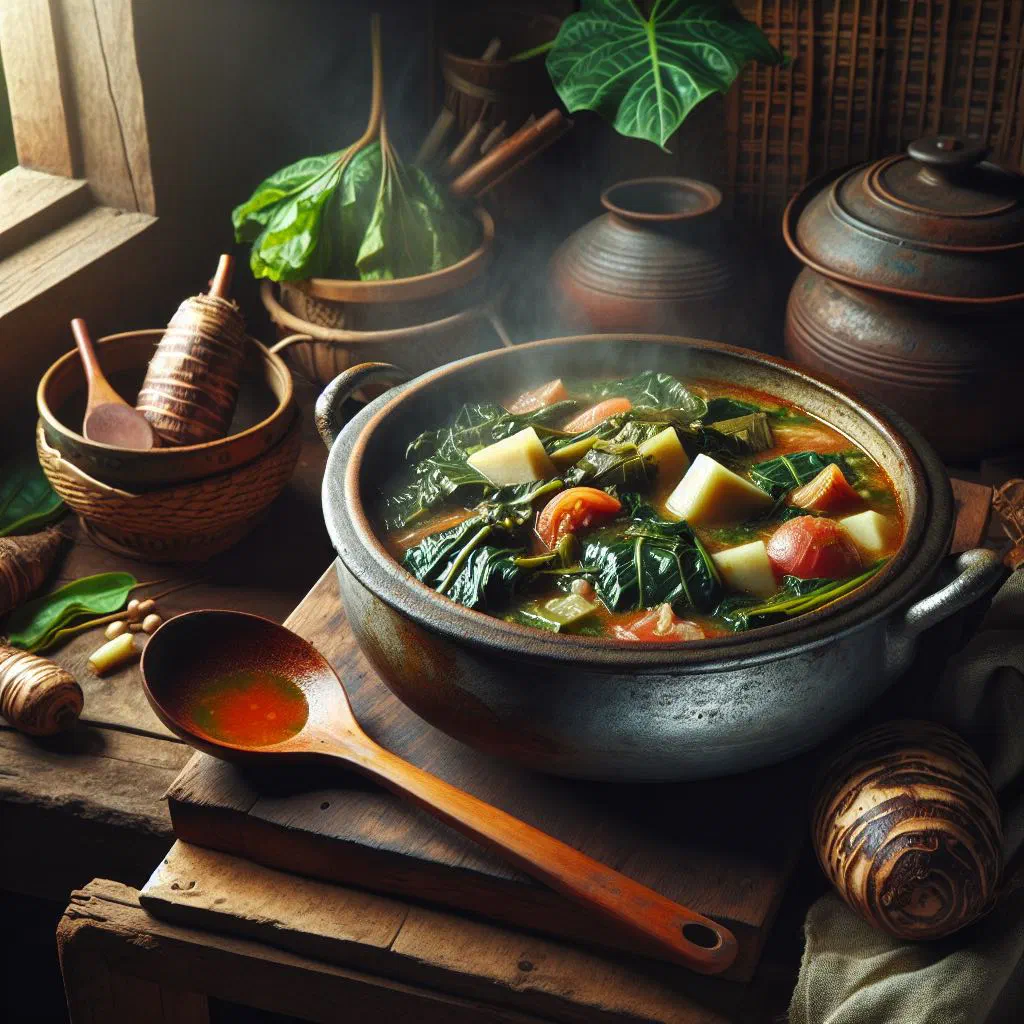
Discover Taro Leaf Stew, the dish that brings the flavours of the Pacific straight to your table. Tender taro leaves simmer gently with onion, garlic and carrot in a fragrant broth until everything turns silky and deeply savoury. It is the kind of unfussy, warming one-pot meal that Micronesian families have shared for generations, nourishing, easy to make and endlessly forgiving of whatever you have in the cupboard.
About Taro Leaf Stew
Taro Leaf Stew is a traditional dish from Micronesia that captures the flavours and the eating culture of the Pacific islands. Taro leaves, the central ingredient, are nutritious and make a wonderfully versatile base for a hearty stew. The leaves are rich in vitamins and minerals, which makes this dish as healthy as it is delicious. Combined with a handful of other simple ingredients, they create a distinctive taste experience that suits any relaxed family meal.
Ingredients (serves 1–2)
- 200 g fresh taro leaves
- 1 onion, diced
- 2 cloves of garlic, chopped
- 1 carrot, cut into cubes
- 400 ml vegetable or meat stock
- 1 tablespoon soy sauce
- Salt and pepper to taste
- 1 tablespoon coconut oil or olive oil
Shopping for the ingredients
When shopping for taro leaf stew, fresh taro leaves should be your first priority. You will usually find them in Asian grocery shops or in some well-stocked supermarkets. It is also worth paying attention to the freshness of the other vegetables. The stock should be homemade or of good quality so the dish can develop its full flavour, the same principle that makes a bowl of Pumpkin Coconut Soup taste so much better with a proper broth.
Preparing the dish
Preparing taro leaf stew takes only a few simple steps. First, wash the taro leaves thoroughly and cut them into medium-sized pieces. Dice the onion and chop the garlic, then cut the carrot into small cubes. Good preparation makes sure the cooking itself runs smoothly and efficiently, so you can keep an eye on the pot rather than the chopping board.
Step-by-step instructions
- Heat the coconut oil or olive oil in a large pan.
- Add the onion and garlic and sauté until soft and fragrant.
- Stir in the diced carrot and fry briefly.
- Add the taro leaves and mix everything together well.
- Pour in the stock and add the soy sauce.
- Bring to the boil, then simmer over low heat for about 20 minutes.
- Season with salt and pepper and serve hot.
Gluten-free / lactose-free version
Taro leaf stew is naturally gluten-free and lactose-free, which makes it an excellent option for anyone with these intolerances. Do check that the stock you use is gluten-free as well, particularly if you reach for a ready-made version. Using coconut oil keeps the dish free of dairy from the start. These qualities make the recipe especially adaptable to different dietary needs.
Tips for vegans and vegetarians
Vegans and vegetarians can enjoy taro leaf stew without any trouble by using a plant-based stock and leaving out animal products altogether. To make the dish even more nourishing, add pulses such as chickpeas or lentils. They raise the protein content and give the stew more substance. When choosing your soy sauce, check that it is vegan, as some brands are not.
More tips and tricks
A few extra touches can lift taro leaf stew further. Adding chilli or other spices brings an additional dimension of flavour, and experimenting with different vegetables is a good way to discover new combinations. Slow cooking in a heavy casserole intensifies the aroma and makes the leaves more tender, giving you a particularly comforting result. If you enjoy that gentle, long-simmered style, Breadfruit Stew rewards the same patience.
Adapting the recipe to your taste
The great thing about taro leaf stew is how adaptable it is. Depending on your preferences, you can change the recipe easily by adding different vegetables or proteins. Sweet potato or pumpkin, for example, go beautifully with the leaves. Just remember to adjust the cooking time accordingly so you end up with the best possible texture and flavour.
Ingredient substitutions
If you cannot find taro leaves, other leafy greens such as spinach or chard work well as an alternative. The stock can be swapped for vegetable stock or even a homemade clear broth to reach the flavour you want. Different oils such as sesame or rapeseed oil will vary the character of the dish too. Be creative and adapt the recipe to whatever is available, much as you would when preparing Taro Mash with the roots rather than the leaves.
Drink pairing ideas
A few drink ideas round off taro leaf stew nicely. A lightly spiced fruit juice or a fresh coconut smoothie complements the flavours beautifully, and unsweetened iced tea or coconut water works just as well. A glass of Soursop Juice makes a refreshing island-style choice. If you would rather have something alcoholic, try a light beer or a fruity white wine.
Serving and presentation ideas
Presentation can matter just as much as taste with taro leaf stew. Serve it in an attractively decorated bowl and garnish with fresh herbs such as coriander or parsley. A few lime wedges look good and add extra freshness at the table. Arrange everything carefully so the dish looks appetising and invites everyone to dig in.
A bit of history
Taro leaf stew has its roots in the traditions of Micronesian cuisine, where taro plays a central role in the diet. Taro is not only a staple food but is also used in feasts and ceremonies. Cooking with taro leaves has developed over many generations and varies from island to island. That historical depth gives the dish real meaning as well as a genuine connection to the cultures of the Pacific.
More recipe ideas
Summary: Taro Leaf Stew
In short, taro leaf stew is a nutritious and flavourful dish and a link to the cultures and traditions of Micronesia. The combination of fresh taro leaves and savoury ingredients makes for a memorable eating experience. Thanks to its adaptability, the recipe suits a wide range of dietary needs, from vegans to those avoiding gluten and lactose. Let this delicious stew inspire you and bring a touch of the Pacific to your table.