National Dish Moldova: Mamaliga (Recipe)
In this article
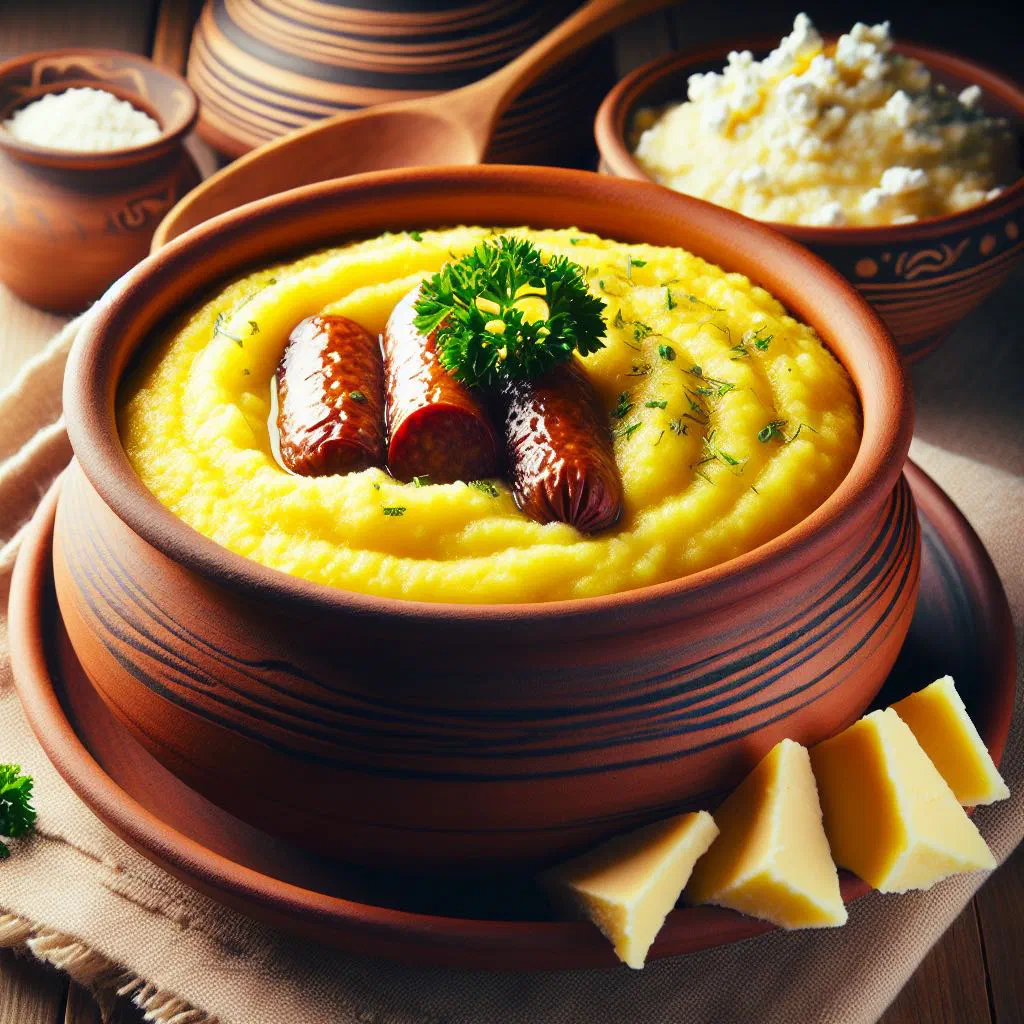
Mămăligă is cornmeal porridge cooked stiff, and Moldova takes it seriously enough that it was peasant food for centuries and is now on every restaurant menu. It is cut with a thread, not a knife, and served with sheep’s cheese, soured cream and mujdei, the garlic sauce.
About Mamaliga
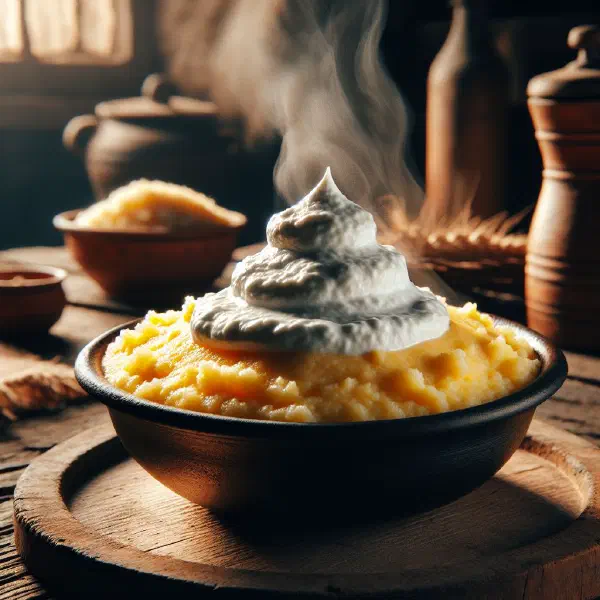
Mămăligă is Moldova’s national dish, shared with Romania. Coarse cornmeal is stirred into boiling salted water and cooked until it comes away from the pan, then turned out as a dome.
Maize arrived in the seventeenth century and displaced millet, and for a long time mămăligă was what poor households ate instead of bread.
Ingredients (serves 1–2)
- 250 g coarse cornmeal
- 1 litre water
- 1 teaspoon salt
- Optional: a knob of butter or a little cheese, to serve
Shopping for the ingredients
Coarse cornmeal, sold as polenta or mălai. Fine cornmeal gives a smooth porridge rather than the slightly grainy texture Moldovans expect. Brânză de burduf, the sheep’s cheese, is the traditional partner; a sharp feta substitutes.
Preparing the dish
Sift the cornmeal into the water rather than tipping it, and stir continuously. Use a heavy pan and a wooden spoon. The last ten minutes take real effort as it thickens.
Step-by-step instructions
- Bring the water to the boil in a heavy-based pan and add the salt.
- Lower the heat and sift the cornmeal slowly into the simmering water, stirring constantly.
- Let the mămăligă cook gently over a low heat for 30–45 minutes, stirring from time to time.
- Take the pan off the heat once the porridge is thick and pulls away from the sides.
- Turn it out onto a board and cut it with a thread.
- Serve hot, ideally with a knob of butter or a scattering of grated cheese.
Gluten-free / lactose-free version
Maize contains no gluten, so mămăligă is naturally gluten-free. The butter, cheese and soured cream traditionally served with it are dairy; the porridge alone is not.
Tips for vegans and vegetarians
Mămăligă is cornmeal and water. Served with salată de vinete, the aubergine spread, or with mushrooms and garlic, it makes a full vegan plate.
More tips and tricks
Give it the full 30 to 45 minutes. Undercooked cornmeal tastes raw and gritty and is the usual failure. Cut it with a thread or a wooden knife, since a metal blade drags. And serve it hot; mămăligă sets solid.
Adapting the recipe to your taste
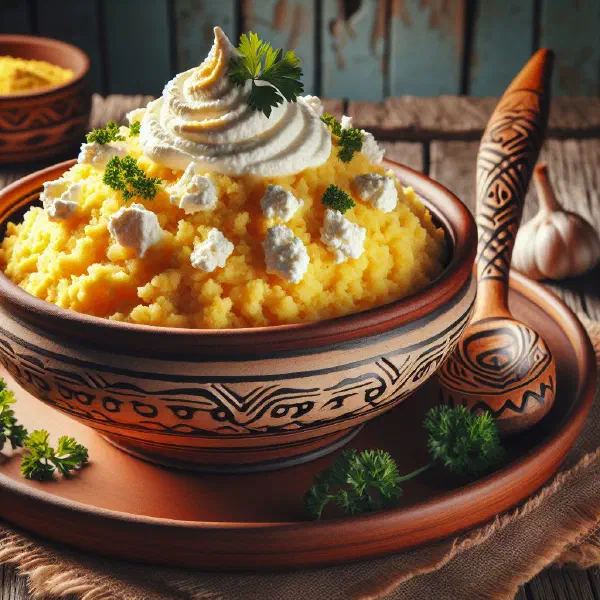
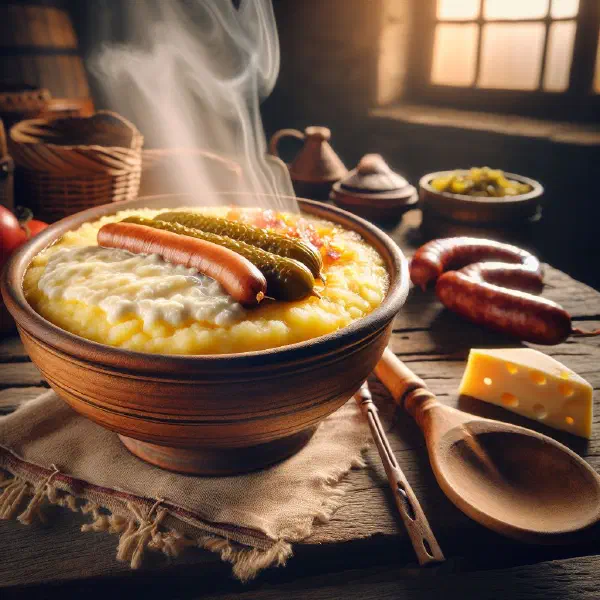
Bulz is mămăligă wrapped around cheese and baked or grilled, which is the best version. With soured cream or with cheese are the standard pairings. Mujdei, crushed garlic in oil, goes on the table.
Ingredient substitutions
Polenta and mălai are the same thing. Milk in place of some of the water makes a richer version. Butter is not optional in most households.
Drink pairing ideas
Moldovan wine, since the country is a serious producer and has been for millennia. A Fetească Neagră with meat, a Fetească Albă otherwise. House wine from a demijohn is what you would actually be given.
Serving and presentation ideas
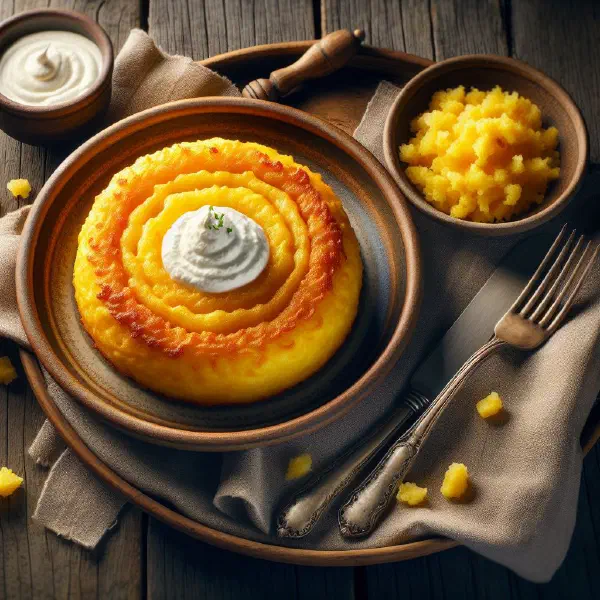
Turn it out as a dome onto a wooden board, cut it into wedges with a thread, and serve with cheese, soured cream and mujdei in separate bowls. It goes alongside mititei or a stew rather than under it.
A bit of history
Maize reached the region through Ottoman trade and spread because it grew where wheat failed and was not taxed the same way. Mămăligă became the peasant staple to the point of causing pellagra, a niacin deficiency, in the nineteenth century, because the maize was not nixtamalised as it is in Mexico. It anchors Moldovan cuisine.
More recipe ideas
Summary: Mamaliga
Mămăligă is coarse cornmeal cooked stiff in salted water and turned out as a dome. Sift it in slowly, cook it a full 40 minutes, cut it with a thread, and serve it hot with cheese.