National Dish Monaco: Pâté de Pâques (Recipe)
In this article
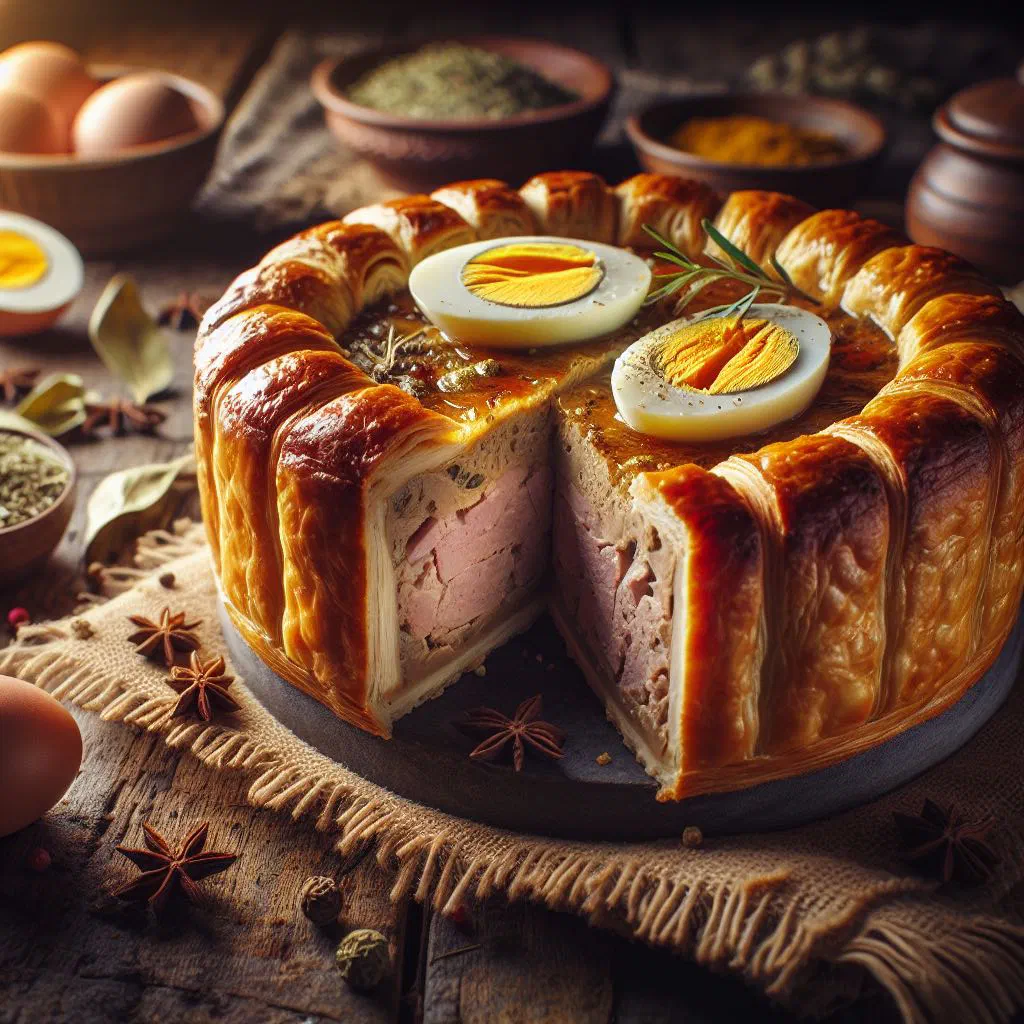
Discover Pâté de Pâques, the golden Easter pie that turns a Monegasque spring table into an occasion. Beneath a burnished lid of pastry sits a savoury filling of seasoned meat wrapped around whole hard-boiled eggs, so that every slice reveals a bright ring of yolk. Fragrant with thyme and garlic, it is festive food at its most generous, as handsome on the board as it is satisfying on the plate.
About Pâté de Pâques
Pâté de Pâques is a genuinely remarkable dish from Monaco, one that brings tradition and flavour together in equal measure. It is a savoury meat pie that appears on the table above all at Easter. The filling of mixed meats, hard-boiled eggs and a harmonious blend of spices gives the dish its particular character. This delicious pie is not only a celebration meal but a culinary inheritance, with every family guarding its own secrets and variations.
Ingredients (serves 1–2)
- 250 g shortcrust pastry
- 200 g beef
- 100 g minced pork
- 4 hard-boiled eggs
- 1 onion
- 1 clove of garlic
- 1 tsp thyme
- 1 tsp salt
- 1/2 tsp pepper
- 1 egg yolk (for the glaze)
Shopping for the ingredients
To prepare an authentic Pâté de Pâques, choosing the right ingredients matters. Visit a local butcher for fresh meat, particularly the beef and the minced pork. The freshness of what goes in has an enormous influence on the flavour of the finished pie. Reach for fresh herbs wherever possible, too, as they intensify the aromas far more than dried ones can.
Preparing the dish
Begin by preparing all the ingredients before you start cooking. Chopping the onion and garlic takes only a few minutes, but these steps are decisive for how the flavours develop. Boil the eggs well in advance as well, so that they have cooled thoroughly before they go into the filling. Careful preparation of this kind makes for a smooth, unhurried cooking process.
Step-by-step instructions
- Roll out the shortcrust pastry on a floured surface and line a greased tin with it.
- Fry the onion and garlic in a pan until golden brown.
- Add the beef and minced pork and cook until the meat is done through.
- Stir in the spices — thyme, salt and pepper — and mix well.
- Let the mixture cool, then nestle the hard-boiled eggs into the filling.
- Spoon the filling into the pastry-lined tin and cover with the remaining pastry.
- Brush with egg yolk and bake in a preheated oven at 180°C for about 40 minutes.
Gluten-free / lactose-free version
For anyone sensitive to gluten or lactose there are straightforward alternatives. Use a gluten-free shortcrust pastry, easily found in health food shops and most supermarkets. The meat can come from lactose-free products as well. Check the labels carefully as you shop and pay particular attention to the ingredient lists, so that you end up with a pie that is both flavourful and easy to digest.
Tips for vegans and vegetarians
Pâté de Pâques can also be made in a vegan or vegetarian version. Use a plant-based mince instead of the meat, or a mixture of cooked lentils and vegetables. In place of the eggs, try puréed tofu tinted with turmeric to mimic both the colour and the texture. These alternatives offer a delicious way to make the dish suitable for everyone at the table, much like a well-made Terrine de Legumes.
More tips and tricks
Take care not to over-season the filling, so that the natural flavour of the ingredients still comes through. Another useful tip is to let the Pâté de Pâques rest properly once it comes out of the oven. This helps the aromas settle and makes it far easier to cut clean, handsome portions. Avoid overheating the ingredients as well, to keep the texture tender.
Adapting the recipe to your taste
You can vary the meats in the recipe to suit your own palate. Try it with chicken or game for a change of character. The spicing can be adjusted just as freely, herbes de Provence or smoked paprika add an interesting note. Experiment with small changes until you have created your own personal version of this festive pie.
Ingredient substitutions
If certain ingredients are hard to come by, there are plenty of alternatives to fall back on. The beef can be replaced with pork or lamb, depending on taste and preference. For the seasoning, Italian herbs or a pinch of chilli will liven the filling up nicely. Do adjust the quantities accordingly, though, so that the balance of flavours stays right, the same care that makes a good Pate De Campagne work.
Drink pairing ideas
A number of drinks go beautifully with Pâté de Pâques. A well-balanced red wine such as a Merlot or a Bordeaux complements the savoury depth of the filling. Light beers or fruity cocktails such as sangria can harmonise well too.
Serving and presentation ideas
Presentation plays a decisive part in the enjoyment of this dish. Serve the pie on an elegant wooden board with fresh herbs and a colourful selection of seasonal vegetables. A little chutney or mustard not only lifts the look of the plate but offers excellent flavour combinations as well. A crisp Salade Nicoise alongside makes a fresh counterpoint to the richness. Be creative with the arrangement to give your guests something memorable.
A bit of history
Pâté de Pâques has its roots in Monegasque culture and forms part of a culinary tradition running deep through the history of the principality. Originally intended as an Easter feast, it grew over the years into a favourite for all manner of sociable occasions. The combination of meat and eggs symbolises fertility and new beginnings, which fits the Easter season perfectly. With every bite you can taste the long tradition of Monaco’s cuisine.
More recipe ideas
Summary: Pâté de Pâques
In short, Pâté de Pâques is an exquisite culinary discovery in which tradition and flavour are held in perfect balance. The careful preparation and the choice of special ingredients make this pie a highlight of any table. It will certainly impress your guests. Let yourself be won over by the refinement and rich flavour of this Monegasque classic.