National Dish Mongolia: Byaslag (Recipe)
In this article
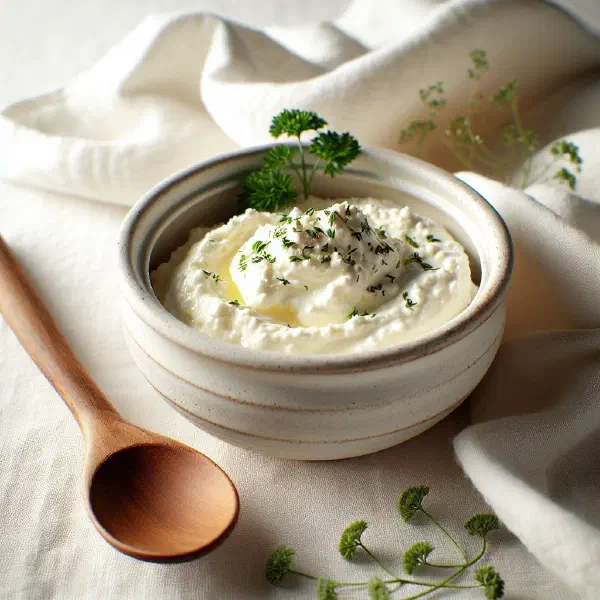
Byaslag is the fresh cheese of the Mongolian steppe — milk curdled, drained and pressed under a weight until firm enough to slice. Herding families have made it in their gers for centuries, usually from cow, yak or goat milk, and it belongs to the tsagaan idee, the “white foods” that form the backbone of the Mongolian summer diet.
About Byaslag
Byaslag is a traditional mild fresh cheese, made for generations in the gers of the steppe. This simple but flavourful dairy speciality from cow’s or yak’s milk is characterised by a mild, gently sour note, and it can be made at home with very few ingredients. It belongs to Mongolia’s substantial dairy tradition, developed by a nomadic culture that turns a summer surplus of milk into products that keep.
Ingredients (serves 1–2)
- 1 litre whole milk (supermarket cow’s milk is fine)
- 150 ml buttermilk or natural yoghurt, as the souring agent
- 2 tablespoons lemon juice or vinegar
- A pinch of salt
- A clean piece of muslin or cheesecloth
Shopping for the ingredients
Fresh pasteurised whole milk works well; UHT milk curdles poorly and gives a rubbery result. Any live buttermilk or natural yoghurt is the starter. You will also need muslin and something to press with, a plate topped with a few tins does the job perfectly.
Preparing the dish
Line a sieve with a double layer of muslin and set it over a bowl. Warm the milk slowly and watch the temperature: it should steam but never boil. Have the lemon juice ready, and clear space in the fridge for the pressing stage, which takes several hours.
Step-by-step instructions
- Heat the milk gently to about 85 °C, stirring so it does not catch.
- Stir in the buttermilk or yoghurt, then the lemon juice.
- Let it stand off the heat for 10 minutes, until the curds separate clearly from the whey.
- Pour into the muslin-lined sieve and drain for 30 minutes.
- Gather the cloth, add the salt and shape the curd into a flat round.
- Press under a weight in the fridge for 3–4 hours, or overnight for a firmer cheese.
- Slice and serve, or dry further for longer keeping.
Gluten-free / lactose-free version
Byaslag is naturally gluten-free. It is a dairy product by definition, though much of the lactose drains away with the whey; a lactose-free milk curdles the same way if you need to be certain.
Tips for vegans and vegetarians
The cheese is vegetarian provided you use an acid (lemon or vinegar) rather than animal rennet, as in this recipe. There is no genuine vegan equivalent, though pressed and marinated firm tofu occupies a similar place on the plate, sliced, salted and eaten with bread and tea.
More tips and tricks
Do not boil the milk; overheating makes the curd tough. Press longer for a firmer cheese that slices cleanly, less for something soft and fresh. And keep the whey, Mongolians use it in dough, in soups and as a drink, and it is far too useful to pour away.
Adapting the recipe to your taste
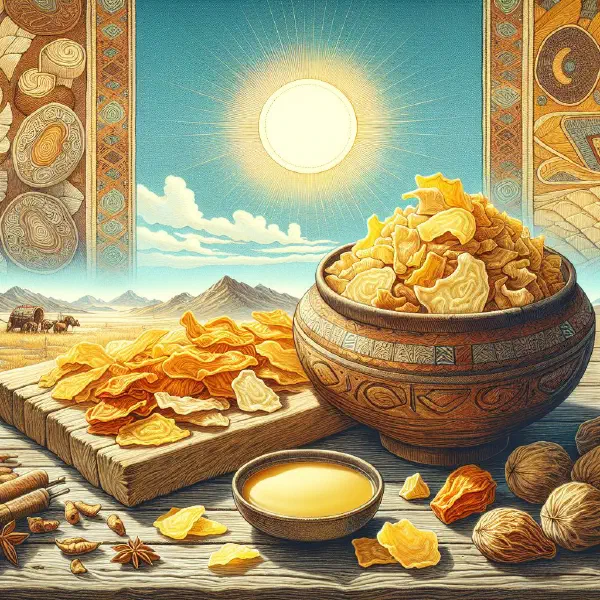
Caraway seeds or chopped wild herbs pressed into the curd are traditional variations. For longer keeping, the pressed cheese is cut into strips and dried in the sun until rock hard (aaruul), which lasts for months. A little more salt makes it keep better.
Ingredient substitutions
Goat’s or sheep’s milk both work and give tangier results. Vinegar substitutes directly for lemon juice. Yoghurt, buttermilk and kefir are interchangeable as starters.
Drink pairing ideas
Salted milk tea (suutei tsai) is the constant companion in Mongolia and the natural partner to byaslag. Airag, fermented mare’s milk, is the traditional celebratory drink. Black tea works just as well for anyone outside the steppe.
Serving and presentation ideas
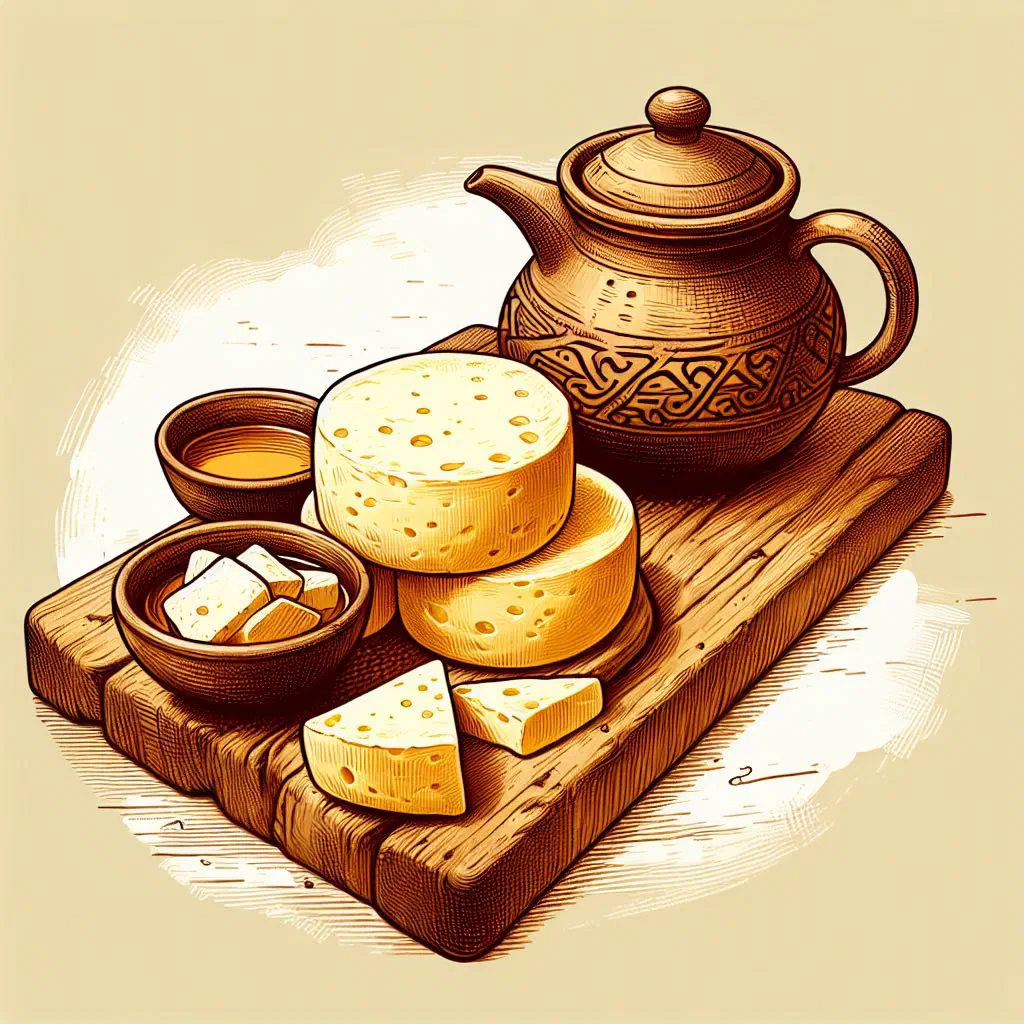
Serve byaslag sliced, on a board with flatbread and butter, alongside a bowl of milk tea. That is the standard Mongolian offering to a guest. It also works crumbled over salads or fried briefly in a pan until golden. Serve it at room temperature, since cold mutes its mild flavour.
A bit of history
Mongolian herders divide their food into tsagaan idee (white foods, meaning dairy) and ulaan idee (red foods, meaning meat), with dairy dominating the summer months when animals are in milk. Byaslag, aaruul and airag all come from that tradition of turning a seasonal glut into something that lasts. It offers a genuine window onto Mongolian cuisine.
More recipe ideas
Summary: Byaslag
Byaslag is milk curdled, drained and pressed into a mild fresh cheese, the everyday dairy of the Mongolian steppe. One litre of milk, a squeeze of lemon and a few hours under a weight, and you have something herders have eaten for centuries.