National Dish Montenegro: Kačamak (Recipe)
In this article
Kačamak is cornmeal and potato beaten together with cheese and kajmak until it becomes glossy and elastic. It comes from the mountains, it is extremely rich, and one portion will keep a person going through a day’s work outdoors.
About Kacamak
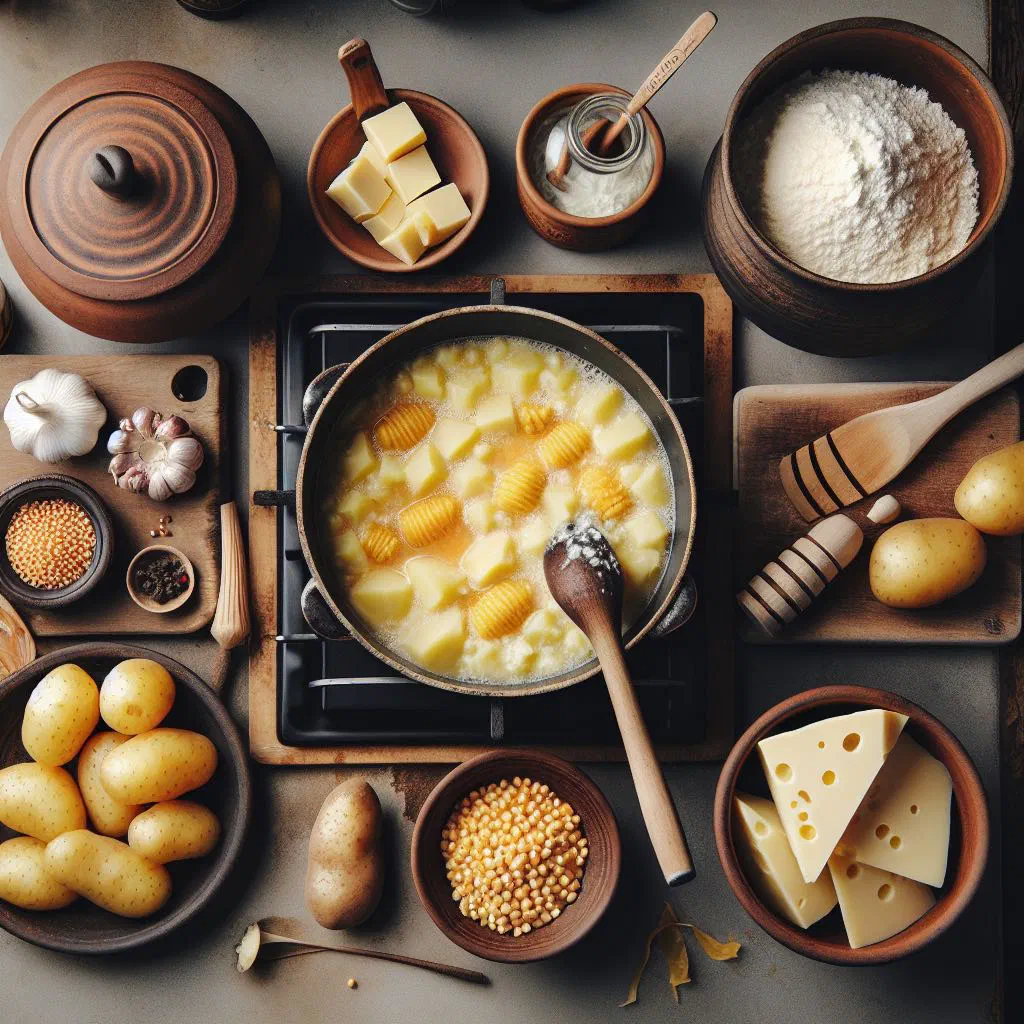
Kačamak is Montenegro’s national dish and belongs to the highlands. Cornmeal is cooked in potato water, the potatoes are mashed back in, and then cheese and kajmak are beaten through until the whole thing pulls away from the pot in strands.
The beating is the point. A properly made kačamak has a stringy, glossy texture from the melted cheese worked through it.
Ingredients (serves 1–2)
- 200 g cornmeal
- 300 g potatoes
- 500 ml water
- 1 teaspoon salt
- 50 g cheese (mountain cheese or feta)
- 50 g soured cream
Shopping for the ingredients
Kajmak, the Balkan clotted dairy spread, is what makes this dish and is sold in Balkan and Turkish shops. Soured cream is the fallback. A young mountain cheese that melts into strings is better than a hard one; a young feta or a fresh mozzarella works.
Preparing the dish
Cook the potatoes in salted water and keep that water: the cornmeal cooks in it. Use a heavy pot and a wooden spoon, and expect the last stage to take real effort as it thickens.
Step-by-step instructions
- Put the potatoes into a pan with 500 ml water and 1 teaspoon of salt and bring to the boil.
- Cook the potatoes for around 15 minutes until soft, then drain, reserving the cooking water.
- Return the water to the pan, then add the cornmeal slowly, stirring constantly.
- Keep cooking the mixture until it reaches a smooth, creamy consistency, about 10 minutes.
- Mash the cooked potatoes back in and beat well.
- Beat in the cheese and kajmak until the mixture becomes glossy and pulls away from the pan.
Gluten-free / lactose-free version
Cornmeal and potato are gluten-free, so the base is suitable. The cheese and kajmak are dairy and are the whole character of the dish, so a lactose-free version loses most of its point.
Tips for vegans and vegetarians
Kačamak is vegetarian as written. A vegan version with plant cheese and oil is possible, and the potato and cornmeal base is good on its own with fried onions, though it is a different dish.
More tips and tricks
Use the potato water. Beat the cheese in over low heat and keep beating until it strings. And serve it immediately, since kačamak sets into a solid mass as it cools and cannot be revived.
Adapting the recipe to your taste
More kajmak is always the direction Montenegrins go. Some households add a fried egg on top. Polenta sa sirom is the simpler cheese version without potato.
Ingredient substitutions
Crème fraîche or clotted cream approximate kajmak. Any melting cheese works. Polenta and cornmeal are the same thing here.
Drink pairing ideas
A Montenegrin Vranac, the local red. Rakija before or after. Yoghurt or sour milk alongside, which is the mountain habit.
Serving and presentation ideas
Serve it hot straight from the pot into bowls, with extra kajmak on top melting into it. Pickles or a sharp salad on the side, because it is very rich. Nothing else is needed.
A bit of history
Maize arrived in the Balkans in the seventeenth century and became the food of the mountains, where wheat would not grow. Kačamak and its relatives run across Montenegro, Serbia, Bosnia and Bulgaria under variations of the same name. It anchors Montenegrin cuisine.
More recipe ideas
Summary: Kacamak
Kačamak is cornmeal cooked in potato water with the potatoes mashed back in and cheese beaten through. Use the potato water, beat it until it strings, and serve it at once.