National Dish Morocco: Couscous (Recipe)
In this article
Couscous in Morocco is Friday food, served after prayers, in a wide shallow dish with the vegetables piled in a cone and the broth poured separately. The grain is steamed three times over the stew, which is the part shortcuts skip.
About Couscous
Moroccan couscous is served with a stew of lamb or chicken and seven vegetables, the number being traditional. The grain goes into a couscoussier, a two-part pot: stew below, perforated basket above, so the steam rises through the semolina and flavours it.
Three steamings, with the grain rubbed and rested between each, produces something no packet method matches.
Ingredients (serves 1–2)
- 200 g couscous
- 250 ml vegetable or chicken stock
- 1 courgette
- 1 carrot
- 1 pepper
- 100 g chickpeas (pre-cooked)
- 2 tablespoons olive oil
- 1 teaspoon cumin
- Salt and pepper to taste
Shopping for the ingredients
Medium-grain couscous. Pre-steamed is what supermarkets sell and it needs only soaking; if you find unsteamed, it needs the full treatment. Ras el hanout, the Moroccan blend, is worth having, and a pinch of saffron transforms the broth.
Preparing the dish
For the quick version, measure the liquid precisely: about 1.25 parts to 1 part couscous by volume. For the proper version, steam the grain over the stew for twenty minutes, tip it out, rub it with oil and water between your palms, rest it, and repeat twice.
Step-by-step instructions
- Sauté the vegetables in a pan with olive oil until lightly browned and tender.
- Tip the couscous into a bowl and pour over the boiling stock. Cover and leave to swell for 5 minutes.
- Once swollen, fluff the couscous with a fork, working from the edges in.
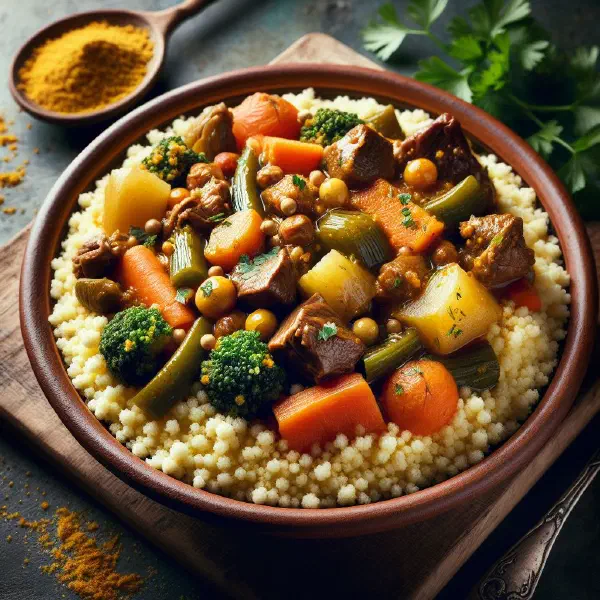
- Fold in the sautéed vegetables and the chickpeas.
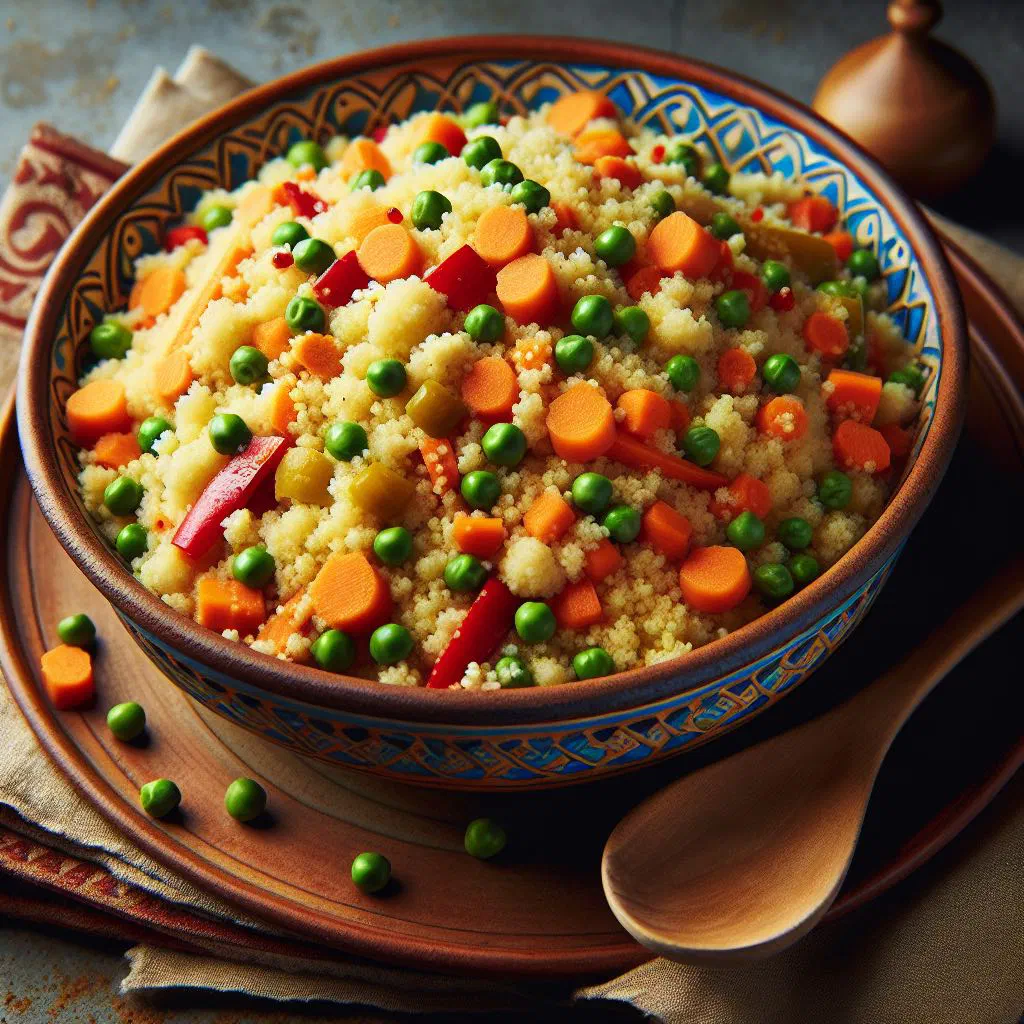
- Season with cumin, salt and pepper, mix well and serve warm.
Gluten-free / lactose-free version
Couscous is wheat semolina and contains gluten. There is no way round it, though maize couscous and millet are both sold and both are steamed the same way. There is no dairy in the dish.
Tips for vegans and vegetarians
Vegetable couscous is a standard Moroccan dish, not a substitution, and it is what is eaten during fasting and in poorer households. Seven vegetables in a saffron broth with chickpeas is a complete meal.
More tips and tricks
Fluff with a fork or your fingers, working from the outside in, and never with a spoon. Serve extra broth in a jug, because the grain drinks it and people want more. And if you have the time, steam it properly: the difference is larger than the effort.
Adapting the recipe to your taste
Couscous tfaya adds caramelised onions and raisins and is the sweet version served at celebrations. Turnip, pumpkin and cabbage are the traditional vegetables. Harissa on the side, though Moroccans use it less than Tunisians.
Ingredient substitutions
Barley couscous, belboula, is a Berber alternative and has more character. Lamb or chicken in place of a vegetable broth. Ras el hanout replaces the cumin.
Drink pairing ideas
Mint tea, poured from height, follows the meal rather than accompanying it. Leben, the fermented milk, is the traditional drink with couscous. Water otherwise.
Serving and presentation ideas
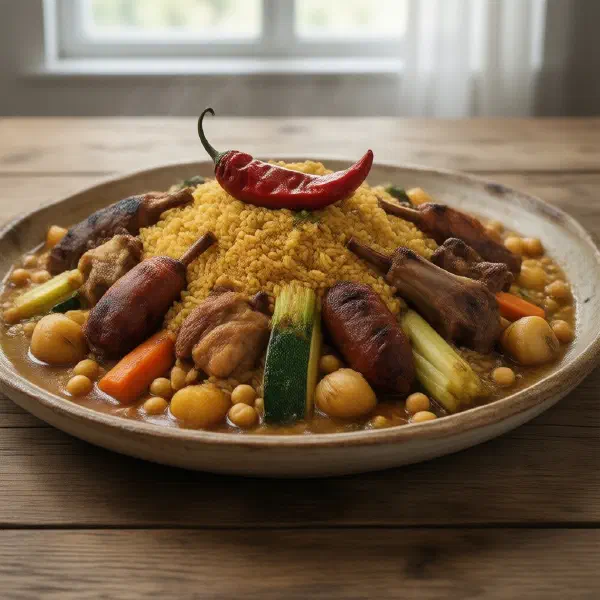
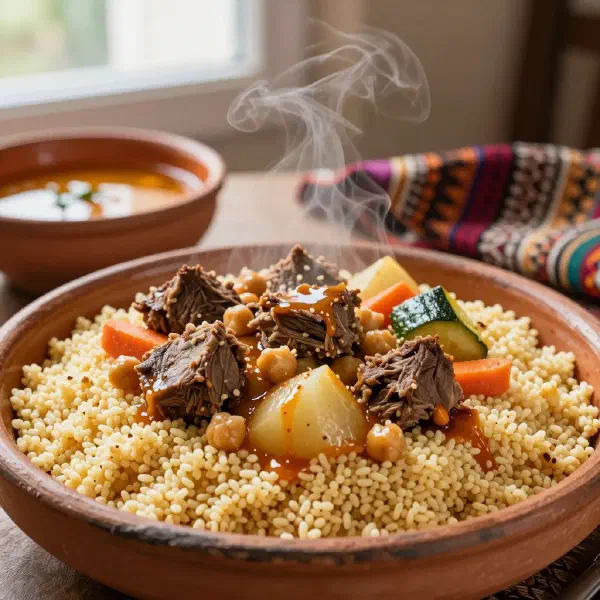
Pile the couscous in a wide shallow dish, make a well, arrange the vegetables in a cone in the middle with the meat beneath, and pour some broth over. More broth in a jug. Everyone eats from the shared dish, from the section in front of them.
A bit of history
Couscous is Berber and predates Arab arrival in North Africa; couscoussier-shaped vessels have been found in ninth-century sites. UNESCO listed the knowledge and practices around it in 2020, jointly for Morocco, Algeria, Tunisia and Mauritania, which settled a long argument by refusing to take sides. It anchors Moroccan cuisine.
More recipe ideas
Summary: Couscous
Couscous is steamed semolina served under vegetables and broth. Keep the liquid ratio honest, fluff with a fork from the outside in, and serve extra broth in a jug.