National Dish Mozambique: Matapa (Recipe)
In this article
Matapa is cassava leaves pounded and cooked with ground peanuts and coconut milk. The leaves must be cooked thoroughly, because raw cassava leaf contains cyanogenic compounds. Twenty minutes of boiling deals with that and is not optional.
About Matapa
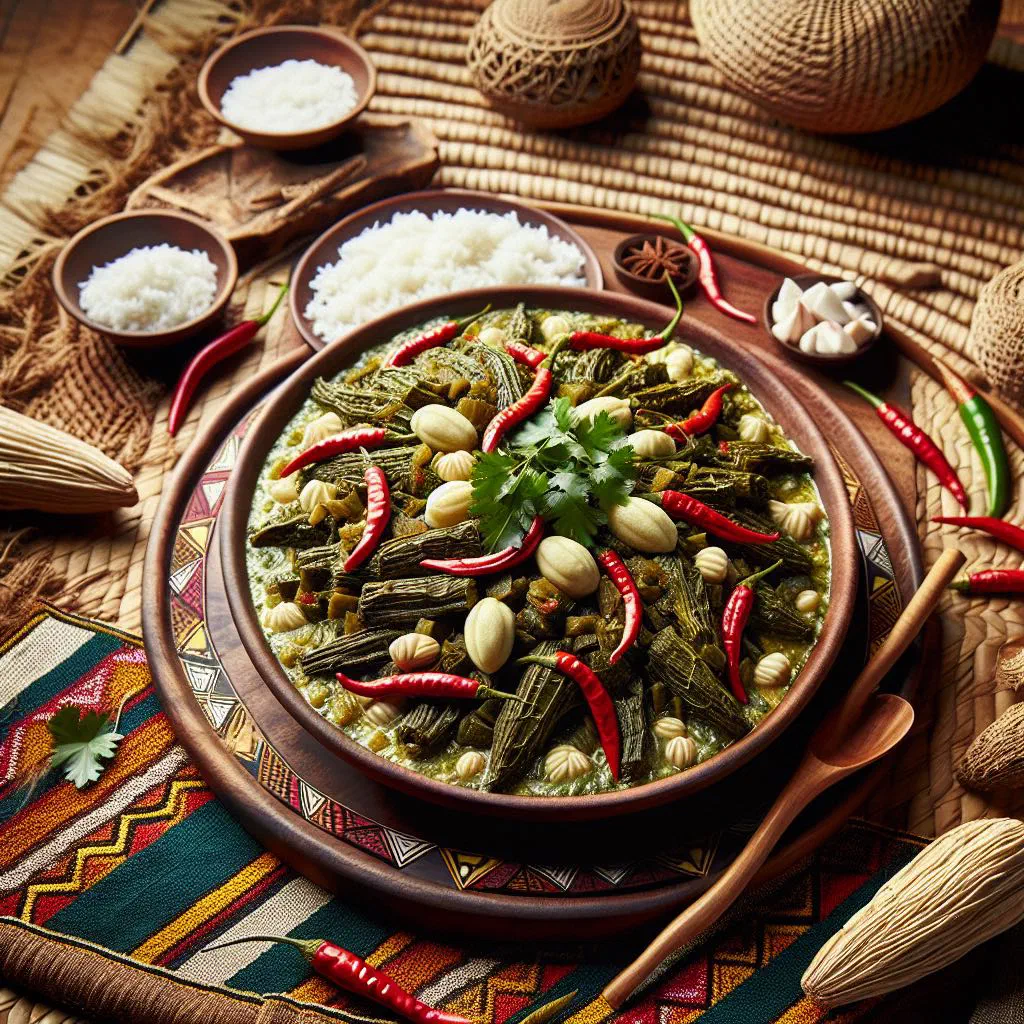
Matapa is Mozambique’s national dish. Young cassava leaves are pounded in a mortar, simmered with ground peanuts, coconut milk and garlic, and often with prawns or crab. It is served with xima, the maize porridge, or rice.
Both parts of the cassava plant are used in Mozambican cooking: the root as flour, the leaves as this.
Ingredients (serves 1–2)
- 300g cassava leaves, fresh or frozen
- 200ml coconut milk
- 100g peanuts, roasted and ground
- 2 cloves garlic, finely chopped
- 1 onion, finely diced
- Salt to taste
- 1 tablespoon vegetable oil
- (Optional) 200g fresh prawns or dried fish
Shopping for the ingredients
Frozen cassava leaves are sold pre-pounded in African and Brazilian grocers, which saves considerable work and guarantees they have been prepared properly. Spinach is the common substitute but lacks the character. Grind roasted peanuts yourself for the best flavour.
Preparing the dish
If starting with fresh leaves, strip them from the stalks, pound them and boil for at least twenty minutes before anything else happens. Frozen pounded leaves still need their full cooking time. Slacken the ground peanuts with coconut milk before adding.
Step-by-step instructions
- First, cook the cassava leaves in a large pot with plenty of salted water for about 20 minutes, until soft.
- Meanwhile, heat the vegetable oil in a pan and sauté the onion and garlic until fragrant.
- Drain the cooked cassava leaves, press out the excess water and chop them finely, or pound them to a paste in a mortar.
- Add the leaf paste to the onion and garlic in the pan and let it sweat briefly.
- Stir in the peanuts and coconut milk until well combined. If using, add the prawns or dried fish now.
- Let everything simmer gently over low heat for around 10 minutes, until the matapa thickens and the flavours come together.
- Taste and add more salt if needed.
Gluten-free / lactose-free version
Matapa contains no gluten and no dairy. Served with xima, made from maize flour, the whole meal is naturally suitable for both restrictions.
Tips for vegans and vegetarians
Without the prawns or dried fish, matapa is vegan and is eaten that way routinely. Cassava leaves, peanuts and coconut is a genuinely balanced plate, and matapa de amendoim is the peanut-forward version.
More tips and tricks
Cook the leaves thoroughly. That is a safety point, not a texture one. Do not let the coconut milk boil hard, since it splits. And pound rather than chop if you can: the texture matapa should have comes from pounding.
Adapting the recipe to your taste
Prawns are the classic addition on the coast. Crab is the luxury version. A little piri piri gives it heat, though matapa is usually mild and served with the chilli sauce on the side.
Ingredient substitutions
Spinach or chard replace cassava leaves with a milder result. Cashew paste can stand in for peanut. Coconut cream makes it richer.
Drink pairing ideas
2M or Laurentina, the Mozambican lagers. Fresh coconut water. Sugarcane juice on the street.
Serving and presentation ideas
Serve it beside a mound of xima or over rice, with piri piri sauce on the table. It is thick and dark green and comes to the table in the pot.
A bit of history
Mozambique’s coast was a Swahili and later Portuguese trading zone, and the cooking shows it: coconut and peanuts from Africa and Asia, chillies from the Americas via Portuguese ships. Cassava itself is a Brazilian import that became the staple. Matapa anchors Mozambican cuisine.
More recipe ideas
Summary: Matapa
Matapa is pounded cassava leaves cooked with ground peanuts and coconut milk. Boil the leaves at least twenty minutes, pound rather than chop, and keep the coconut milk below a boil.