National Dish Nepal: Gundruk Soup (Recipe)
In this article
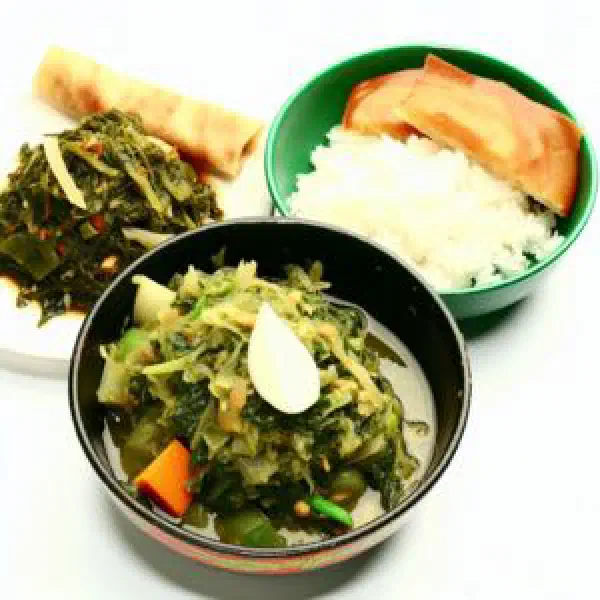
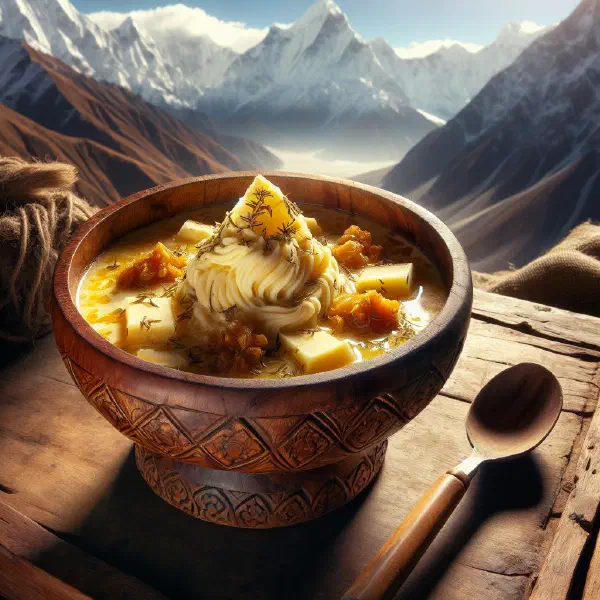
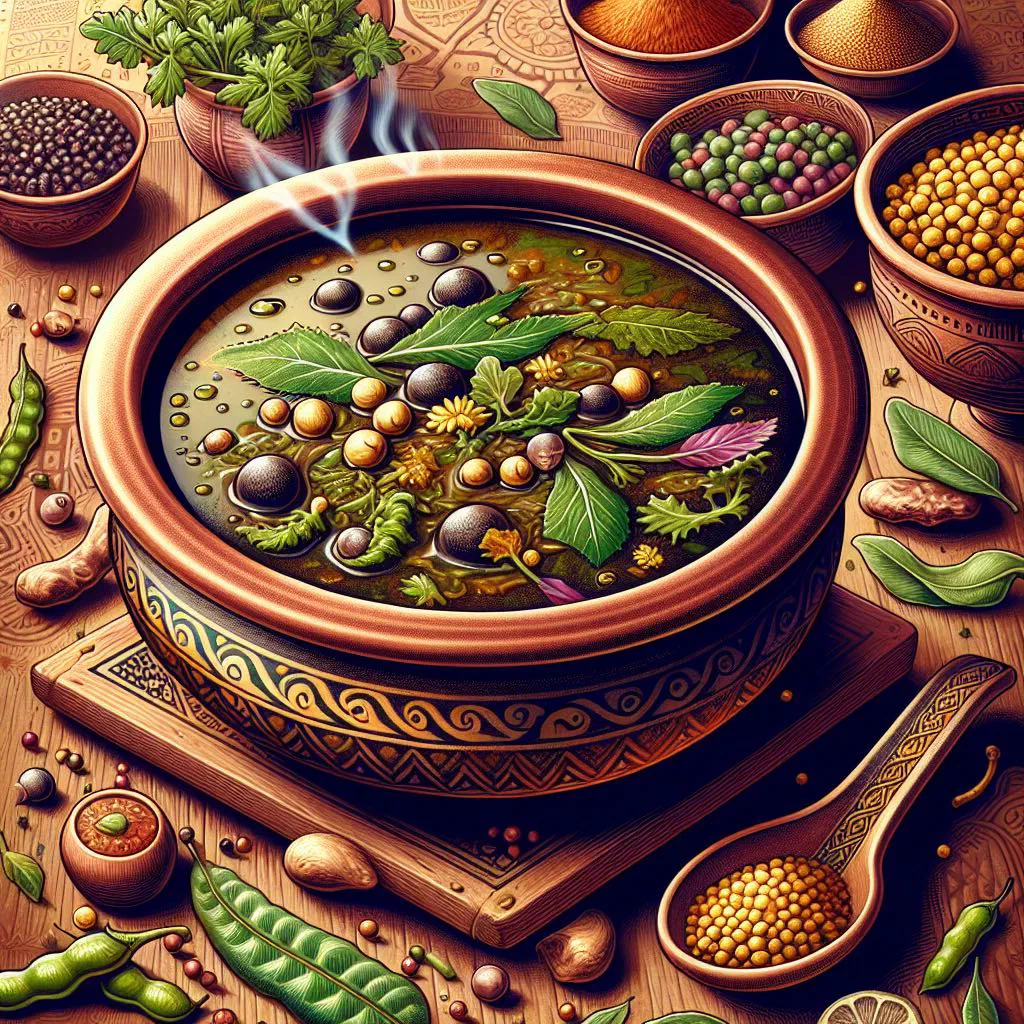
Warm up with Gundruk Soup, a nourishing Nepalese favourite built around fermented leafy greens. This earthy, tangy broth is a staple of everyday Himalayan cooking, prized as much for its deep savoury flavour as for its wholesome goodness. Gently spiced with turmeric and finished with fresh coriander, it is the kind of comforting bowl that comes into its own on cold days. Bring a taste of the mountains straight to your own kitchen.
About Gundruk Soup
Gundruk Soup is a speciality that is much loved in Nepal, where it often appears as part of the daily meal. It is built around gundruk, a fermented vegetable made from the leaves of mustard or other leafy greens. This fermentation process is an age-old tradition and improves the digestibility of the nutrients and gives the soup its characteristic earthy taste.
Ingredients (serves 1–2)
- 100 g gundruk (fermented leafy greens)
- 1 medium onion, diced
- 2 cloves of garlic, finely chopped
- 500 ml vegetable or chicken stock
- 1 teaspoon turmeric
- Salt and pepper to taste
- Fresh coriander leaves, to garnish
Shopping for the ingredients
The ingredients for gundruk soup are usually available in Asian grocery shops or well-stocked supermarkets. Try to choose fresh gundruk if you can find it in store; otherwise, you can also buy fermented leafy greens online. Fresh ingredients are key to both the flavour and the health benefits of the soup, so it is worth paying attention to quality.
Preparing the dish
To prepare gundruk soup at its best, start by getting all the ingredients ready. The onion should be diced and the garlic finely chopped. The gundruk can be given a quick rinse or used straight from the pack, according to preference. Good preparation of the ingredients keeps the cooking process running smoothly and will noticeably improve the flavour of the soup.
Step-by-step instructions
- Heat a pan over medium heat and add a little oil.
- Add the onion and fry until it turns translucent.
- Add the garlic and turmeric and fry both for about 1 minute.
- Add the gundruk to the pan and stir well.
- Pour in the stock and bring everything to the boil.
- Reduce the heat and let the soup simmer for 15–20 minutes.
- Season with salt and pepper and garnish with fresh coriander leaves.
Gluten-free / lactose-free version
Gundruk soup is naturally gluten-free and lactose-free, as long as you use the right stock. Take care to choose a gluten-free stock or make your own from fresh ingredients. This makes the soup an ideal choice for anyone with intolerances. It is important to check all the ingredients to be sure they contain no hidden gluten or lactose.
Tips for vegans and vegetarians
Gundruk soup is a wonderful option for vegans and vegetarians, since it is based on plant ingredients. Simply use vegetable stock instead of chicken stock to make the vegan version of the soup. You can also add extra vegetables such as carrots or potatoes to boost the nutritional density. These tweaks make the soup even tastier and more filling, and fit perfectly with a plant-based lifestyle.
More tips and tricks
A good way to make gundruk soup even more aromatic is to add spices such as cumin or ginger. These can enhance your tasting experience considerably. Let the soup rest briefly after cooking so the flavours have time to mingle. Experiment with the consistency by adding more or less stock, depending on whether you prefer a thick or a thin soup.
Adapting the recipe to your taste
The recipe for gundruk soup is easy to adapt to personal preference. For more protein, you can add tofu or lentils, which is also a great option for vegetarians. A scattering of dried chillies can lend the soup a pleasant heat too. Do not be afraid to experiment with different kinds of leafy greens to discover new flavours, much as you would in a hearty Saag Ko Tarkari.
Ingredient substitutions
If you cannot find gundruk, you can try using other fermented leafy greens such as sauerkraut or kimchi. Fresh kale or spinach can also be used in the soup, though the flavour will vary accordingly. If you are using stock, pick one that suits your taste, whether vegetable or chicken. A closely related option is Sinki Soup, which uses fermented radish taproots. Always aim to use fresh ingredients to guarantee the best flavour.
Drink pairing ideas
Gundruk soup pairs wonderfully with a range of drinks. A classic Nepalese beer could be an excellent choice, while a light white wine can likewise complement the flavours of the soup. Alternatively, fresh fruit juices or ginger tea go perfectly with it. These drinks help to intensify the aromas and create a well-rounded tasting experience.
Serving and presentation ideas
To present gundruk soup attractively, serve it in decorative bowls and garnish with fresh coriander leaves. A few wedges of lime on the rim of the bowl add a fresh look and can be squeezed over the soup at the table. Remember, too, to serve the soup with crusty bread or rice, which is a great addition both in taste and in appearance. An appealing presentation greatly heightens the whole dining experience.
A bit of history
Gundruk soup has its roots in the rural regions of Nepal, where the use of fermented foods is widespread. Fermentation is a traditional process that extends the shelf life of foods and improves their nutritional content. This soup reflects the culture and eating habits of Nepal, and is a fine example of the practical use of fermentation in the kitchen, a hallmark of resourceful Nepalese cuisine. The dish is often prepared in the winter months, when fresh vegetables are scarce, which underlines the cleverness of the country’s cooking.
More recipe ideas
Summary: Gundruk Soup
Gundruk soup is a delicious and nourishing delicacy that embodies the rich culture of Nepal. With its distinctive flavours and health benefits, this traditional soup offers a perfect way to get to know Nepalese cooking. Gundruk soup wins you over with its hearty taste and simple preparation. Let this dish inspire you and bring a little piece of the Himalayas into your own kitchen.