National Dish New Zealand: Hangi (Recipe)

In this article
Hāngī is cooked in a pit. Stones are heated in a fire for several hours, food is laid over them in baskets, everything is covered with wet cloth and earth, and it steams underground for three or four hours. It is Māori, it is communal, and it is not a weeknight dish.
About Hangi
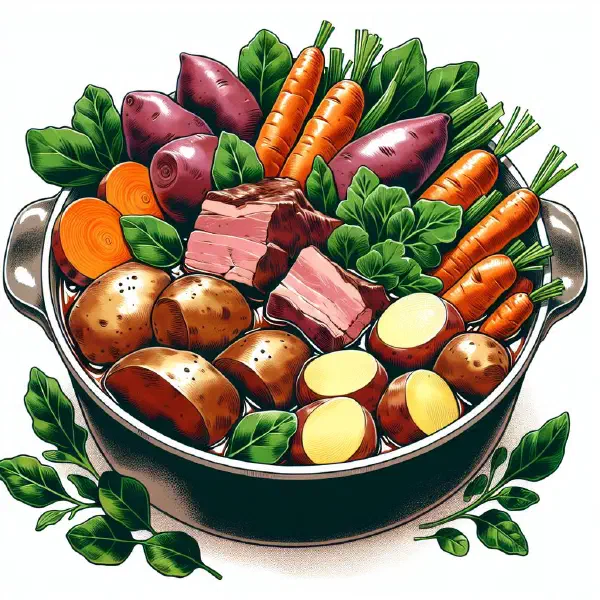
A hāngī is an occasion: a tangi, a birthday, a celebration. Meat and root vegetables go into the pit together and come out smoky and falling apart. The smell of a hāngī being opened is the thing people describe when they talk about it.
The recipe below is the domestic approximation, using a hot stone on a tray, which gets some of the way there.
Ingredients (serves 1–2)
- 450–900 g beef roasting joint
- 250 g potatoes
- 250 g carrots
- 250 g cauliflower
- 250 g onions
- 250 g peas
- 60 ml soy sauce
- 60 ml cider vinegar
- 60 ml olive oil
- 120 ml water
- 2 banana leaves
Shopping for the ingredients
Kūmara, the New Zealand sweet potato, belongs in a hāngī and is sold in some specialist shops. Pork, lamb and chicken are all traditional alongside beef. Banana leaves are a substitute for the harakeke flax and cabbage tree leaves used traditionally.
Preparing the dish
Cut the vegetables large; three hours of steam reduces everything. If you are doing the real thing, the fire needs to burn for three hours before the stones are ready, and the pit must be lined and sealed so no steam escapes.
Step-by-step instructions
- Lay the banana leaves crossways on a baking tray and pile the meat and vegetables into the middle.
- Whisk together the soy sauce, cider vinegar, olive oil and water, then pour the mixture over the meat and vegetables.
- Fold the leaves over into a sealed parcel, cover with a second baking tray and place a hot stone on top.
- Leave the dish to steam over a medium heat for 45 minutes, or bake at 160°C for 2 hours for a larger joint.
- Open the parcel at the table so everyone catches the aroma.
Gluten-free / lactose-free version
The dish contains no dairy. Soy sauce contains wheat; use tamari. Everything else is naturally gluten-free.
Tips for vegans and vegetarians
A vegetable hāngī with kūmara, potato, pumpkin and cabbage works well, since the method is steaming and the smoke does the flavouring. It is increasingly offered at commercial hāngī. Buttered kūmara is the simpler route.
More tips and tricks
Seal the parcel completely. The whole method depends on trapped steam and any gap dries the food out. Do not open it early. And if you ever get the chance to eat a real pit hāngī, take it, because the domestic version is an approximation and everyone involved knows it.
Adapting the recipe to your taste
Kūmara is the essential addition. Pork and lamb alongside the beef is standard. A stuffing of onion and herbs inside the meat is common.
Ingredient substitutions
Foil replaces banana leaves at some cost to flavour. A slow cooker gives a similar texture without any smoke. Any root vegetable belongs.
Drink pairing ideas
Lemon & Paeroa, the New Zealand soft drink. A Marlborough Sauvignon Blanc or a Central Otago Pinot Noir. Beer at a gathering.
Serving and presentation ideas
Open the parcel at the table, which is the point. Serve it on platters with rewena bread, the Māori potato sourdough, and let people help themselves. It is communal food and portioning it out individually misses the spirit.
A bit of history
Hāngī is an earth-oven method brought to Aotearoa by Polynesian voyagers and related to the Hawaiian imu and Samoan umu. It survived colonisation intact and remains central to Māori gatherings. It anchors New Zealand cuisine in a way that the pavlova argument with Australia never will.
More recipe ideas
Summary: Hangi
Hāngī is meat and root vegetables steamed underground over hot stones, or approximated in a sealed leaf parcel. Cut everything large, seal it completely, and open it at the table.