National Dish New Zealand: Scones with Jam and Cream (Recipe)
In this article
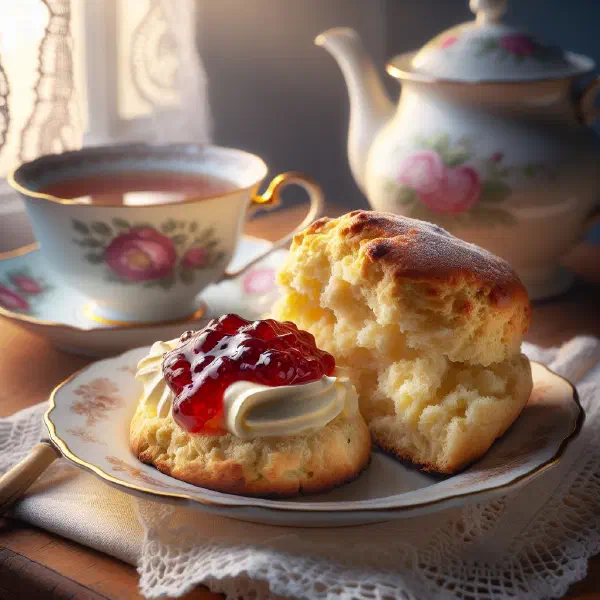
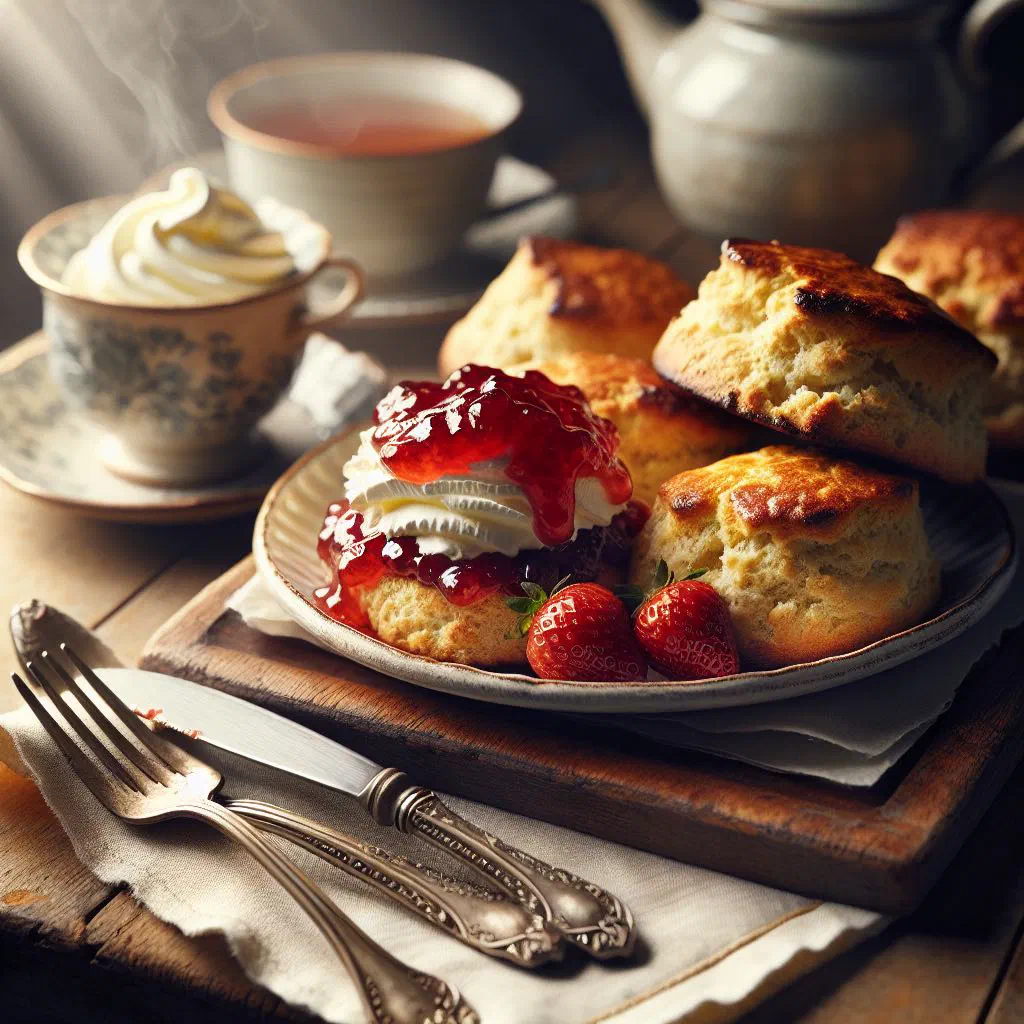
Few things say New Zealand afternoon tea quite like a tray of warm scones with jam and cream. Light, tender and barely sweet on their own, they come alive the moment you split them open and pile on strawberry jam and a generous spoonful of softly whipped cream. They take barely half an hour from bowl to table, which is exactly why so many Kiwi kitchens turn to them whenever visitors drop by.
About Scones with Jam and Cream
Scones are tender, fluffy little rounds of baked dough that began life in Britain but have long since been adopted wholeheartedly in New Zealand. This traditional treat is nearly always served with jam and freshly whipped cream, which turns something very simple into something quietly decadent. They are an absolute fixture of a classic Kiwi afternoon tea, and cafés and tearooms up and down the country keep their own versions on the counter. Best of all, they are genuinely easy to make and please adults and children alike.
Ingredients (serves 1–2)
- 200 g plain flour
- 50 g butter, cold and diced
- 2 tablespoons sugar
- 1 tablespoon baking powder
- 100 ml milk
- A pinch of salt
- Jam of your choice
- Freshly whipped cream
Shopping for the ingredients
Everything you need for scones is available in any supermarket. Pay attention to freshness when you shop, particularly with the milk and the butter, since both carry a lot of the flavour. For the jam, you can stick with a classic strawberry or branch out into more unusual choices such as kiwifruit or fig, the same fruit-forward spirit that runs through a Feijoa Crumble. Don’t overlook the cream either: it should be fresh and, ideally, unhomogenised so it whips up properly and tastes of something.
Preparing the dish
Before you start baking, get all your ingredients out and ready. Measure the quantities accurately, scones are forgiving in most respects but not in the flour-to-liquid ratio. Preheat the oven to 220°C so it is fully up to temperature by the time the tray goes in. It also pays to sift the flour together with the baking powder and sugar into a large bowl, which keeps the mixture lump-free and helps the scones rise evenly.
Step-by-step instructions
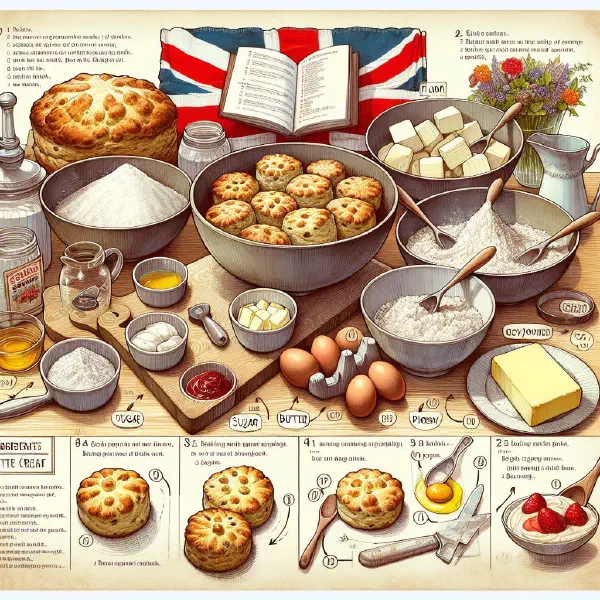
- Tip the flour, baking powder, sugar and salt into a bowl and mix well.
- Add the cold butter and rub it into the flour with your fingertips until the mixture looks like coarse crumbs.
- Gradually stir in the milk until a smooth, soft dough comes together.
- Roll the dough out on a floured surface to about 2–3 cm thick and cut out rounds with a cutter.
- Place the scones on a lined baking tray and bake for 12–15 minutes, until golden brown.
Gluten-free / lactose-free version
To make scones gluten-free, simply swap the plain flour for a good gluten-free blend. Check that everything else is gluten-free too, especially the baking powder and the jam. For a lactose-free batch, use lactose-free milk and a plant-based butter. Neither substitution costs you much in flavour, and both mean everyone at the table can help themselves.
Tips for vegans and vegetarians
Vegan scones are perfectly achievable with a couple of changes. Use a plant-based margarine or coconut oil in place of the butter, and swap the milk for oat or almond milk. These give you a very similar crumb and taste. Choose a jam made without gelatine, and top with a whippable coconut or oat cream to keep the whole thing vegan from start to finish.
More tips and tricks
For really fluffy scones, rub the butter thoroughly into the flour until the mixture is even throughout. Do not overwork the dough once the milk goes in. That is the fastest way to lose the lightness you are after. Let the scones cool briefly after baking, but serve them warm so the cream softens slightly against the heat. You can also experiment with warming spices or additions such as chocolate chips or dried fruit, much as you would in a Banana Cake.
Adapting the recipe to your taste
The scone recipe is endlessly adaptable and easy to bend to whatever you fancy. Add cinnamon or nutmeg for a festive aroma, or fold in fresh herbs and grated cheese for a savoury version. Fruit such as blueberries or apples, or a handful of nuts, works beautifully too. There is really no limit here. You can build a scone that suits your palate exactly.
Ingredient substitutions
If you find yourself short of something, there are plenty of workarounds. Instead of plain flour you can use almond flour or a blend of gluten-free flours. Sugar can be replaced with honey or agave syrup, which lends the scones a gentler sweetness. Other fats work as well: coconut oil, for instance, brings a subtle tropical note to the crumb.
Drink pairing ideas
Scones sit happily alongside a wide range of drinks. The classic partner is a cup of black tea, whose tannins cut cleanly through the cream. Herbal teas offer a lighter, refreshing alternative, while fresh fruit juices brighten the whole plate. If you want something more indulgent, try a frothy latte or a mug of hot chocolate, both of which play well against the sweetness of the jam.
Serving and presentation ideas
Presentation turns scones into an occasion. Serve them on a handsome plate or a tiered cake stand for a properly elegant look. Scatter fresh berries around them and set out small jugs or bowls of cream and jam alongside so guests can build their own. It is a simple arrangement, but an inviting one, the same generous spirit you’d bring to a Pavlova at the end of a meal.
A bit of history
Scones have a history stretching back to the 16th century. They began as plain country fare, something that could be thrown together quickly with very little. Over the centuries they evolved into a symbol of British tea culture and a fixture at family gatherings. In New Zealand they took on a life of their own, becoming central to afternoon tea and to the country’s café culture, a cornerstone of New Zealand cuisine that sits comfortably beside home-baked staples like Pikelets with Butter and Jam.
More recipe ideas
Summary: Scones with Jam and Cream
With these scones you can put a small piece of New Zealand culture on your own table. They are quick to make, easy to vary and suited to almost any moment, a special occasion or simply a snack between meals. Let your imagination run and enjoy the many flavours a good scone can carry. Once you have made them a couple of times, you will find yourself reaching for the recipe whenever someone knocks on the door.