National Dish Niger: Jambon de Boeuf (Recipe)

In this article
Discover Jambon de Boeuf, a slow-cooked beef dish that captures the warm, generous spirit of Niger’s cuisine. Tender cuts of beef are gently simmered for hours with onions, garlic and fragrant bay leaves until the meat almost falls apart. Rich, comforting and made for sharing, this is the kind of dish that draws family and friends around the table. Bring a taste of West Africa into your own kitchen.
About Jambon de Boeuf
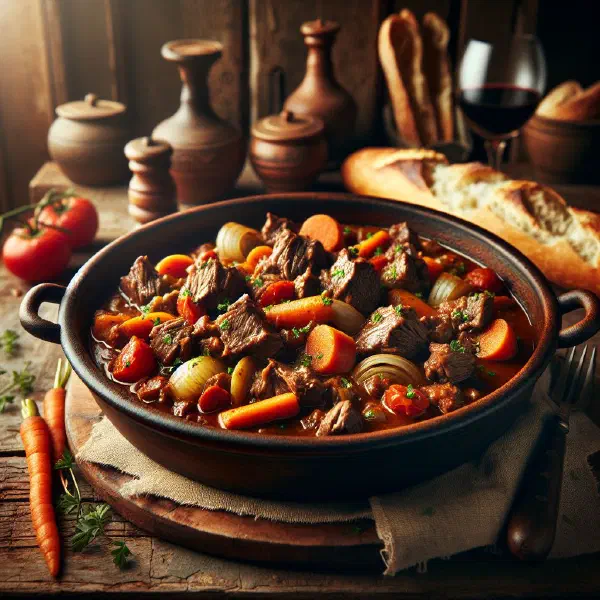
Jambon de Boeuf is a traditional dish rooted in the home cooking of Niger. It is built almost entirely around beef, which is cooked slowly over several hours to deepen the flavours and turn the meat wonderfully tender. It is usually served with a selection of vegetables and its own broth, which round out the dish beautifully. In Niger, preparing Jambon de Boeuf is a social occasion, bringing people together over a shared pot.
Ingredients (serves 1–2)
- 300 g beef (such as shoulder or leg)
- 2 onions, diced
- 2 cloves of garlic, chopped
- 2 carrots, sliced
- 1 pepper, diced
- 2–3 bay leaves
- Salt and pepper to taste
- 1 litre vegetable stock
- 1 tablespoon oil, for frying
Shopping for the ingredients
When shopping for the ingredients for Jambon de Boeuf, it is important to choose fresh, good-quality beef. Visit a local butcher or a farmers’ market to find the best cuts. Take equal care with the vegetables, as fresh produce has a real impact on the aroma and quality of the finished dish. Where you can, reach for seasonal and regional ingredients for the best possible flavour.
Preparing the dish
Preparing Jambon de Boeuf takes a little time and patience, but the reward is well worth it. Start by cutting the beef into evenly sized pieces so it cooks through at the same rate. Next, get the vegetables and seasonings ready, as these give the dish its distinctive character. Bear in mind that marinating the meat in spices overnight intensifies the flavours and makes the end result even more satisfying.
Step-by-step instructions
- Heat the oil in a large pot and brown the beef on all sides until golden.
- Add the onions and garlic and fry until softened.
- Stir in the carrots and pepper and mix well.
- Pour in the vegetable stock, add the bay leaves and season with salt and pepper.
- Cover the pot and let the dish simmer gently over low heat for around 2 to 3 hours.
- Once the meat is tender, lift it out of the pot and slice it thinly.
- Serve the Jambon de Boeuf with the vegetables and broth.
Gluten-free / lactose-free version
Jambon de Boeuf is naturally gluten-free and lactose-free, as long as you make sure the stock and seasonings contain no gluten-based ingredients. Use a pure vegetable stock to keep the dish clean and simple. It is also worth checking that any oils and spice brands you use are suitable for your needs.
Tips for vegans and vegetarians
For vegan and vegetarian alternatives, you can swap the beef for tofu or seitan and use a plant-based stock in place of the vegetable broth. The spices and vegetables can be adjusted further to achieve the flavour you are after. Adding pulses such as chickpeas or lentils makes the dish satisfyingly high in protein. In this way vegans and vegetarians can enjoy a hearty meal too, much like a warming Soupe de Haricots.
More tips and tricks
A few tips and tricks can refine your Jambon de Boeuf even further. Let the meat come up to room temperature before browning so it cooks more evenly. Make sure there is always enough liquid in the pot so the meat does not dry out as it simmers. You can also add a splash of red wine at the start to intensify the flavour and create a rich, glossy sauce.
Adapting the recipe to your taste
Another great feature of Jambon de Boeuf is its versatility. Depending on your personal taste, you can adjust the spices and the choice of vegetables. If you like things hotter, add a few chillies or a dash of hot sauce. For a sweeter note, a little honey or sugar helps balance the flavours. These small tweaks let anyone create a dish that suits their own preferences perfectly.
Ingredient substitutions
Sometimes not every ingredient is easy to find. In those cases there are plenty of alternatives to fall back on. If fresh beef is not available, frozen or vacuum-packed meat works just as well. In place of carrots, sweet potatoes or squash lend the dish a lovely twist. And if a particular spice is missing, many can be swapped for something similar to reach the flavour you want, the same approach that works well for a hearty Ragout de Chèvre.
Drink pairing ideas
For a truly memorable meal, the choice of drink matters just as much as the food. A classic dish like Jambon de Boeuf pairs wonderfully with red wines or fruity cocktails. For those who prefer alcohol-free options, a fresh fruit smoothie or an alcohol-free beer makes a lovely accompaniment.
Serving and presentation ideas
Presentation can have a real impact on how a dish is received. Serve the Jambon de Boeuf on a large platter and garnish it with fresh herbs such as parsley or coriander. Use colourful vegetables to make the dish visually appealing. Adding a small bowl of the broth alongside creates an inviting spread and encourages guests to dig in and enjoy.
A bit of history
Jambon de Boeuf is more than just a dish; it is part of Niger’s culture. It is often prepared for festivals, weddings and other special occasions, bringing family and friends together. The way it is made has evolved over the years, giving rise to many different regional variations. These stories and traditions turn every serving into a special experience, in the same spirit as celebratory grilled Suya.
More recipe ideas
Summary: Jambon de Boeuf
Jambon de Boeuf is a fine example of Niger cuisine, winning people over with its deep flavours and the many ways it can be prepared. With a careful choice of ingredients and a little patience during cooking, you end up with a dish that is both simple and celebratory. Give it a go and discover the history and unique taste of Niger’s cuisine.