National Dish Nigeria: Fufu with Egusi Soup (Recipe)
In this article
Meet Fufu with Egusi Soup, one of Nigeria’s most celebrated pairings and a true showcase of the country’s rich culinary heritage. Soft, stretchy fufu made from yam or cassava is scooped straight into a thick, savoury soup thickened with ground melon seeds. The result is hearty, deeply nourishing and full of warmth, the kind of meal that satisfies both body and soul. Bring the flavours of a West African kitchen straight to your own table.
About Fufu with Egusi Soup
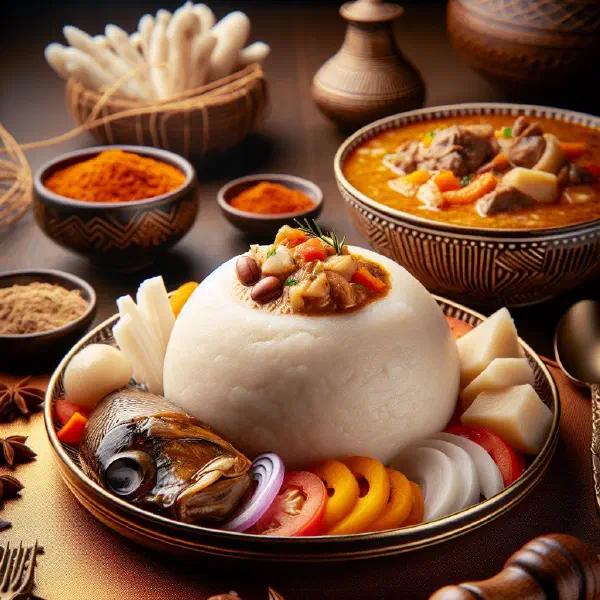
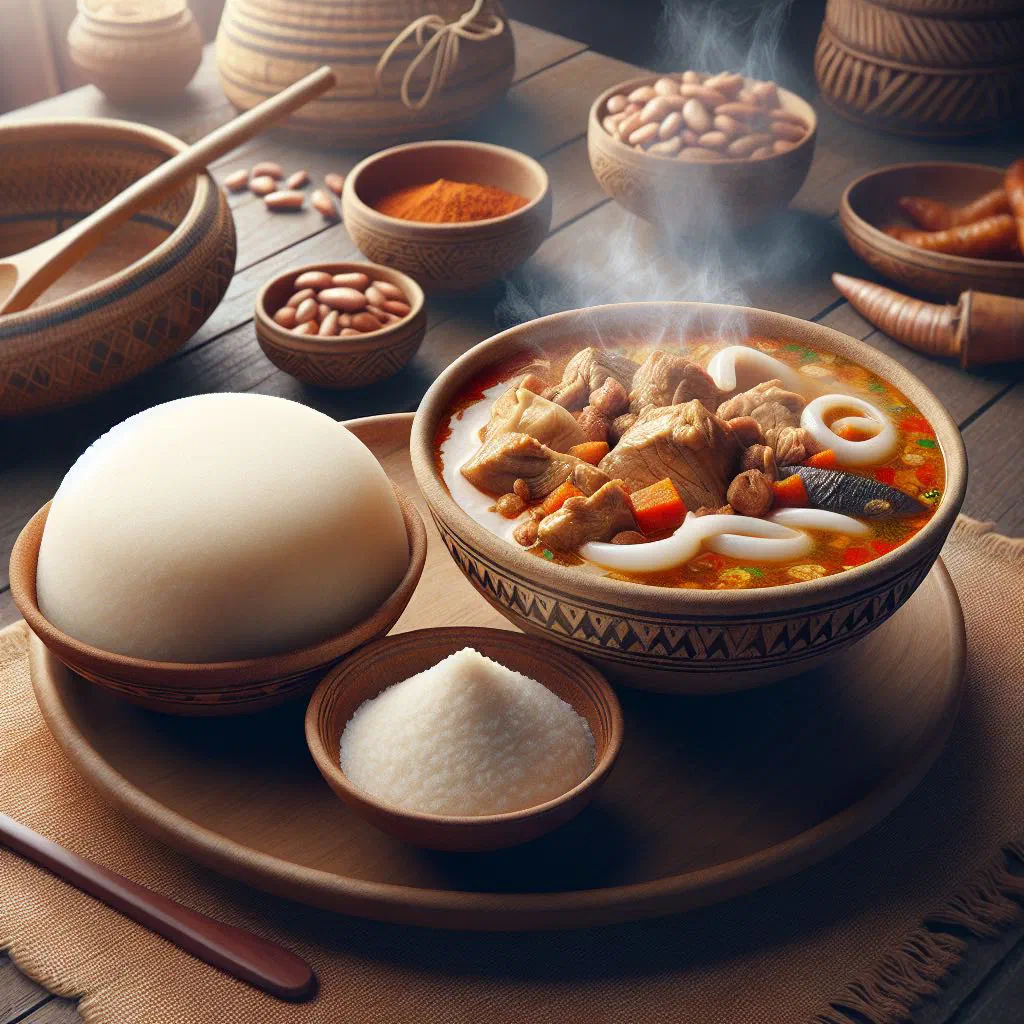
Fufu and egusi soup are two of Nigeria’s best-known dishes, standing for the variety and richness of the country’s cooking. Fufu is a traditional staple made from different starches, typically yam or cassava, with a distinctive, springy texture that makes it the perfect partner for sauces and soups. Egusi soup, enriched with ground melon seeds, brings a savoury, spiced depth and is prized for its high nutritional value. Together they form a nourishing and delicious national dish that pleases the palate as much as it comforts the soul.
Ingredients (serves 1–2)
- 250g fufu (yam or cassava)
- 1 cup egusi seeds (ground)
- 2 cups vegetable stock
- 1 onion, chopped
- 2 tomatoes, chopped
- 3–4 green chillies (to taste)
- Salt and pepper, to taste
- 2 tablespoons palm oil or groundnut oil
Shopping for the ingredients
When shopping for fufu and egusi soup, it is worth seeking out fresh, good-quality produce. Many of the ingredients you need are available in Asian or African grocery shops, especially the melon seeds. When buying fresh vegetables, look for onions and tomatoes that are ripe and firm. It is also a good idea to hunt down palm oil or groundnut oil in health-food shops or well-stocked supermarkets, as these oils play a central role in the flavour of the egusi soup.
Preparing the dish
Before you start cooking fufu and egusi soup, prepare all your ingredients thoroughly. Begin by peeling the yam or cassava for the fufu and cutting it into small pieces. These should then be boiled in water until soft. While the fufu cooks, prepare the onion, tomatoes and chillies for the egusi soup by chopping them and setting them aside. A well-organised kitchen makes the cooking easier and keeps every step running smoothly.
Step-by-step instructions
- Boil the yam or cassava in a large pan of water until soft.
- Meanwhile, heat the oil in another pan and add the chopped onion. Fry until golden brown.
- Add the chopped tomatoes and chillies and cook for about 5 minutes.
- Sprinkle in the ground egusi seeds and stir well so everything combines.
- Pour in the vegetable stock and let the soup simmer until it thickens. Season with salt and pepper.
- Once the fufu is cooked, drain it and pound it with a wooden pestle or by hand until smooth.
- Serve the fufu alongside the egusi soup and enjoy your Nigerian feast.
Gluten-free / lactose-free version
Fufu and egusi soup are naturally gluten-free and lactose-free, since the main ingredients come from plant sources. If you want to be certain your dish contains no traces of gluten, use only gluten-free products and check the labels of every ingredient. The combination of fufu and egusi is therefore ideal for people with different dietary needs who still want to enjoy authentic Nigerian cooking.
Tips for vegans and vegetarians
For vegans and vegetarians, fufu and egusi soup are easy to adapt. Instead of palm oil or groundnut oil, you can use other plant-based oils such as coconut or olive oil. Make sure the stock you use contains no animal products by reaching for a vegetable stock. These small adjustments ensure the dish is delicious and suited to a wider audience.
More tips and tricks
To get the best result, keep a few tips in mind when making fufu and egusi soup. You can adjust the consistency of the fufu by using more or less water while it cooks. For a more intense flavour, enrich the egusi soup with spices such as ground crayfish or extra pepper. Cooking with fresh herbs, such as spinach or bitterleaf, can also add new dimensions of flavour. Experiment with different ingredients to create your perfect dish.
Adapting the recipe to your taste
There are many ways to tailor this dish to your personal preferences. If you like a milder flavour, reduce the chillies in the egusi soup or leave them out altogether. For a more protein-rich version, add cooked beans or leafy greens to the soup. Simply adjust the seasoning and ingredients so the dish suits your taste perfectly.
Ingredient substitutions
Nigerian cooking offers a number of alternatives should certain ingredients prove hard to find. In place of egusi seeds, you can use ground almonds or cashews to achieve a similar texture. For the fufu, sweet potatoes or even rice work well if you want to explore different textures and flavours, much as you would with a mound of Pounded Yam. Experimenting with substitutes can bring you intriguing new flavours and lift the dish to another level.
Drink pairing ideas
To round off your Nigerian menu, you might serve a few traditional drinks. Zobo, a hibiscus-based drink, brings fruity notes and a refreshing edge that pairs beautifully with the hearty flavours of fufu and egusi soup. A fresh fruit juice, such as pineapple or mango, would also be an excellent choice. For those who enjoy alcoholic drinks, a Nigerian beer or a light red wine that highlights the spices of the dish works well.
Serving and presentation ideas
An attractive presentation can greatly enhance the dining experience. Serve fufu and egusi soup in traditional bowls, often made of clay or wood. Garnish the soup with fresh herbs or wholesome sides such as avocado to add a splash of colour. Using colourful table settings or napkins can also lend the meal a festive flair that appeals to your guests.
A bit of history
Fufu and egusi soup have deep roots in Nigerian culture and history. Fufu is a staple food found across many African countries, where it often accompanies stews and sauces. Egusi soup has its origins in the traditions of the peoples of West Africa, where melon seeds are a common ingredient. These dishes reflect the social and cultural influences of the region and are a central part of Nigerian identity, a proud cornerstone of Nigerian cuisine.
More recipe ideas
Summary: Fufu with Egusi Soup
Fufu and egusi soup are a flavoursome dish and an expression of Nigeria’s rich cultural traditions. The combination of the tender texture of the fufu and the intense aromas of the egusi soup makes this dish a genuine treat. With a wide range of ways to adapt and combine it, you can easily tailor the recipe to your own preferences and dietary needs. Let the exciting world of Nigerian cooking inspire you, and enjoy the variety and richness that fufu and egusi soup have to offer.