National Dish Norway: Brunost (Recipe)

In this article
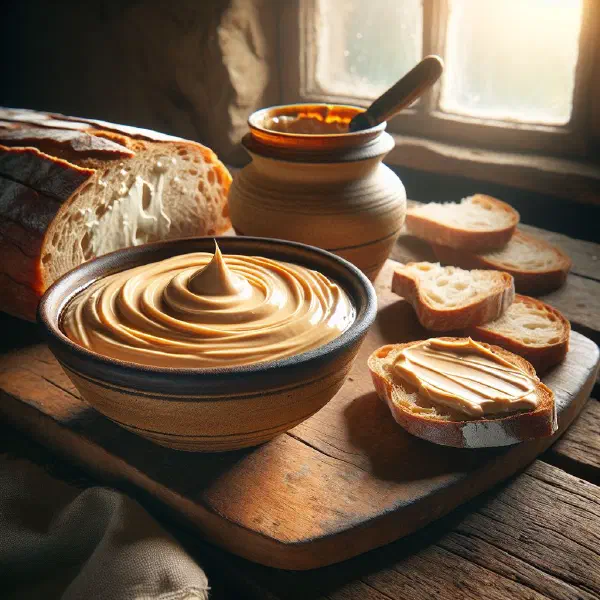
Say hello to Brunost, the amber-coloured caramel cheese that sits on almost every Norwegian breakfast table. Slowly simmered until the milk sugars turn deep and toffee-like, it tastes nothing like the cheeses most of us grew up with. Think fudge with a savoury edge and a gentle, nutty finish. Shaved into thin ribbons over warm bread or crispbread, it is the sweetest introduction to Nordic cooking you could wish for, and it is surprisingly straightforward to make at home.
About Brunost
Brunost, known abroad as Norwegian brown cheese, is one of the quiet treasures of the Nordic kitchen. It is made from a blend of goat’s and cow’s milk, and it owes its characteristic sweetness to hours of patient boiling, during which the natural milk sugars caramelise. The result has a smooth, fudgy consistency and a rich, faintly nutty flavour that has made it a fixture at breakfast. In Norway it is most often served in wafer-thin slices on crisp bread, or alongside fruit and nuts for a touch of everyday elegance.
Ingredients (serves 1–2)
- 1 litre whole milk
- 200 ml double cream
- 300 g sugar
- 1 teaspoon salt
- 2 tablespoons lemon juice
- 1 teaspoon vanilla extract
Shopping for the ingredients
When shopping for brunost, the quality of the milk and cream matters more than anything else. Fresh, full-fat whole milk makes a noticeable difference to the finished cheese, and organic dairy produced without additives is well worth seeking out. For the sugar, choose an unrefined or raw sugar if you can. It deepens the caramel notes and gives the cheese a rounder flavour. Everything else is standard supermarket fare.
Preparing the dish
Preparing brunost is uncomplicated, but it does ask for patience. Clear and clean your work surface first, and have your pans and utensils within easy reach before you begin. The key is to heat the milk slowly, stirring at regular intervals so nothing catches on the base of the pan. A steady, even heat is what allows the sugars to caramelise properly rather than scorching, so resist the temptation to hurry things along.
Step-by-step instructions
- Pour the milk and cream into a large, heavy-based pan and bring them slowly to the boil.
- Add the sugar and salt and stir well until the sugar has completely dissolved.
- Turn the heat right down and let the mixture simmer for about 1½ to 2 hours, stirring from time to time.
- Once the mixture has thickened noticeably, stir in the lemon juice and the vanilla extract.
- Pour into a mould and leave to cool until the cheese has set firm.
Gluten-free / lactose-free version
Making brunost gluten-free or lactose-free is refreshingly easy. To avoid lactose, simply use lactose-free milk and cream. Both are stocked by most supermarkets and behave much like the originals in both taste and texture. The recipe contains no wheat at all, so it is naturally gluten-free; you need only make sure any bread you serve alongside it is too. That makes this a very welcoming recipe for anyone with intolerances.
Tips for vegans and vegetarians
Vegans and vegetarians can get close to the texture and sweetness of traditional brunost with a few sensible swaps. In place of cow’s and goat’s milk, plant-based alternatives such as almond or coconut milk work nicely, especially when combined with coconut sugar to build that caramel depth. Bear in mind that both the flavour and the set will differ somewhat from the dairy original, so it pays to experiment with the quantities until you find the balance you like.
More tips and tricks
A few small habits make all the difference to a good brunost. A low, slow heat is the single most important factor: it prevents scorching and gives you an even, well-developed flavour. Try not to stir more than you need to once the mixture has thickened, as excessive agitation works against a smooth texture. And do not rush the cooling stage, the cheese needs proper time in its mould to set, and a night in the fridge is rarely wasted. The same unhurried approach rewards you when making Karamellpudding.
Adapting the recipe to your taste
Brunost takes happily to personal tweaks. Swapping in brown sugar for white gives a richer, more molasses-like result, while warm spices such as cinnamon or cardamom add a lively Nordic accent, the same aromatics that make Kanelboller so hard to resist. If you prefer something fruitier, a spoonful of puréed berries stirred in towards the end of cooking makes for an interesting variation. Adjust the salt too: a slightly bolder pinch sharpens the contrast with all that sweetness.
Ingredient substitutions
If you cannot lay hands on a particular ingredient, there are workable alternatives. Honey or agave syrup can stand in for some of the sugar, lending a different sweetness and a little extra character. Should the mixture refuse to firm up, a small amount of gelatine or a plant-based setting agent will help it along. Experimenting with different sweeteners often turns up unexpected and rather pleasant results, much as it does with Blabaersyltetoy.
Drink pairing ideas
There is plenty of scope when it comes to drinks to serve with brunost. A fresh, fruity smoothie provides a bright contrast to all that caramel richness, while a mild tea or a cup of strong black coffee cuts through the sweetness beautifully, the classic Norwegian pairing. For something more indulgent, hot chocolate or a flavoured coffee turns a simple slice of cheese into a small occasion. A mulled Gløgg works well on cold winter afternoons.
Serving and presentation ideas
Presentation can lift the brunost experience considerably. Serve the cheese on an attractively dressed board with fresh fruit, nuts and crisp bread, sliced thinly with a cheese slicer so the ribbons curl. An artful arrangement not only whets the appetite but creates a genuinely festive atmosphere. Use small bowls for the accompaniments to bring out the contrast of colours and textures, and consider adding warm Vafler for the full Norwegian effect.
A bit of history
The story of brunost reaches back to the 19th century, when Norwegian farmers looked for ways to use up surplus whey and milk. Originally it was a means of preserving dairy for longer while boosting its nutritional value, a practical solution born of a hard climate. Today it is a symbol of Norwegian culture, eaten daily at home and increasingly sought out abroad. As a traditional staple it offers a genuine window onto rural life and the wider traditions of Norwegian cuisine.
More recipe ideas
Summary: Brunost
In short, brunost is far more than a curious sweet cheese. It is a slice of Norwegian tradition in every bite. Making this caramel cheese at home takes a measure of patience, but it repays the effort with a flavour you will find nowhere else. Fold it into creative bakes or bring it out as part of a festive spread, brunost makes any meal feel a little more special. Let this Nordic highlight inspire you and give it a go in your own kitchen.