National Dish Palau: Coconut Taro Pudding (Recipe)
In this article
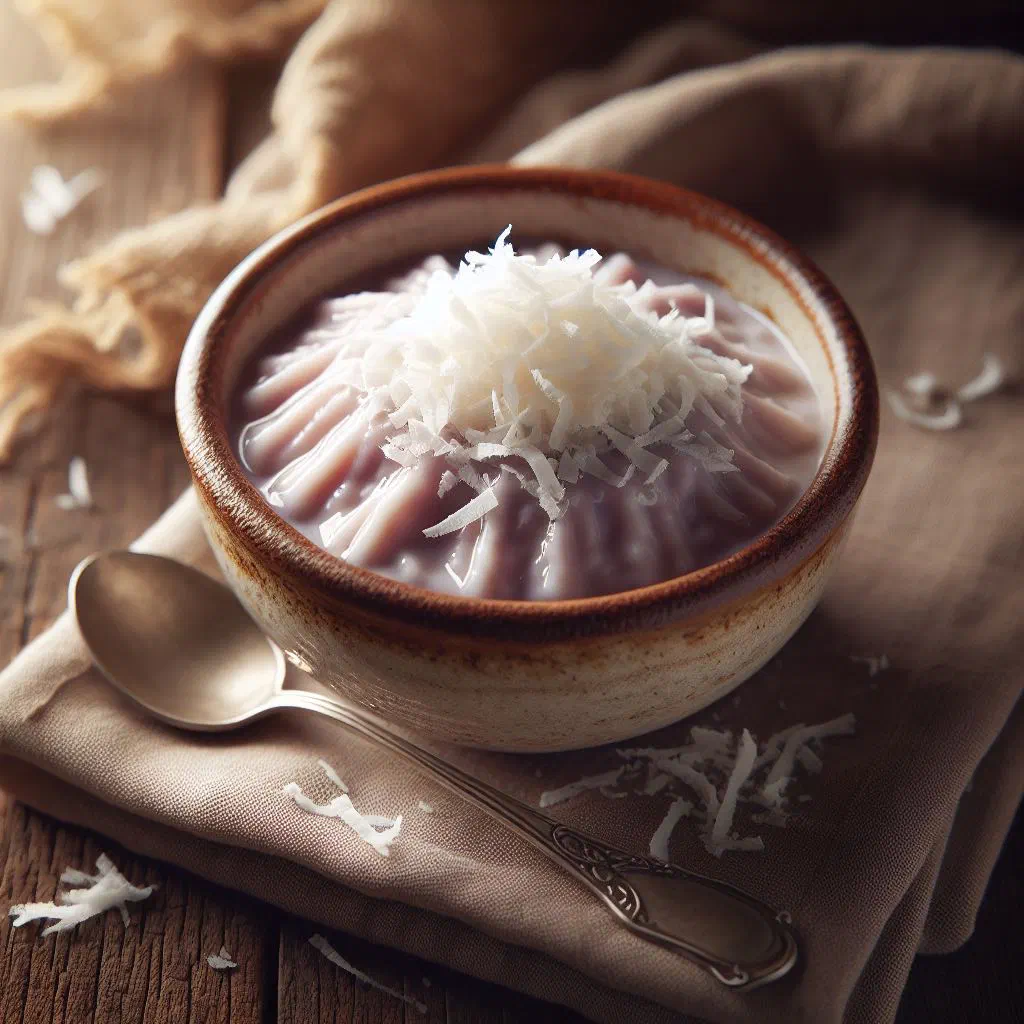
Coconut Taro Pudding is taro mashed with coconut milk and a little sugar, chilled and eaten cold. Taro is Palau’s staple, grown in irrigated patches tended almost entirely by women, and this is the sweet end of what it does.
About Coconut Taro Pudding
Palau is an archipelago of several hundred islands in the western Pacific with a population of under 20,000. Taro cultivation there is a highly organised traditional practice, and taro patches pass down the female line.
The pudding is simple: boiled taro, coconut milk, sugar. It is somewhere between a dessert and a snack, and it is served cold.
Ingredients (serves 1–2)
- 200 g taro
- 400 ml coconut milk
- 3 tablespoons sugar (to taste)
- 1 teaspoon vanilla extract
- A pinch of salt
- Fresh fruit, to garnish
Shopping for the ingredients
Taro is sold in Asian, African and Caribbean grocers, and frozen taro is a reasonable shortcut. It must be cooked thoroughly; raw taro irritates the mouth and throat. Full-fat coconut milk.
Preparing the dish
Peel the taro under running water or wear gloves, since the raw corm irritates skin. Cook it until completely soft, which takes longer than potato. Mash it while hot.
Step-by-step instructions
- Put the peeled and diced taro into a pan of water and bring to the boil. Cook for 15–20 minutes until the taro is tender.
- Drain the cooked taro and tip it into a bowl. Mash well with a fork or a masher.
- Add the coconut milk, sugar, vanilla extract and salt to the taro and mix thoroughly.
- Spoon the mixture into small bowls or glasses and chill in the fridge for at least 2 hours.
- Before serving, garnish with fresh fruit and enjoy.
Gluten-free / lactose-free version
Taro and coconut milk contain no gluten and no dairy. The pudding is naturally suitable for both restrictions.
Tips for vegans and vegetarians
It is vegan as written. Taro, coconut and sugar, nothing else. It is one of the simplest naturally vegan desserts anywhere.
More tips and tricks
Cook the taro until it is genuinely soft, which takes longer than you expect. Wear gloves when peeling. And mash it hot, since cooled taro goes gluey and will not smooth out.
Adapting the recipe to your taste
Pandan leaf infused in the coconut milk is a Pacific habit worth borrowing. Purple taro gives a striking colour. Toasted coconut on top adds texture.
Ingredient substitutions
Sweet potato or purple yam make ube halaya, which is the Filipino relative and reflects Palau’s Philippine connections. Coconut cream is richer. Honey replaces sugar.
Drink pairing ideas
Fresh coconut water. Mango coconut smoothie doubles down. Black coffee cuts the sweetness.
Serving and presentation ideas
Serve it cold in small bowls or glasses with fresh fruit on top. It is rich, so portions are modest. It keeps two days in the fridge.
A bit of history
Palau’s taro patches are a documented traditional agricultural system, and the knowledge of managing them is passed between generations of women. Rising sea levels and saltwater intrusion now threaten those patches directly, which makes taro cultivation a matter of cultural survival as much as food. It anchors Palauan cuisine.
More recipe ideas
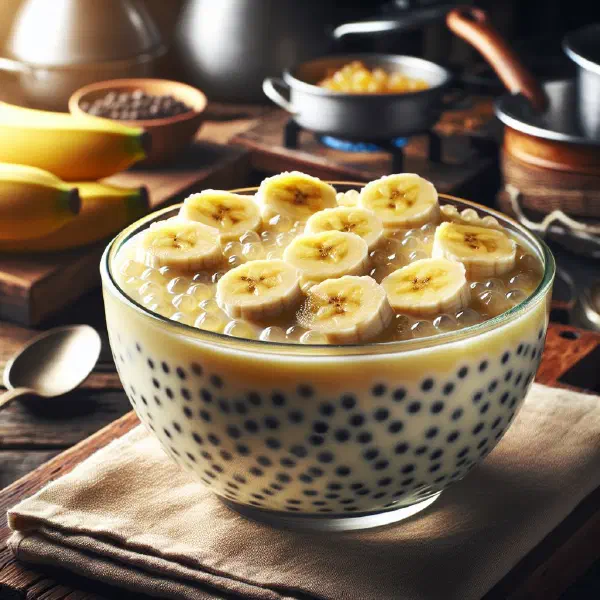
- Banana Tapioca
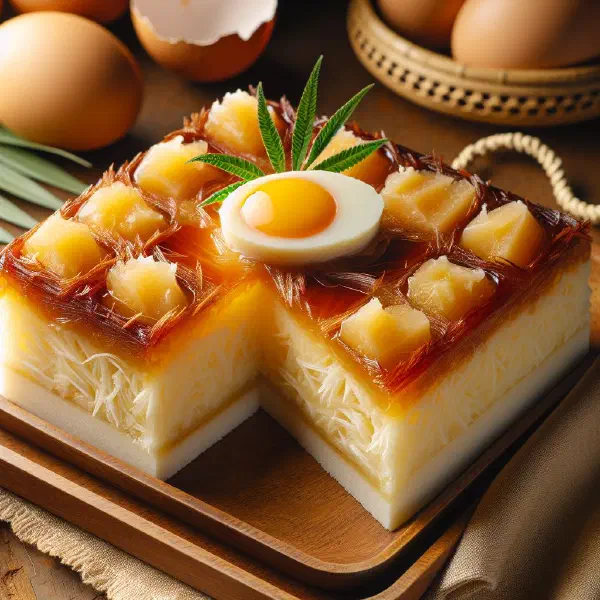
- Cassava Cake
- Coconut Pancakes
- Roasted Breadfruit with Coconut Cream
- Steamed Taro with Coconut Sauce
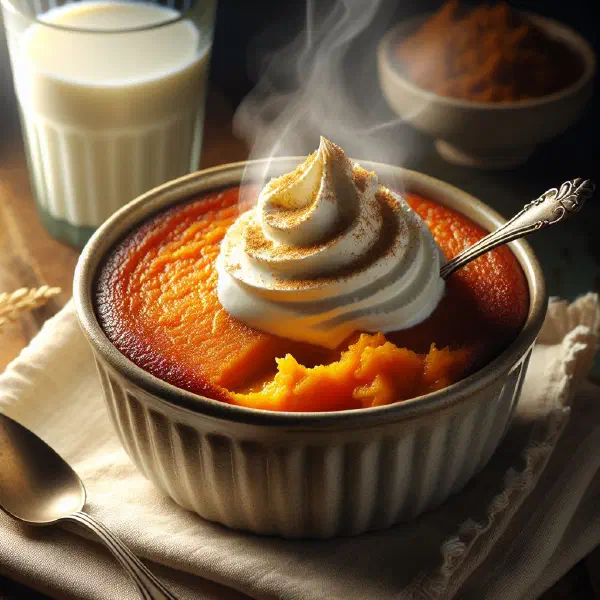
- Sweet Potato Pudding
Summary: Coconut Taro Pudding
Coconut taro pudding is boiled taro mashed with coconut milk and sugar, chilled and served cold. Cook the taro through, wear gloves peeling it, and mash it hot.