National Dish Papua New Guinea: Taro Leaf Soup (Recipe)
In this article
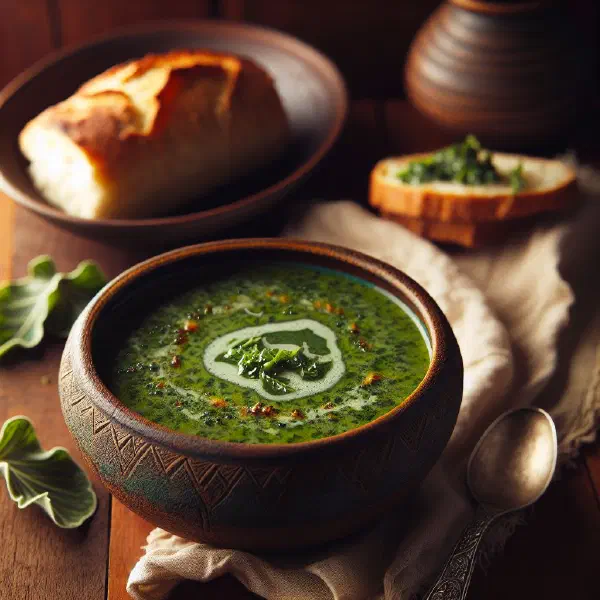
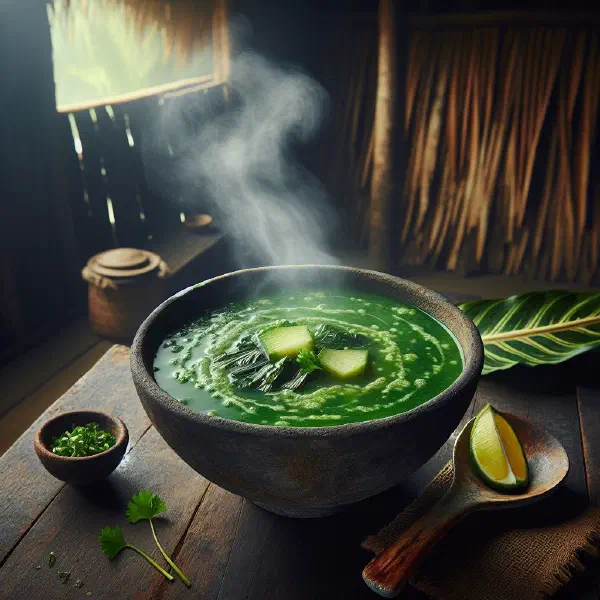
Meet Taro Leaf Soup, a comforting bowlful that carries the warmth of Papua New Guinea’s tropical gardens. Tender taro leaves melt down into a silky, mineral-rich green broth, while coconut milk rounds everything off with a gentle sweetness. Ginger, garlic and a final squeeze of lime keep it lively rather than heavy. It is nourishing, quick to put together and every bit as good on a chilly evening as it is under a tropical sun.
About Taro Leaf Soup
Taro Leaf Soup is a traditional dish from Papua New Guinea that captures the hearty, generous flavours of this tropical region. The soup is built on tender taro leaves, which are rich in vitamins and minerals and cook down to a wonderfully creamy texture. Combined with coconut milk and a handful of aromatic spices, the result is a balanced dish that manages to be both filling and genuinely good for you. Perfect for a relaxed evening in, it brings a touch of island cooking to your table.
Ingredients (serves 1–2)
- 200 g fresh taro leaves
- 1 tin coconut milk (400 ml)
- 1 onion, finely chopped
- 2 cloves of garlic, crushed
- 1 piece of ginger (about 2 cm), grated
- 500 ml vegetable stock
- 1–2 tablespoons vegetable oil (coconut oil works well)
- Salt and pepper to taste
- Juice of one lime
- Fresh herbs to garnish (coriander, for example)
Shopping for the ingredients
When shopping for taro leaf soup, it is worth choosing good-quality, fresh produce to get the best possible flavour. Taro leaves are available from Asian grocers or at weekly markets. Look for leaves that are fresh and crisp, with no brown patches. The remaining ingredients, the coconut milk and the fresh vegetables in particular, should also be of decent quality, as they carry much of the soup’s aroma.
Preparing the dish
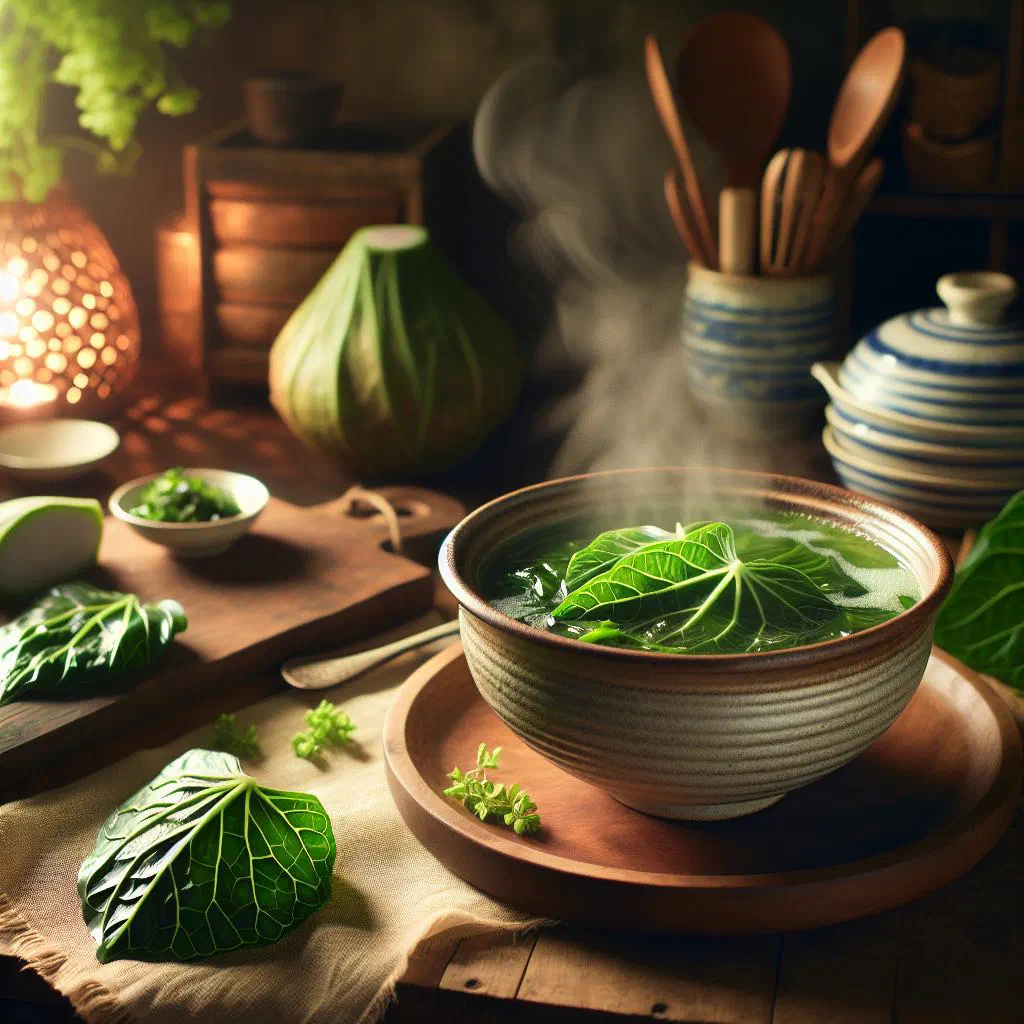
Before you start cooking, wash the taro leaves thoroughly to remove any grit or stray insects. Cut the leaves into rough pieces; they collapse considerably as they cook. The onion, garlic and ginger should be prepared too, either finely chopped or grated. These small steps make sure the flavours blend properly while the soup simmers away, much as they do in a Pumpkin And Coconut Soup.
Step-by-step instructions
- Heat the vegetable oil in a large pan over a medium heat.
- Add the chopped onion and fry until soft and lightly golden.
- Stir in the crushed garlic and grated ginger and cook for 1–2 minutes, until fragrant.
- Add the fresh taro leaves to the pan and stir well so they are coated in the aromatics.
- Pour in the vegetable stock and the coconut milk and bring the soup to the boil.
- Let it simmer for around 15–20 minutes, until the taro leaves are tender.
- Season to taste with salt, pepper and lime juice.
- Serve hot, garnished with fresh herbs.
Gluten-free / lactose-free version
Taro leaf soup is naturally gluten-free and lactose-free when made with the ingredients above. Do check the vegetable stock when you buy it, as some brands contain wheat derivatives. Coconut milk is an excellent lactose-free alternative in its own right and gives the soup its creamy consistency without any dairy at all. With these simple checks, the recipe suits anyone with those dietary restrictions.
Tips for vegans and vegetarians
For vegans and vegetarians, taro leaf soup is an outstanding choice: it is entirely plant-based and packed with nutrients. To make it more substantial, add extra vegetables such as carrots, peppers or sweet potato. These not only broaden the flavour but bring more colour to the bowl. For additional protein, stir in chickpeas or lentils, the same trick that works nicely alongside a Boil Up With Greens.
More tips and tricks
A few pointers make this vegan soup even easier. Use fresh rather than frozen taro leaves for the best flavour. If the coconut milk tastes too dominant, simply adjust the ratio of stock to coconut milk. Experiment with different spices, such as turmeric or cumin, to discover new directions. A dash of chilli adds welcome heat if you like things on the spicier side.
Adapting the recipe to your taste
Taro leaf soup adapts readily to personal preference. If you prefer it less creamy, reduce the amount of coconut milk. For extra texture and bite, scatter over toasted nuts or seeds. The dish can also be varied according to what is in season and what you happen to enjoy. Play around with the herbs and the add-ins until you land on your perfect version.
Ingredient substitutions
If taro leaves are hard to come by, spinach or chard make a workable stand-in, though they are less authentic. Coconut milk can be swapped for almond milk or another plant-based alternative, which will change the character of the soup noticeably. The vegetable stock can equally be replaced with a meat-based one if you prefer. Substitutions like these mean everyone can enjoy the soup, whatever is available locally.
Drink pairing ideas
Plenty of drinks sit well with taro leaf soup and complement its gentle flavours. Fresh coconut water is refreshing and entirely natural. Try a Kulau Drink for the traditional version. A lightly chilled white wine or a fruity mocktail with lime and mint works beautifully too. For an alcohol-free pairing, a homemade lemonade or a lemongrass tea makes a pleasant companion.
Serving and presentation ideas
Thoughtful presentation lifts taro leaf soup considerably. Serve it in good bowls with fresh herbs scattered over the top to add colour and lift. An extra wedge of lime on the side provides a lovely contrast. Consider putting out small dishes of accompaniments, toasted nuts, or hot chillies, so everyone can help themselves. A little creativity in the serving makes the whole meal feel more inviting.
A bit of history
Taro leaf soup has deep roots in the culture of Papua New Guinea, where the taro plant is a staple food. The plant appears in countless dishes and is a symbol of local agriculture. The soup reflects the everyday eating habits of the population and their close relationship with the land and their use of seasonal ingredients. In recent years the dish has gained international attention as a healthy and delicious ambassador for Papua New Guinean cuisine.
More recipe ideas
- Aibika With Coconut
- Pumpkin Leaves In Coconut Milk
- Taro And Coconut Cream
- Tulip Greens With Coconut
- Roast Taro With Coconut Cream
Summary: Taro Leaf Soup
Taro leaf soup is a delicious, nourishing bowl that shows off the flavours of Papua New Guinea to their best advantage. It is a fine example of how fresh, wholesome ingredients can be combined with a bit of imagination. It is straightforward to make and memorable to eat. Easily adjusted for different dietary needs, it wins over anyone keen to explore the rich flavours of tropical cooking.