National Dish Peru: Malarrabia (Recipe)
In this article
Malarrabia comes from Piura in northern Peru and pairs two things that ought not to work together: sweet fried plantain, mashed soft, and salty fresh cheese. It is Lenten food, eaten on Fridays with rice and fish, and the sweet-salt combination is the entire point.
About Malarrabia
Malarrabia is a striking Peruvian dish from the Piura region, combining ripe, sweet plantains with creamy fresh cheese into a savoury-sweet whole. Malarrabia is a harmonious meeting of simple ingredients, characteristic flavours and good accompaniments that reflects the cooking of northern Peru. It belongs particularly to Lent, when it is served alongside rice and fish on Fridays.
Ingredients (serves 1–2)
- 2 ripe plantains (plátano maduro, skin already spotted dark)
- 100 g fresh cheese (queso fresco; feta or cottage cheese as substitutes)
- 1 red onion, sliced into fine rings
- 1 tomato, diced
- Juice of 1 lime
- 2 tablespoons oil, for frying
- Salt and pepper, to taste
- Fresh coriander, to garnish
Shopping for the ingredients
The plantains must be genuinely ripe, the skin should be yellow with substantial black patches, since a green plantain is starchy and will not sweeten. Queso fresco is sold in Latin American shops; a mild feta or a firm cottage cheese substitutes. Red onion, not white, for the salsa.
Preparing the dish
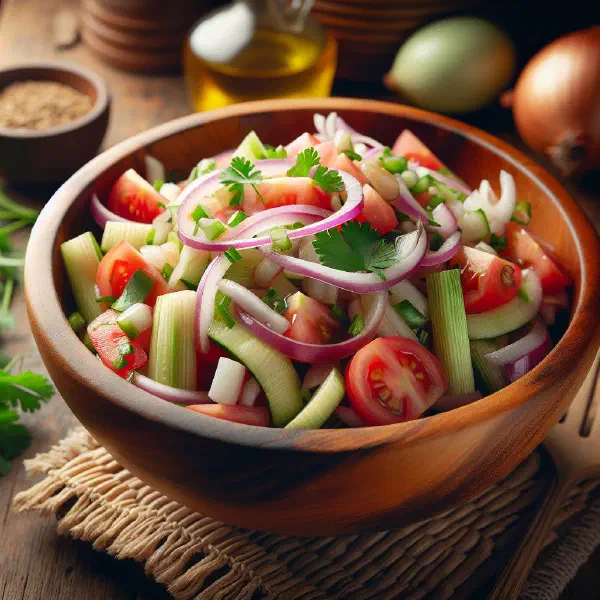
Soak the sliced onion in cold salted water for ten minutes to take the edge off, then drain and dress with lime. This makes the salsa criolla that goes on top. Peel the plantains by cutting off the ends and levering the skin away.
Step-by-step instructions
- Soak the sliced red onion in cold salted water for 10 minutes; drain.
- Toss with the diced tomato, lime juice, salt and pepper to make a salsa.
- Peel the plantains and cut into thick slices.
- Fry in the oil over medium heat until deep golden on both sides, about 8 minutes.
- Transfer to a bowl and mash roughly with a fork, leaving some texture.
- Season lightly with salt.
- Crumble in half the cheese and fold through while still warm.
- Serve topped with the remaining cheese, the salsa and coriander.
Gluten-free / lactose-free version
Malarrabia is naturally gluten-free. For a lactose-free version, use a plant-based fresh cheese, the dish needs the salt contrast more than the dairy itself, so a well-salted substitute works.
Tips for vegans and vegetarians
The dish is vegetarian as written and becomes vegan with a plant-based cheese. Plantain and cheese is already a complete plate; served with rice and beans it makes a substantial meal.
More tips and tricks
Use the ripest plantains you can find. This is not a dish that tolerates underripe fruit. Mash roughly rather than smoothly, since the texture matters. And fold the cheese in while the plantain is still warm so it softens without melting away entirely.
Adapting the recipe to your taste
A little butter mashed in makes it richer. Chancaca or brown sugar pushes it sweeter, which some Piuran cooks prefer. Ají amarillo paste adds the characteristic Peruvian heat.
Ingredient substitutions
Very ripe bananas work at a pinch, though they are sweeter and softer. Sweet potato substitutes for a different but pleasant version. Any salty fresh cheese does the job.
Drink pairing ideas
Chicha morada, the purple corn drink, is the classic Peruvian pairing. A cold beer suits it. Inca Kola is what most Peruvians would actually reach for.
Serving and presentation ideas
Serve malarrabia warm, with the salsa criolla heaped on top and extra cheese crumbled over, the pink onion against the golden plantain is what makes the plate. During Lent it goes alongside rice and fried fish as part of the siete potajes, the seven Friday dishes.
A bit of history
Piura’s cooking is the most distinctive in Peru after Lima’s, shaped by the coast, by African influence and by the plantain, which grows readily in the north. Malarrabia is firmly a Lenten dish, part of a Catholic tradition of meatless Friday cooking that produced a whole regional repertoire. It offers a genuine window onto Peruvian cuisine.
More recipe ideas
Summary: Malarrabia
Malarrabia is ripe plantain fried, mashed and folded with salty fresh cheese, topped with a lime-dressed onion salsa. Use the ripest fruit, mash it roughly, and eat it warm.