National Dish Philippines: Pancit Palabok (Recipe)
In this article
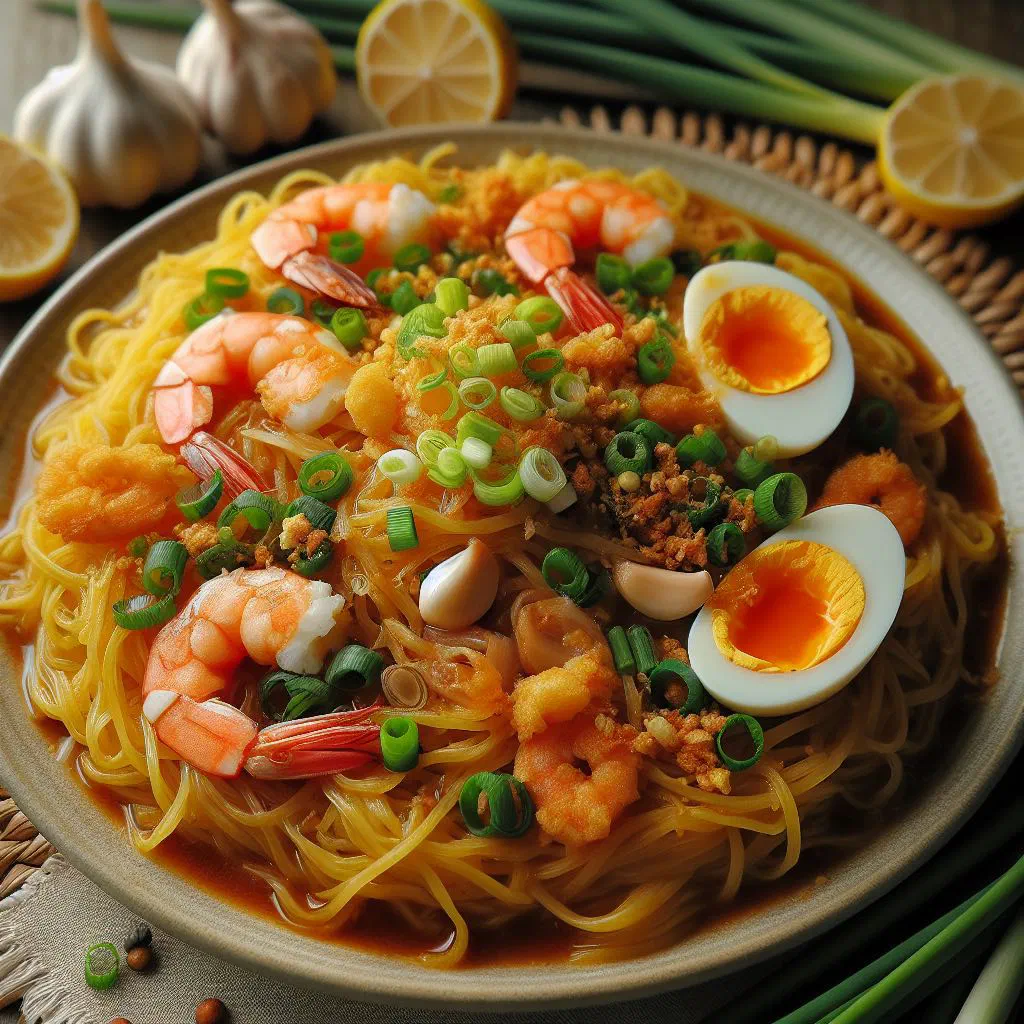
Discover Pancit Palabok, one of the most beloved noodle dishes of the Philippines. This bright plate brings together silky rice noodles, a savoury seafood-rich sauce and a colourful crown of sliced egg, spring onions and a squeeze of lime. It is the kind of dish that turns up at every fiesta and family gathering, prized as much for its looks as its flavour. Bring a taste of Filipino celebration straight to your own kitchen.
About Pancit Palabok
Pancit Palabok is a much-loved dish from the Philippines, served above all at festive occasions and special celebrations. This delicious noodle variation is known for its aromatic sauce and a wholesome mix of toppings. The base is formed by rice noodles, which can vary from region to region. With a generous ladle of prawn-rich sauce and a garnish of hard-boiled eggs, spring onions and other choice ingredients, every plate becomes a feast of flavours. Like many a classic of Philippine cuisine, it is built for sharing.
Ingredients (serves 1–2)
- 150 g rice noodles
- 200 ml stock (fish or vegetable)
- 100 g prawns, peeled
- 1 tablespoon vegetable oil
- 2 cloves garlic, finely chopped
- 1 onion, diced
- 2 tablespoons soy sauce
- 2 hard-boiled eggs, sliced
- 2 tablespoons spring onions, chopped
- 1 teaspoon chilli powder (optional)
- Lime wedges, to garnish
Shopping for the ingredients
When shopping for pancit palabok, it is well worth paying attention to the quality of your produce. Visit an Asian grocery to track down fresh, authentic ingredients. Take particular care over the prawns and the stock, as these have the greatest influence on the flavour of the finished dish. The right oil and fresh herbs make all the difference between an average pancit palabok and an outstanding one.
Preparing the dish
Preparing the dish begins with soaking the rice noodles. They should be left in warm water for at least 30 minutes so that they soften properly. While they soak, you can get on with the vegetables and prawns. Dice the onion and finely chop the garlic to build an aromatic foundation for the sauce a little later on.
Step-by-step instructions
- Drain the soaked rice noodles and set them aside.
- Heat the oil in a pan, then sauté the garlic and onion until golden brown.
- Add the prawns and fry briefly until they turn pink and are cooked through.
- Pour in the stock and soy sauce and bring to the boil.
- Add the soaked noodles to the pan and toss well until they have absorbed the sauce.
- Garnish the pancit palabok with the sliced eggs and chopped spring onions.
- If you like, add chilli and serve with lime wedges.
Gluten-free / lactose-free version
For a gluten-free version, simply swap the regular soy sauce for a gluten-free one. The rice noodles are naturally gluten-free and an excellent choice for anyone with a gluten intolerance. Take care with the stock too, making sure no gluten-containing ingredients sneak in. That way the pancit palabok stays delicious and easy on the system, and naturally lactose-free as it contains no dairy.
Tips for vegans and vegetarians
Vegan and vegetarian versions of pancit palabok are easy to put together. Replace the prawns with cubed tofu or seitan to keep the dish high in protein. Instead of fish stock you can use plain water or vegetable stock, and the eggs can simply be left out or swapped for a plant-based alternative. This keeps the authentic character of the dish while making it suitable for plant-based diets, much like a well-made Vegetable Lumpia.
More tips and tricks
A few tips and tricks can lift the flavour of your pancit palabok. Try adding fresh herbs such as coriander or Thai basil as a garnish. This deepens the taste and brings extra colour to the plate. A squeeze of lime juice just before serving sharpens the whole aroma and makes the dish taste brighter and fresher.
Adapting the recipe to your taste
Everyone has their own preferences when it comes to food, and adapting the recipe to your taste makes all the difference. If you like things hot, add more chilli or reach for a spicy soy sauce. For a sweeter result, stir a little sugar into the sauce.
Ingredient substitutions
If you do not have certain ingredients to hand, there are always substitutions to fall back on. In place of rice noodles you could use other types such as spaghetti or soba. If you cannot find prawns, mushrooms make a fine stand-in, lending a meaty texture to the dish, much as they do in a hearty bowl of Kare Kare.
Drink pairing ideas
For the perfect meal around pancit palabok, it is worth giving some thought to the drinks. A light herbal tea or a refreshing glass of citrus-spiked water rounds off the flavours nicely. For something more robust, a local beer or a glass of rice wine works well too. These drinks harmonise beautifully with the savoury notes of the dish.
Serving and presentation ideas
The presentation of pancit palabok can lift the whole eating experience. Serve the dish in an attractive bowl and garnish it with fresh herbs and lime wedges. A dusting of chilli powder adds extra colour and draws the eye. Make sure the colours of the toppings stay bright and vivid to create an inviting, appetising plate.
A bit of history
Pancit palabok has a long and fascinating history, deeply rooted in Filipino culture. It is thought to have grown originally out of Chinese noodle traditions before adapting over time to local tastes. Traditionally it is served at festive gatherings, which gives it real cultural significance. many regional variations exist across the country, among them the closely related Pancit Malabon, each with its own distinctive flavour.
More recipe ideas
Summary: Pancit Palabok
Pancit palabok is an incredibly varied and flavoursome noodle dish that everyone should try at least once. With its fresh ingredients and lively flavours, it brings the spirit of Filipino cooking to the table. Pancit palabok rises to the occasion.