National Dish Philippines: Vegetable Kare-Kare (Recipe)
In this article
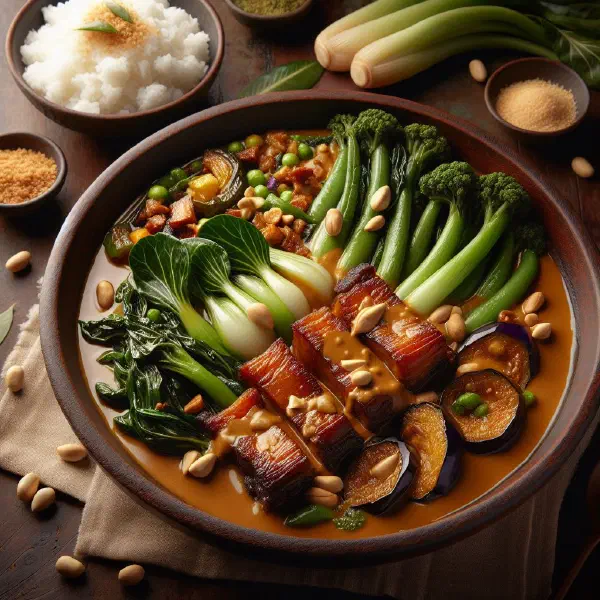
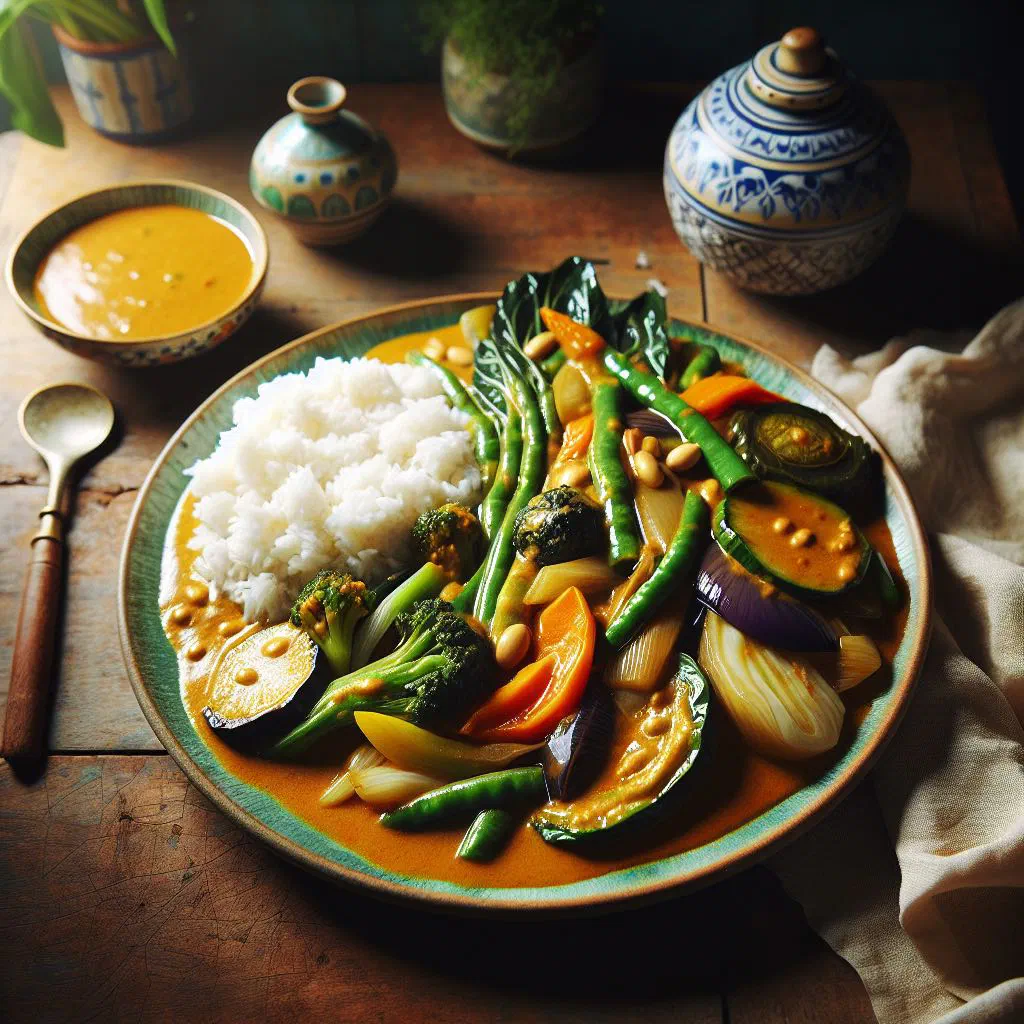
Discover Vegetable Kare-Kare, a much-loved classic of the Philippines. This meat-free take on the famous Filipino stew brings together a velvety peanut sauce and a colourful medley of fresh vegetables for a dish that is every bit as satisfying as the original. Rounded off with a spoonful of savoury bagoong on the side, it delivers a deep, comforting flavour that turns an everyday meal into a small celebration. Bring the warmth of the Filipino table straight into your own kitchen.
About Vegetable Kare-Kare
Vegetable Kare-Kare is a traditional Filipino dish celebrated for its rich peanut sauce and a bright mix of fresh vegetables. It is especially popular with vegetarians, as it is made entirely without meat yet still bursts with flavour. The creamy texture of the peanut sauce allows the aromas of the different ingredients to blend together beautifully. Served with a side of savoury bagoong (shrimp paste), the dish becomes even more authentic and offers a truly memorable taste experience.
Ingredients (serves 1–2)
- 200 g mixed vegetables (e.g. broccoli, carrots, aubergine)
- 1 cup peanut butter
- 2 cups vegetable stock
- 1 onion, diced
- 2 cloves garlic, chopped
- 1 tsp bicarbonate of soda
- 1 tbsp vegetable oil
- A few banana leaves (optional, for aroma)
- Bagoong, to serve
Shopping for the ingredients
The ingredients for Vegetable Kare-Kare are widely available in Asian and international supermarkets. Peanut butter and vegetable stock are the main building blocks and can usually be found in any ordinary supermarket. Fresh vegetables such as broccoli or aubergine are best picked up at a weekly market or greengrocer. If you are hunting for bagoong, look in the international aisle or visit a dedicated Filipino grocery.
Preparing the dish
To get the most out of making Vegetable Kare-Kare, it helps to have everything ready before you start. First, wash, peel and cut the vegetables into bite-sized pieces. It is also worth dicing the onion and chopping the garlic in advance, before you begin the actual cooking. This bit of groundwork keeps the whole process running smoothly and lets you focus entirely on bringing the dish together.
Step-by-step instructions
- Heat the vegetable oil in a large pot, then add the diced onion and chopped garlic. Sweat them gently until translucent.
- Add the chopped vegetables to the pot and sauté briefly to release their aromas.
- Pour in the vegetable stock and let the vegetables simmer for about 10 minutes, until cooked but still pleasantly firm.
- Stir in the peanut butter until fully dissolved, then add the bicarbonate of soda.
- Cook everything together for a further 5 minutes, until the sauce turns thick and creamy. Serve hot with bagoong.
Gluten-free / lactose-free version
The recipe for Vegetable Kare-Kare is easy to make both gluten-free and lactose-free. When buying the peanut butter, check that it contains no unwanted additives that might include gluten. Instead of standard vegetable stock, you can use a gluten-free stock just as easily. For a lactose-free version, plant-based alternatives to peanut butter work well too, offering the same creamy taste without any dairy.
Tips for vegans and vegetarians
For vegans, Vegetable Kare-Kare is an excellent choice, as the dish is naturally plant-based to begin with. Just be sure to swap the bagoong for a vegan alternative or a homemade sauce. You can make the dish more varied by adding extra vegetables such as peppers or courgettes. The options for the peanut butter are plentiful too, so feel free to use different nut butters to fine-tune the flavour.
More tips and tricks
To deepen the full-bodied flavour of the Vegetable Kare-Kare sauce, you can scatter in some roasted peanuts. It is also worth preparing the dish a few hours ahead so the aromas have time to develop and mingle. If you fancy an extra-creamy sauce, stir in a little coconut milk. Experiment with spices such as turmeric or black pepper to give the dish a special kick.
Adapting the recipe to your taste
The wonderful thing about Vegetable Kare-Kare is its versatility. Depending on your taste, you can use different vegetables such as sweet potatoes or green peas. The consistency of the sauce is up to you as well. Simply add a little more stock for a thinner result. If you like things spicy, toss in some hot chilli for an extra kick. Create your own personal version and adapt the recipe to suit your preferences, much as you would with a comforting bowl of Pinakbet.
Ingredient substitutions
If some of the ingredients are not to your liking or are hard to find, they are easy to swap out. In place of aubergine you can use courgette, and broccoli works well replaced with cauliflower. Vegetable oil can also be exchanged for olive oil to achieve a slightly different flavour. Be creative and try out different combinations that match your taste, the same spirit of improvisation that brings a hearty Pinakbet Ilocano to life.
Drink pairing ideas
To round off the experience of Vegetable Kare-Kare, the right drink makes all the difference. A classic Filipino calamansi juice (a tangy citrus lemonade) offers a refreshing counterpoint to the dish’s bold flavours. Alternatively, a light Asian beer or a spritzy white wine spritzer both work nicely. These drinks lift the aromas of the stew and make for a perfect pairing at any meal.
Serving and presentation ideas
Presentation can make a real difference to Vegetable Kare-Kare. Serve the dish in an attractive bowl and garnish it with roasted peanuts and fresh herbs such as coriander or spring onions. The colourful vegetables provide plenty of visual appeal and can be set off with a few fresh lime wedges, which add both decoration and an extra hit of freshness. Play with colours and shapes to show your dish off at its best.
A bit of history
The dish Kare-Kare has its origins in Filipino cooking and is closely tied to the Filipino culture of the Philippines. It is traditionally made with oxtail, but the vegetarian version has proven just as popular. The peanut sauce reflects a blending of Filipino and Spanish influences, drawing on both peanuts and a wide range of vegetables. This combination of regional ingredients and outside influences gives the dish the unique profile that sets it apart.
More recipe ideas
Summary: Vegetable Kare-Kare
All in all, Vegetable Kare-Kare is a delicious and nourishing stew that appeals to vegetarians and meat-eaters alike. Its creamy peanut sauce and fresh vegetables make it a remarkable choice for any dinner. With these simple preparation tips and ideas, you can bring your own kare-kare home with ease and take a little journey into Filipino cooking. Let the flavours and the variety inspire you, and enjoy this traditional dish in your very own kitchen.