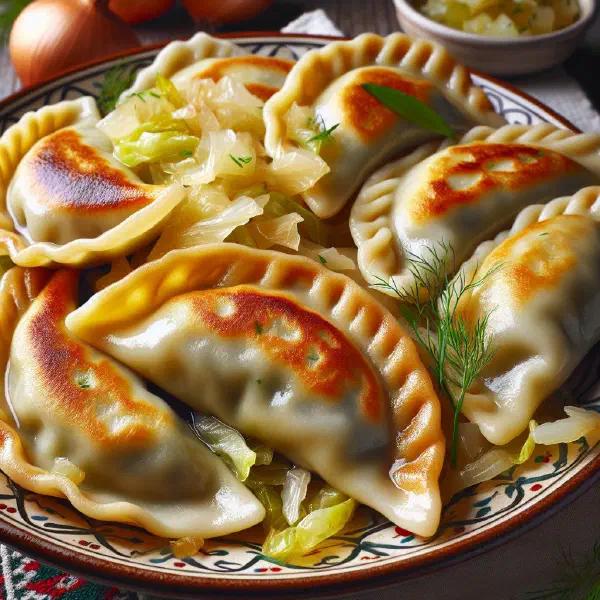
National Dish Poland: Pierogi with Cabbage and Mushrooms (Recipe)

In this article
Meet Pierogi with Cabbage and Mushrooms, one of Poland’s most cherished comfort foods and a fixture on the festive table. These tender little dumplings hide a savoury filling of tangy sauerkraut and earthy mushrooms, folded into soft dough and cooked until they bob to the surface. Boiled, pan-fried or baked, they carry the warmth of a Polish family kitchen and turn a simple meal into something worth gathering around.
About Pierogi with Cabbage and Mushrooms
Pierogi with cabbage and mushrooms rank among the best-loved dishes of Polish cuisine, and they appear especially at festive occasions and holidays. These delicious little dumplings are stuffed with a hearty mix of sauerkraut and mushrooms that is as nourishing as it is tasty. Pierogi can be prepared in several ways, boiled, pan-fried or baked, and each method has a charm of its own. The interplay of soft dough and savoury filling makes for a distinctive flavour that appeals to locals and visitors alike.
Ingredients (serves 1–2)
- 200 g plain flour
- 1 egg
- 100 ml water
- 1 pinch of salt
- 200 g sauerkraut
- 100 g mushrooms (e.g. button mushrooms)
- 1 onion
- 2 tablespoons butter
- Pepper and other seasonings to taste
Shopping for the ingredients
Before you begin making your pierogi with cabbage and mushrooms, gather the necessary ingredients. Most of them are available in any supermarket and tend to be quite affordable. Head to a market or greengrocer for fresh mushrooms and good sauerkraut, as the quality of the ingredients has a big effect on the final flavour. Look out for local suppliers, too. They are often the best source of the freshest produce.
Preparing the dish
Before you start cooking, prepare all the ingredients and set them aside. The sauerkraut should be drained well and perhaps seasoned a little to bring out its best flavour. The mushrooms need to be fresh and cleaned thoroughly, then chopped into small pieces, and the same goes for the onion. This groundwork makes the whole cooking process smoother and more efficient.
Step-by-step instructions
- Combine the flour, egg, water and salt in a bowl and knead into a smooth dough.
- Cover the dough with a cloth and leave it to rest.
- Heat the butter in a pan, add the diced onion and fry until golden.
- Add the mushrooms and sauerkraut, season with pepper and let the mixture cook for a few minutes.
- Roll out the dough on a floured surface and cut out circles using a glass or a special cutter.
- Fill each circle with the filling, fold it over and press the edges together firmly.
- Cook the pierogi in a large pot of salted water until they rise to the surface.
- Serve the pierogi warm, ideally with a little melted butter or soured cream.
Gluten-free / lactose-free version
To make pierogi with cabbage and mushrooms gluten-free, use a gluten-free flour blend in place of wheat flour. You will usually find one in the supermarket, or you can make your own. If the dish also needs to be lactose-free, check the other ingredients carefully, classic butter can be swapped for a plant-based alternative. With these adjustments, people with food intolerances can enjoy the dish just as much as everyone else.
Tips for vegans and vegetarians
For vegans, the filling of these pierogi is easily adapted: replace the butter with a plant-based oil and swap the egg in the dough for apple sauce or grated tofu. These alternatives give the dough the binding it needs without any animal products. The onion, too, can be prepared in a plant-based way. Best of all, the traditional mushrooms and sauerkraut are already plant-based, so you can keep them exactly as they are. If you enjoy meat-free dumplings, the potato-and-cheese-free Pierogi Ruskie is another one worth trying.
More tips and tricks
A tried-and-tested way to make pierogi with cabbage and mushrooms extra tasty is to pan-fry the dumplings after boiling. This gives them a golden, crisp crust that contrasts beautifully with the soft filling. For more flavour, scatter over fresh herbs such as dill or parsley as a garnish. Feel free to experiment with different fillings, too, and develop your own creations, much as you might with a batch of Uszka z Grzybami.
Adapting the recipe to your taste
Pierogi with cabbage and mushrooms are wonderfully adaptable and can be varied to suit personal taste. Instead of sticking to the classic filling, you can add ingredients such as spinach or beans, or change the vegetables according to the season. For a savoury kick, stir in a few spices or a little smoked paprika. Don’t be afraid to get creative and tailor the recipe to your own preferences.
Ingredient substitutions
If you are not keen on mushrooms, you can replace them with cooked potatoes or courgette, both of which make lovely fillings. The sauerkraut, meanwhile, can be swapped for steamed vegetables if you fancy a change. It is important, though, to keep the texture and flavour of the filling well balanced. Sometimes combinations of different ingredients, as in a plate of Golabki, deliver surprisingly good results.
Drink pairing ideas
A range of drinks pairs perfectly with pierogi with cabbage and mushrooms. A classic Polish beer or a fresh cider harmonises wonderfully with the savoury flavour of the dumplings. If you prefer something alcohol-free, a homemade lemonade made from fresh fruit or a lightly sweetened tea adds welcome variety. Just make sure the drinks complement the flavours of the dish rather than overpowering them.
Serving and presentation ideas
Pierogi with cabbage and mushrooms can be plated beautifully to please the eye as well as the palate. Serve the dumplings on a large plate, garnished with fresh herbs and a dollop of soured cream or a vegan alternative. Use colourful tableware or unusual serving platters to lift the presentation. Remember that the look of a dish often shapes the first impression and enriches the whole dining experience.
A bit of history
The roots of pierogi with cabbage and mushrooms reach back to the Middle Ages, when they served as a nourishing, easily prepared meal for peasants and labourers. Over time, various regional variations emerged, reflecting the culinary diversity of Polish cuisine. Today pierogi are known and loved not only in Poland but around the world. They are part of Poland’s cultural heritage and a symbol of the hospitality and tradition at the heart of the country’s cooking, much like a warming bowl of Bigos.
More recipe ideas
Summary: Pierogi with Cabbage and Mushrooms
In short, pierogi with cabbage and mushrooms are a versatile and delicious dish that is prepared traditionally in Poland and lends itself to countless variations. The combination of sauerkraut and mushrooms makes for a truly special flavour. Whether for festive occasions or an everyday meal, they are made with care and can be adjusted to individual tastes. Enjoy your pierogi and let the flavours of Polish cooking work their magic.