National Dish Portugal: Açorda Alentejana (Recipe)

In this article
Meet Açorda Alentejana, a rustic bread soup that sums up the soul of southern Portugal in a single bowl. Born in the sun-baked plains of the Alentejo, it turns humble pantry staples, day-old bread, garlic, fragrant coriander and a glug of good olive oil, into something warming and deeply satisfying. Simple, frugal and full of character, it is the kind of dish that tastes of home and proves that a few honest ingredients are often all you need.
About Açorda Alentejana
Açorda Alentejana is a traditional Portuguese bread soup that is especially cherished across the Alentejo region. It brings together easy-to-find ingredients such as stale bread, fresh coriander, garlic and olive oil to create a nourishing, soul-warming meal. The marriage of these flavours makes for a hearty, comforting dish that satisfies the appetite while carrying a real sense of homeliness. The preparation is wonderfully straightforward and reflects the rustic food culture of the region, built on fresh, seasonal produce.
Ingredients (serves 1–2)
- 200 g stale bread
- 1 bunch fresh coriander
- 2–3 cloves of garlic
- 3 tablespoons olive oil
- 1 litre vegetable or fish stock
- 2 eggs (optional)
- A pinch of salt and pepper
Shopping for the ingredients
When shopping for Açorda Alentejana, it is well worth paying attention to the quality and freshness of the produce. Stale bread is essential, as it forms the very base of the dish and gives it that wonderful flavour. Fresh coriander lends the soup the aromatic note that makes it so distinctive. Try to choose a regional olive oil to keep the recipe as authentic as possible, the same generous splash that gives Favas à Portuguesa its character.
Preparing the dish
Preparing Açorda Alentejana is fairly quick and calls for only a few steps. First, gather all your ingredients and cut the bread into bite-sized pieces. Wash the fresh coriander well and chop it roughly so it releases its full aroma. The garlic can be peeled and lightly crushed to draw out a deeper, more intense flavour.
Step-by-step instructions
- Heat the stock in a pan.
- Warm the olive oil in a separate pan and gently fry the garlic.
- Add the bread and toast it briefly.
- Pour the hot stock over the bread.
- Stir well and leave to simmer for a few minutes.
- Add the coriander and season to taste with salt and pepper.
- If you like, crack the eggs straight into the soup, cover and let them poach gently.
Gluten-free / lactose-free version
For a gluten-free version of Açorda Alentejana, simply use a good gluten-free bread. Make sure the stock is gluten-free too, so you avoid any unnecessary allergens. Since the recipe relies on olive oil rather than dairy, it is naturally suited to anyone who is lactose-intolerant, and you can opt for a plant-based stock to be sure. These small adjustments make the dish easy to share with guests who have different dietary needs.
Tips for vegans and vegetarians
Vegans can simply leave out the eggs and swap the fish stock for vegetable stock to keep the dish every bit as tasty. Using a good plant-based oil and plenty of fresh herbs keeps the soup aromatic and rich in flavour. Experimenting with a handful of mixed vegetables is a lovely way to add variety, too. Done this way, the soup stays a nourishing, hearty meal that everyone can enjoy.
More tips and tricks
A great deal of the flavour in Açorda Alentejana comes from using fresh, good-quality ingredients. Try making the soup a few hours ahead, as the flavours deepen and mingle beautifully with a little time. Finishing with a scattering of fresh herbs lifts both the look and the taste. It is also worth seasoning the stock to your liking, adjusting little by little until you strike the perfect balance.
Adapting the recipe to your taste
The basic ingredients of Açorda Alentejana are easy to tailor to personal preference. Some cooks like to add diced vegetables or even a little meat to make the soup more substantial, much as you would for a rib-sticking Carne Estufada. If you enjoy a bit of heat, a touch of chilli or paprika gives the dish an extra kick.
Ingredient substitutions
If you do not have fresh herbs to hand, you can use dried herbs instead. Just use less, as they are far more concentrated in flavour. In place of olive oil, other mild-tasting vegetable oils work well too. For a creamier texture, stir in a little coconut milk or cream. Trying different breads, such as a hearty rye bread, can also add another dimension to the dish.
Drink pairing ideas
Pairing Açorda Alentejana with the right drink can make the whole experience that much better. A soft white wine such as Vinho Verde goes wonderfully with this hearty soup. Alternatively, serve a glass of fresh water with lemon or mint to balance the flavours. For an alcohol-free option, a non-alcoholic beer or a soothing herbal tea makes a refreshing accompaniment.
Serving and presentation ideas
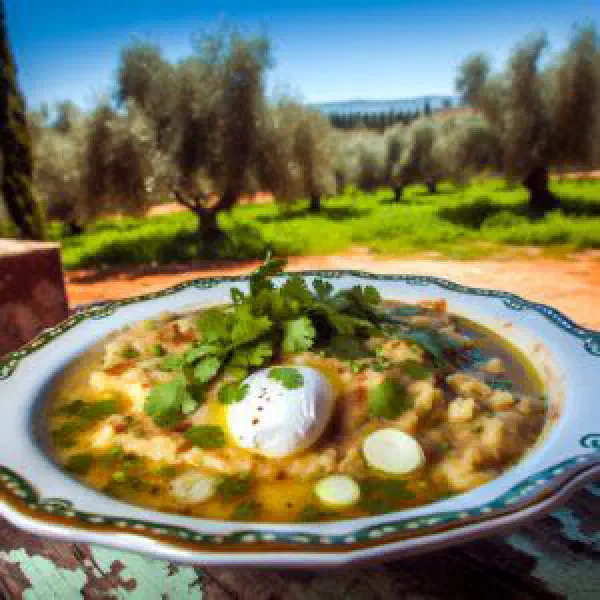
The way you present Açorda Alentejana plays a real part in how appetising it looks. Serve the soup in deep bowls and garnish with fresh coriander and a drizzle of olive oil. Offer some good crusty bread alongside to underline the rustic spirit of the dish. Colourful crockery is a simple trick for showing the soup off to its best advantage.
A bit of history
Açorda Alentejana has its roots in the country kitchens of the Alentejo and reflects the traditions and simplicity of the region. The dish began life as peasant food, made from leftover bread and a handful of humble ingredients. Over the years it has grown into a much-loved national dish, prized by locals and visitors alike. The many variations on the recipe reveal the creativity of its cooks and just how readily it adapts to different tastes, a hallmark of Portuguese cuisine.
More recipe ideas
Summary: Açorda Alentejana
Açorda Alentejana is far more than a simple bread soup. It is a dish of culture and tradition that has won over countless hearts. With its few but high-quality ingredients, it is easy to make and leaves plenty of room for creative tweaks. The flavours are sure to win you over. This dish is the perfect introduction to Portuguese cuisine and an absolute must for any food lover.