National Dish Portugal: Folar da Páscoa (Recipe)
In this article
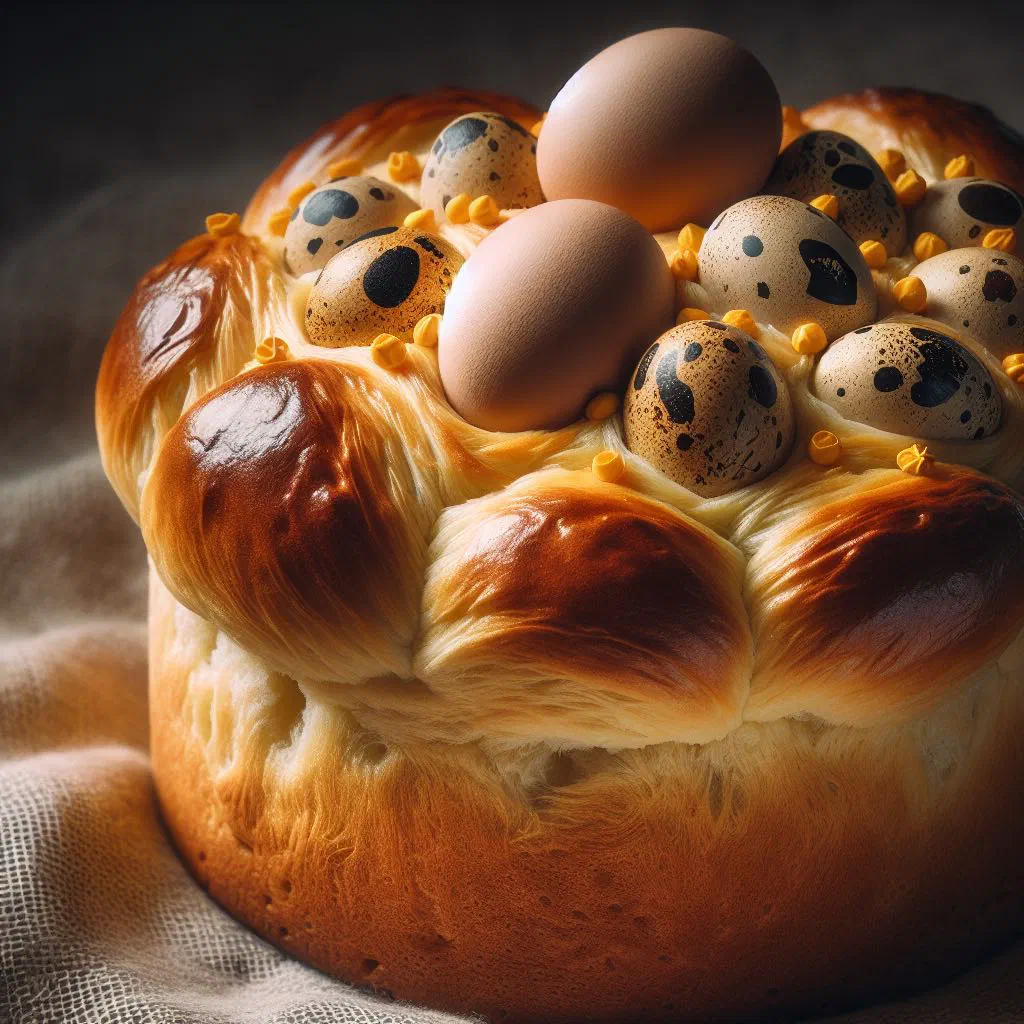
Meet Folar da Páscoa, the traditional Portuguese Easter bread that fills kitchens across the country with the warm scent of baking each spring. Soft, lightly sweet and famously crowned with whole boiled eggs pressed into the dough, this festive loaf is as much a symbol as it is a treat. It marks the end of Lent and brings families together around the table. Bake one at home and you bring a centuries-old slice of Portuguese celebration into your own kitchen.
About Folar da Páscoa
Folar da Páscoa is a traditional Portuguese Easter bread, baked in countless homes throughout the Easter season. This delicious loaf brings together flavours and ingredients that are deeply tied to Portuguese culture. It is often made in many different regional variations, though the basic method stays much the same. What makes this bread so special is its taste and the stories and traditions it carries with it, much like the festive sweets you find across Portuguese cuisine.
Ingredients (serves 1–2)
- 500 g flour
- 200 ml water
- 100 g sugar
- 50 g fresh yeast
- 2 eggs
- 100 ml olive oil
- 1 teaspoon salt
- 1 teaspoon cinnamon (optional)
- 500 g boiled eggs (for the filling)
Shopping for the ingredients
To make an authentic Folar da Páscoa, it is well worth choosing the right ingredients. Most of those listed here are easy to find in any well-stocked supermarket. Be sure to buy fresh yeast for the best texture and flavour. The olive oil should be of good quality too, as it has a real influence on the taste of the finished bread, a hallmark it shares with hearty bakes like Broa de Milho.
Preparing the dish
Before you start baking the folar, it pays to get all your ingredients ready. Weigh out the flour, sugar and the rest of the ingredients precisely for the best results. If you like, you can boil the eggs in advance so they have time to cool before being baked into the bread. These small preparations make the whole process run more smoothly and efficiently.
Step-by-step instructions
- Dissolve the yeast in 200 ml of warm water and leave to rest for a few minutes.
- In a large bowl, mix together the flour, sugar, salt and cinnamon.
- Add the yeast mixture along with the olive oil and the eggs.
- Knead everything well until you have a smooth, supple dough.
- Cover the dough and leave it to prove in a warm place for about 1 hour.
- Once risen, knead the dough briefly and place it in a greased baking tin.
- Set the boiled eggs on top of the dough and press them in gently.
- Bake the folar in a preheated oven at 180°C for around 30–40 minutes, until golden brown.
Gluten-free / lactose-free version
For a gluten-free Folar da Páscoa you can use one of the gluten-free flour blends now widely sold in supermarkets. Just make sure the other ingredients are gluten-free too. For a lactose-free version, the recipe already works in your favour: it relies on olive oil rather than butter, and eggs are naturally lactose-free. With these small adjustments, anyone with special dietary needs can still enjoy the bread.
Tips for vegans and vegetarians
If you follow a vegan diet, the eggs in the recipe can be replaced with plant-based alternatives. Adding mashed banana or apple purée gives excellent binding and improves the texture of the bread. Use a plant-based milk substitute to make up the liquid. Bear in mind that this can change the flavour of the folar slightly, but it remains a delicious bake all the same. As written, the bread is already vegetarian.
More tips and tricks
To make the folar even more aromatic, you can work nuts or dried fruit into the dough. It also helps to knead the dough thoroughly, which gives a better, more even crumb. The folar freezes very well too. Simply wrap it in foil once it has cooled. That way you always have a delicious treat to hand on other days, a clever trick that works just as nicely with Bolo de Mel da Madeira.
Adapting the recipe to your taste
Making Folar da Páscoa leaves plenty of room for personal preference. Feel free to vary the recipe by adding spices or flavourings such as vanilla or orange. You can also experiment with different fillings to create something entirely new. Let tradition guide you, but don’t be afraid to add your own personal touch.
Ingredient substitutions
If you are allergic to certain ingredients or simply don’t have them to hand, there are plenty of alternatives. In place of wheat flour you can try spelt flour or even coconut flour. Baking powder can stand in for yeast, though the dough will still need a little resting time to rise. Sugar can be swapped for honey or stevia to fine-tune the level of sweetness, the same kind of sweet touch found in Broinhas de Mel.
Drink pairing ideas
Folar da Páscoa goes beautifully with a range of drinks. A dry red wine is a great choice, as it brings out the flavours of the bread. For a refreshing non-alcoholic option you might serve a glass of freshly squeezed orange juice. And for those who prefer something more relaxing, an aromatic herbal tea pairs wonderfully with the bread’s savoury-yet-sweet notes.
Serving and presentation ideas
To present the folar at its best, serve it on a lovely, large cake plate. You might decorate the surface with a dusting of icing sugar or a few fresh herbs to create an inviting look. Arrange a few of the boiled eggs around the loaf as well, to highlight the traditional way it is made. That way the folar becomes a treat not just for the palate but for the eyes too.
A bit of history
Folar da Páscoa has its roots in Portugal’s Easter traditions, where it is food and as a symbol of the end of Lent. In many regions of Portugal the folar is baked for family gatherings and festivals, which has made it a firm part of the culture. This bread embodies the connection between food and family, and is a superb example of the country’s culinary heritage alongside classics such as Pão de Ló de Ovar. What’s more, almost every region has its own version, which makes the folar a wonderfully varied and treasured dish.
More recipe ideas
Summary: Folar da Páscoa
Folar da Páscoa is more than just a delicious bake; it is a meaningful symbol within Portuguese culture during the Easter celebrations. With its straightforward method and its many possibilities for adaptation, this traditional bread is ideal for any festive occasion. The recipe brings together tradition and pleasure in the most delicious way. Experiment with different ingredients and techniques to create your very own Folar da Páscoa and impress the whole family.