National Dish Portugal: Migas de Porco (Recipe)
In this article
Discover Migas de Porco, a rustic treasure of the Portuguese table. This hearty dish brings together tender, well-seasoned pork and crisp, golden bread to create a memorable taste of the country’s farmhouse cooking. Born in the sun-baked plains of the Alentejo, it turns simple, humble ingredients into something deeply satisfying. Bring a little Portuguese soul straight to your own kitchen.
About Migas de Porco
Migas de Porco is a much-loved dish of the Portuguese countryside, prized for its honest flavour and its endlessly adaptable preparation. At its heart is the marriage of succulent pork and day-old bread, fried together with plenty of garlic and good olive oil until everything is golden and fragrant. The exact make-up varies from region to region, and the result is a hearty, deeply satisfying meal enjoyed both at family tables and at festive gatherings. With its roots in resourceful, no-waste cooking, it turns every meal into something special.
Ingredients (serves 1–2)
- 250 g pork (shoulder or belly), cut into pieces
- 200 g day-old country bread
- 4 garlic cloves
- 100 ml olive oil
- 1 teaspoon sweet paprika
- 1 bay leaf
- Fresh coriander or parsley
- Salt and pepper to taste
Shopping for the ingredients
When shopping for Migas de Porco, it is worth choosing fresh ingredients of good quality to get the best flavour. The pork, the centrepiece of the dish, should be well marbled so it stays tender and juicy through the cooking. The choice of bread matters too, as a firm, rustic country loaf gives the dish its signature texture. Many supermarkets and specialist delis will carry everything you need, and a good extra-virgin olive oil makes all the difference.
Preparing the dish
Before you begin cooking, it pays to get all the ingredients ready. The pork is best marinated ahead of time with garlic, paprika and a little salt so the flavours can develop, ideally overnight. The day-old bread is torn or sliced into small pieces and lightly moistened with water or stock, which helps it soak up the savoury juices. Finally, peel and crush the garlic so its aroma spreads evenly through the dish.
Step-by-step instructions
- Brown the marinated pork in a large pan with a little olive oil until golden, then set aside.
- Add the remaining olive oil and the crushed garlic, and fry gently until fragrant.
- Stir in the moistened bread and toss it through the flavoured oil over a medium heat.
- Press and turn the bread repeatedly so it forms soft, crisp clumps and absorbs the savoury juices.
- Return the pork to the pan and fold everything together so the flavours combine.
- Season with salt, pepper and paprika, then warm through for a few minutes.
- Garnish with fresh coriander or parsley and serve straight away.
Gluten-free / lactose-free version
For those with particular dietary needs, Migas de Porco offers plenty of flexibility. Because the pork is naturally gluten-free, the main adjustment is the bread: simply swap the country loaf for a good gluten-free alternative so anyone with a gluten intolerance can enjoy the dish. The recipe is already lactose-free in its traditional form, as it relies on olive oil rather than butter. Thoughtful swaps like these ensure the flavour never suffers.
Tips for vegans and vegetarians
Vegans and vegetarians need to get a little creative to capture a similar taste from Migas de Porco. Instead of pork, smoked tofu, mushrooms or a plant-based mince work beautifully, lending the dish a savoury, satisfying depth. The garlic, paprika and good olive oil do most of the heavy lifting on flavour, so the bread still drinks up all those wonderful aromas. With the right seasoning, the dish stays every bit as comforting and delicious.
More tips and tricks
When making Migas de Porco there are a few tricks that simplify the process and improve the result. Using genuinely stale bread is key, as fresh bread turns mushy rather than forming those prized crisp clumps. Keep the heat moderate and be patient, pressing and turning the bread so it crisps evenly without burning. A final drizzle of good olive oil just before serving lifts the aroma and adds a glossy, appetising finish.
Adapting the recipe to your taste
Part of the charm of Migas de Porco is how easily it adapts to personal preference. Fans of bolder flavours can add a pinch of chilli or extra paprika for a spicier note. For a richer, more rustic version, fry in a little rendered pork fat alongside the olive oil. You might also fold through chestnuts or sautéed greens, letting you reinterpret the dish again and again with your own individual touch.
Ingredient substitutions
Several ingredients in Migas de Porco can be swapped to suit your taste or simply use up what is in the cupboard. Cornbread, the kind used in Broa de Milho, makes a wonderful stand-in for wheat country bread and gives a sweeter, more golden crumb. The pork can be exchanged for chicken or even chouriço for a smokier flavour, much as in heartier braises like Carne Estufada. Different oils, such as a robust extra-virgin or a milder blend, will also shift the character of the dish.
Drink pairing ideas
The right drink can lift the whole experience of eating Migas de Porco. A robust Portuguese red, such as an Alentejo wine, stands up beautifully to the savoury pork and garlic. For something lighter, a crisp Vinho Verde offers a refreshing contrast to the richness, much like the gentle white you might pour with Vinho Quente com Especiarias on a cold evening. For an alcohol-free option, a fruity iced tea or a homemade lemonade helps balance the hearty flavours and rounds the meal off nicely.
Serving and presentation ideas
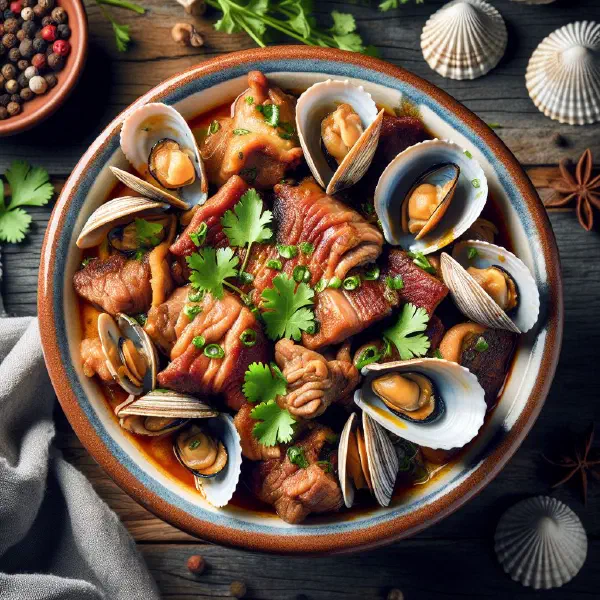
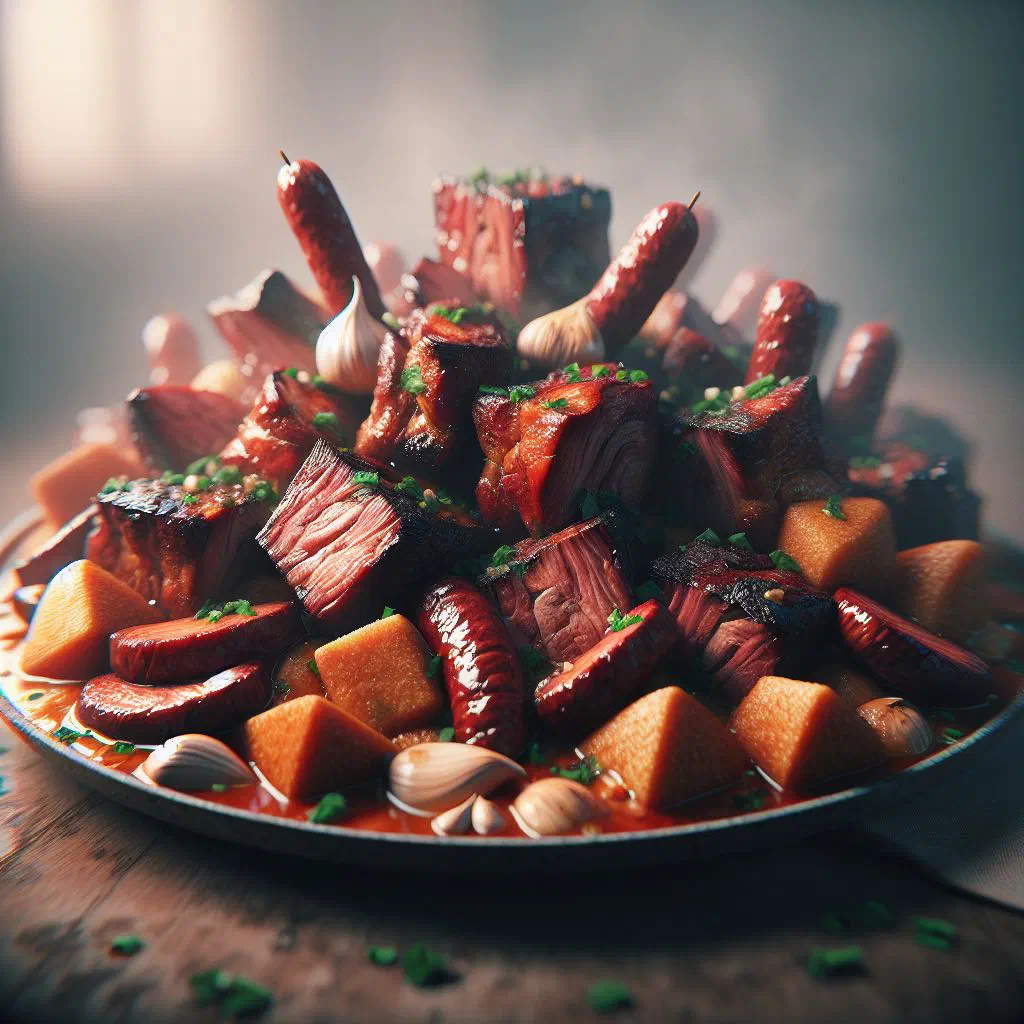
Presentation plays a big part in the overall enjoyment of Migas de Porco. Serve the dish in a rustic earthenware bowl to underline its country roots and keep it warm at the table. A scattering of fresh coriander or parsley adds a lively splash of colour, while the tender pork arranged on top of the golden bread makes the plate look all the more inviting. Black olives or a simple side salad round things off and complete the picture.
A bit of history
Migas de Porco has its roots in the Alentejo region of Portugal, where frugal, resourceful cooking has long been a way of life. The dish grew out of the need to make the most of stale bread, transforming yesterday’s loaf into a nourishing meal rather than letting it go to waste. Paired with pork from the region’s prized free-roaming pigs, it became a staple of rural kitchens. Today it is celebrated as one of the most cherished comfort foods of Portuguese cuisine, served in homes and restaurants alike across the country.
More recipe ideas
- Cozido à Portuguesa
- Carne Grelhada à Portuguesa
- Favas à Portuguesa
- Frango de Churrasco
- Tripas à Alentejana
Summary: Migas de Porco
In short, Migas de Porco is a true gem of Portuguese cooking, winning hearts with its simple yet deeply satisfying ingredients. Thanks to its approachable preparation, it suits both special occasions and an everyday family dinner. Its many variations and easy adaptations leave plenty of room for creativity in the kitchen. Give the recipe a try and dive into the rich, traditional culinary world of Portugal.