National Dish Portugal: Pastéis de Nata (Recipe)
In this article
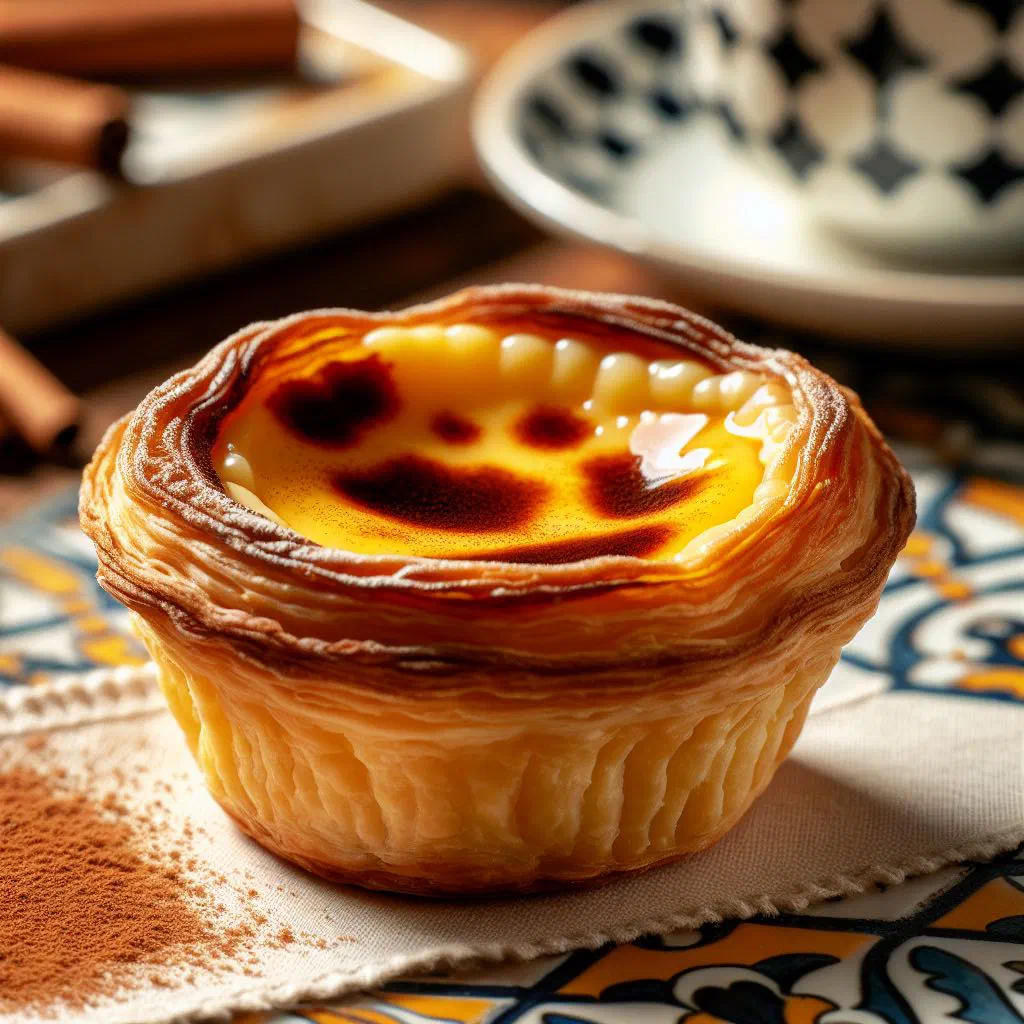
Say hello to Pastéis de Nata, Portugal’s most famous little indulgence. These crisp puff-pastry shells cradle a silky vanilla custard with that unmistakable scorched, caramelised top. Beloved far beyond Lisbon’s cafés, they manage to be both wonderfully simple and impossibly moreish. With this easy recipe you can bring the warm, sweet pleasure of these golden tarts straight into your own kitchen.
About Pastéis de Nata
The Pastéis de Nata, also known as Portuguese custard tarts, are an unmistakable dessert from Portugal that is cherished not only at home but right across the world. These little treats are built from a crisp puff pastry shell and a creamy vanilla custard filling that caramelises beautifully in the oven. Their golden colour and signature scorched crust make them a feast for the eyes as much as the palate. The Pastéis de Nata are far more than just a sweet snack; they are a genuine part of Portuguese culture and history.
Ingredients (serves 1–2)
- 250 g puff pastry
- 2 egg yolks
- 100 g sugar
- 200 ml milk
- 1 tsp vanilla extract
- 1 tsp cinnamon (optional)
Shopping for the ingredients
The ingredients for Pastéis de Nata are easy to find in most supermarkets and delicatessens. Puff pastry can be bought fresh or frozen, and it is well worth choosing a good-quality version to get the best possible flavour. For the filling, fresh eggs, sugar, milk and vanilla extract are essential. These are the ingredients that give the tarts their unique character and creamy richness.
Preparing the dish
Before you begin, it helps to lay out all your ingredients and pick a suitable baking tin. A muffin tin is ideal for giving the tarts their classic shape. The oven should also be preheated to 200°C, as the tarts need a good blast of heat to achieve that perfect caramelisation.
Step-by-step instructions
- Roll the puff pastry out thinly on a floured surface and cut out small circles.
- Press the pastry circles into the muffin tin, easing the edges gently up the sides.
- In a bowl, whisk the egg yolks with the sugar until the mixture is light and slightly frothy.
- Add the milk and the vanilla extract, then mix together well.
- Pour the filling into the prepared pastry cases.
- Bake the Pastéis de Nata in the preheated oven for about 15–20 minutes, until golden brown.
- Let them cool briefly before serving — then enjoy.
Gluten-free / lactose-free version
For a gluten-free version of the Pastéis de Nata, you can use a gluten-free puff pastry, now widely available in supermarkets. Alternatively, you can make your own dough from gluten-free flours. For lactose-free tarts, simply swap the milk for lactose-free milk or a plant-based alternative such as almond or oat milk. These small adjustments mean that people with dietary restrictions can enjoy this delicious dessert too.
Tips for vegans and vegetarians
For vegan Pastéis de Nata, you can replace the eggs with a blend of plant-based yoghurt and starch. Instead of dairy milk, opt for a plant-based alternative to keep the filling lovely and creamy. Another handy tip is to use a ready-made vanilla custard to capture that characteristic flavour. With these swaps, even vegans can savour this popular Portuguese treat.
More tips and tricks
One of the keys to perfect Pastéis de Nata is getting the oven temperature right. Using top and bottom heat helps ensure an even browning across each tart. It can also be worth firing up the grill for the final minute of baking to achieve an especially crisp, blistered top.
Adapting the recipe to your taste
The filling for Pastéis de Nata can be varied however you fancy. Add a little grated lemon or orange zest, for instance, for a fresh, citrusy lift. If you prefer something a touch spicier, scatter in a pinch of nutmeg or cinnamon. These small adjustments let you shape the recipe entirely to your own taste, much as you might tweak a comforting Arroz Doce of your own.
Ingredient substitutions
If you have no vanilla extract to hand, vanilla sugar will give you much the same flavour. As an alternative to sugar, you could use erythritol or another sweetener if you are watching your calories. Whatever you choose, keep an eye on quality, as it has a real influence on the overall taste, the same care that goes into a well-made Queijadas da Madeira. Substitutions like these open up new possibilities for adventurous bakers.
Drink pairing ideas
The Pastéis de Nata pair wonderfully with a strong espresso or a milky coffee such as a cappuccino. A fragrant tea, a spiced chai or a fruit tea with cinnamon, also sits nicely alongside this dessert. In warmer weather, a chilled Portuguese wine or a fresh lemonade works beautifully to complement the sweet notes of the tarts. These combinations make for a particularly memorable tasting experience.
Serving and presentation ideas
To present the Pastéis de Nata in style, arrange them on a pretty plate and dust them lightly with icing sugar. Add a few fresh berries or mint leaves to lighten the overall look. Small decorative napkins and a couple of drips of caramel sauce on the plate can make the dessert even more eye-catching. Little touches like these round off a thoroughly inviting spread on the table.
A bit of history
The origins of the Pastéis de Nata reach back to the 18th century, when monks near Belém, a district of Lisbon, began baking these sweet tarts. They were first made using a surplus of egg yolks and sugar that arose from textile production. Today they are a symbol of Portuguese baking and draw tourists from all over the world. Many local bakeries and cafés have developed their own versions, each reflecting the rich heritage of this delicious treat and of Portuguese cuisine more broadly.
More recipe ideas
Summary: Pastéis de Nata
The Pastéis de Nata are more than just a dessert; they are a slice of Portuguese culture and history served up on your plate. With simple ingredients and a straightforward method, they are well suited to beginners and seasoned bakers alike. Perfect for special occasions or simply for the pleasure of it. Give this recipe a go and let the variety and flavour of the Pastéis de Nata win you over.