National Dish Romania: Goulash (Recipe)
In this article
Warm, hearty and richly spiced, Goulash is one of Romania’s great cold-weather comfort dishes. Tender chunks of meat simmer slowly with sweet peppers, onions and a generous dusting of paprika until everything melts into a deeply savoury stew. It is the sort of one-pot meal made for gathering friends and family around the table, and it only gets better the longer it sits. Bring a little of Romania’s rustic warmth to your own kitchen.
About Goulash
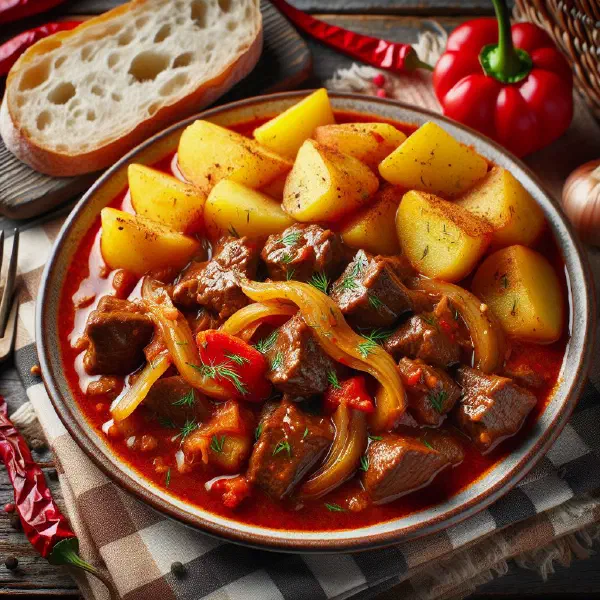
Goulash is a traditional Romanian dish that has won over countless food lovers. At its heart is a hearty stew with a spicy, well-seasoned character. Most recipes use tender meat, usually beef or pork, combined with aromatic vegetables and a good range of spices, with paprika playing the starring role. The way these ingredients come together makes goulash the perfect dish for sociable occasions and cold days, when nothing satisfies quite like something warm and filling.
Ingredients (serves 1–2)
- 300 g tender beef or pork
- 2 large onions
- 2–3 cloves of garlic
- 2–3 large potatoes
- 1–2 red peppers
- 2 tablespoons sweet paprika
- 1 teaspoon caraway seeds
- Salt and pepper, to taste
- Oil, for frying
- 500 ml stock (vegetable or meat)
Shopping for the ingredients
When shopping for goulash, it is well worth paying attention to the quality of the meat. Fresh, nicely marbled meat makes for a full-flavoured stew. The vegetables, and especially the peppers, should also be of good quality to bring out the fullest taste. Give particular thought to your choice of paprika too; Hungarian paprika lends goulash its characteristic aroma.
Preparing the dish
Preparing goulash is not complicated, but it does call for a little time and patience. First, wash the vegetables thoroughly, the onions and peppers in particular, and cut them into small pieces. Chop the meat into even cubes so it cooks at a consistent rate. While you prep, you can measure out some of the spices in advance to make the cooking itself a little easier.
Step-by-step instructions
- Heat the oil in a large pot and fry the onions until translucent.
- Add the cubed meat and brown it on all sides until lightly coloured.
- Stir in the garlic and diced peppers and let them cook briefly.
- Sprinkle in the paprika and caraway seeds and stir to combine.
- Pour in the stock and bring everything to the boil.
- Reduce the heat and let the dish simmer for about 1 to 1.5 hours, until the meat is tender.
- Add the diced potatoes and cook for a further 20–30 minutes, until soft.
- Season with salt and pepper and serve warm.
Gluten-free / lactose-free version
Goulash is easy to adapt into a gluten-free and lactose-free dish. Simply use a gluten-free stock to make sure the meal suits anyone with a gluten intolerance. In the same way, check that all your other ingredients are lactose-free. With these small adjustments in place, everyone can enjoy this comforting dish without a second thought.
Tips for vegans and vegetarians
There are several tips for adapting goulash for vegans and vegetarians. In place of meat you might use tofu or seitan to achieve a similar texture. You can also add a wider selection of colourful vegetables to make the dish even more appetising. A good vegetable stock stands in beautifully for meat stock and keeps the flavour rich and full.
More tips and tricks
A few extra tips can take the flavour of your goulash up a notch. Experiment with different spices to tune the aromas to your own taste. A pinch of chilli adds a pleasant warmth, while a hint of bay leaf brings extra depth. Enjoy the dish as a main course and as leftovers. It often tastes even better the next day.
Adapting the recipe to your taste
Adapting the goulash recipe to your preferences could not be simpler. Vary the amount of vegetables, or swap in different varieties depending on the season. You can also adjust the heat and seasoning to make the dish milder or more piquant. Little changes like these make the meal feel more personal and add to the pleasure of eating it.
Ingredient substitutions
If you do not have every ingredient to hand, there are plenty of alternatives. Instead of beef, for example, you could use chicken or lamb to explore different flavours, much like the tender lamb in a Ciorba De Miel. Vegetables can be swapped too, according to what is available and what you fancy; try courgettes or carrots, for instance. Substitutions like these open up new tastes and possibilities.
Drink pairing ideas
A hearty goulash goes well with a range of drinks that round off the experience. A robust red wine complements the flavours of the dish superbly. Alternatively, serve a cool beer or a fruity malt beer, both of which harmonise nicely with the warmth of the stew. For a non-alcoholic option, a refreshing sparkling water or homemade lemonade works well.
Serving and presentation ideas
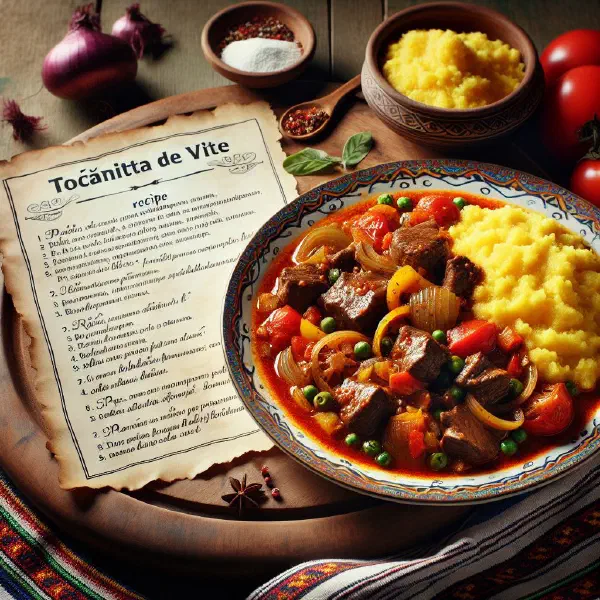
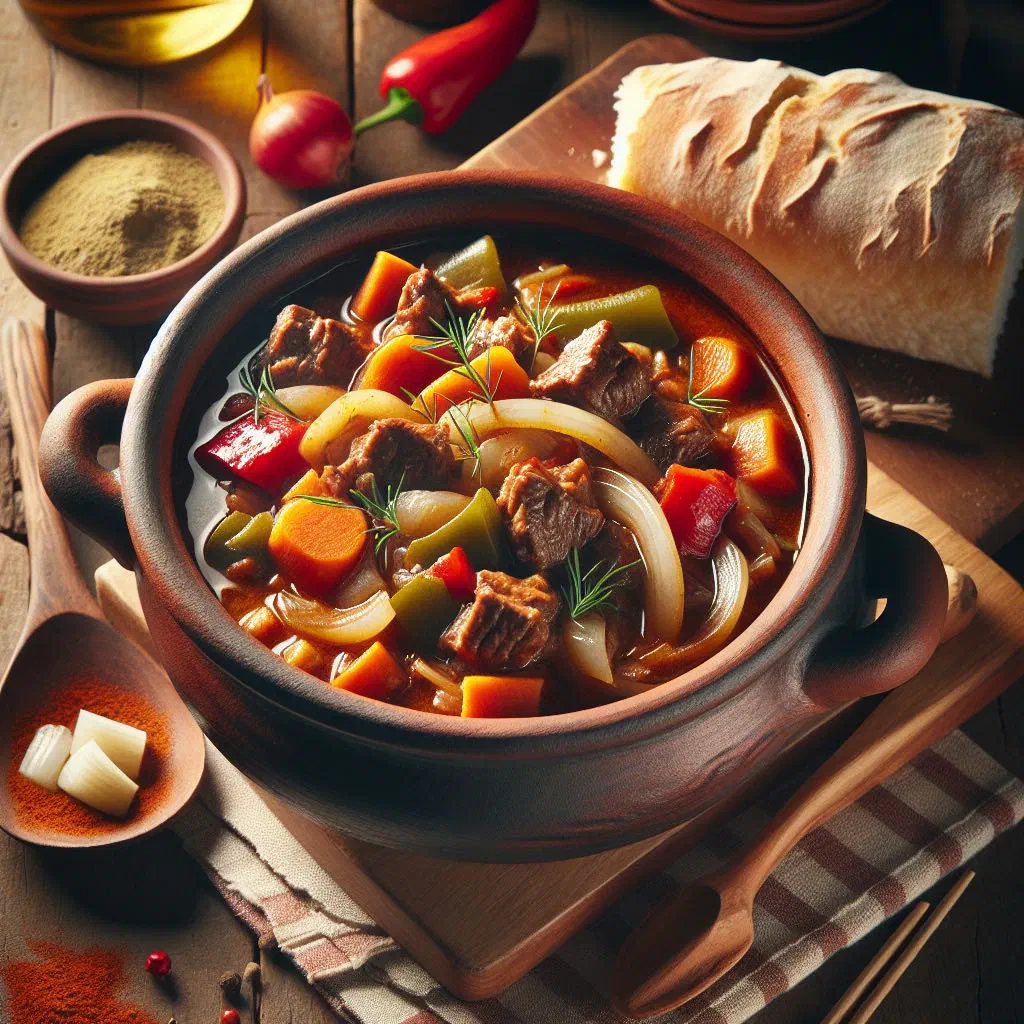
The presentation of your goulash can enrich the whole meal. Serve it in a deep bowl and garnish with fresh herbs such as parsley or dill. A slice of fresh bread or a piece of garlic bread alongside the stew makes an excellent accompaniment, as does a wedge of classic Mamaliga. Serving it in a traditional clay pot lends your dish a wonderfully rustic feel.
A bit of history
The history of goulash can be traced back to Hungarian cuisine, where the dish has its origins. It began as the food of herdsmen, who wanted to make a nourishing meal from just a few ingredients. In Romania, goulash quickly became a much-loved dish and evolved to take in regional flavours and produce. This culinary blending speaks to the cultural diversity and shared traditions of both countries, and sits comfortably within the wider world of Romanian cuisine.
More recipe ideas
Summary: Goulash
Goulash is a hearty, spiced stew that brings together the traditions and flavours of Hungarian and Romanian cooking. With its robust ingredients and straightforward preparation, it is ideal for sociable meals or cold days. It invites you to experiment with different ingredients and adjust things to your own liking. Give it a try and discover the rich culinary culture of Romania.