National Dish Russia: Rassolnik (Recipe)

In this article
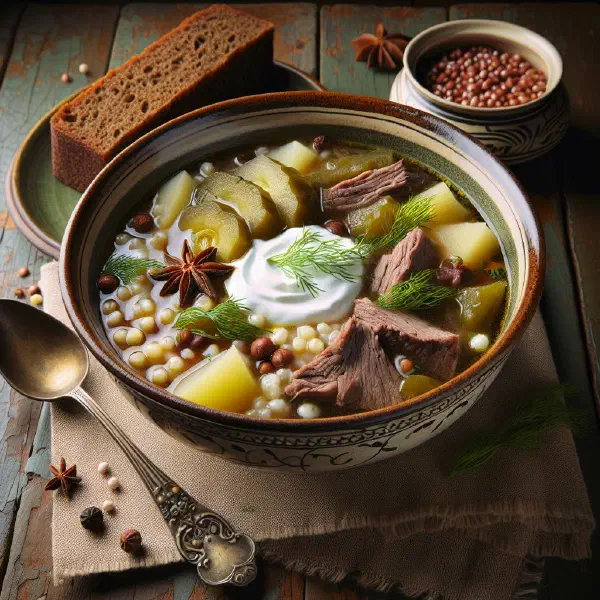
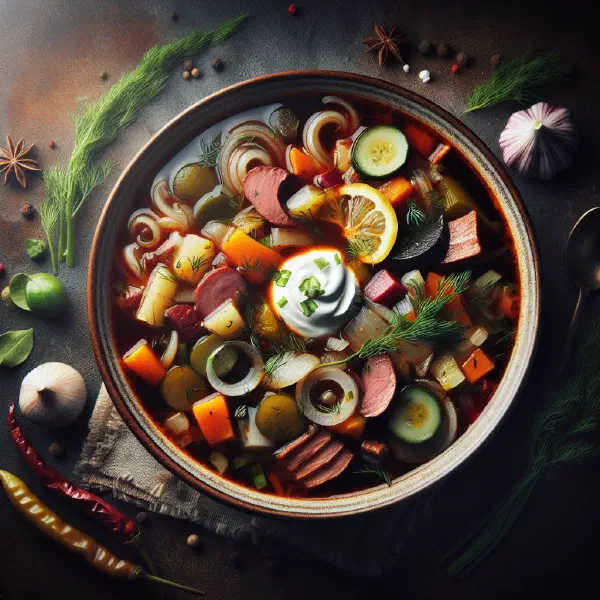
Warm up a cold day with Rassolnik, a hearty Russian soup that balances rich, savoury depth with a bright, tangy lift. Built around tender chunks of meat, soft potatoes and the unmistakable sharpness of pickled cucumbers, it is the kind of bowl that families have turned to for generations after a long day’s work. Endlessly adaptable and deeply comforting, this classic of the Russian table is ready to find a place in your own kitchen.
About Rassolnik
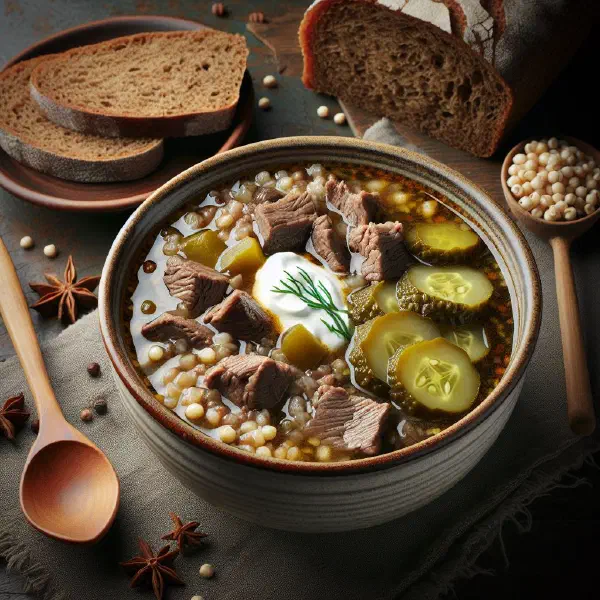
Rassolnik is a traditional Russian stew prized for a flavour profile that is both hearty and refreshing at the same time. Rooted in Slavic cuisine, it was often made by families craving something warming after a long working day. Its core ingredients are pickled cucumbers, potatoes and various cuts of meat, which together make it the perfect meal for cold weather. On top of that, Rassolnik can be prepared in countless variations, making it remarkably flexible to suit a wide range of tastes.
Ingredients (serves 1–2)
- 200 g beef (or chicken)
- 2 medium potatoes
- 1 large onion
- 1–2 pickled cucumbers
- 1 carrot
- 1.5 litres stock (vegetable or meat)
- 2 tablespoons vegetable oil
- 1 bay leaf
- Salt and pepper, to taste
- Fresh parsley, to garnish
Shopping for the ingredients
When shopping for Rassolnik, it is important to choose fresh ingredients to get the best possible flavour. Try to use organically grown vegetables and fresh meat. Pickled cucumbers are a central part of Rassolnik, so it can be worth seeking out local producers who specialise in traditional preserving methods. If you enjoy experimenting, you can also try different types of cucumber to give the dish your own personal twist.
Preparing the dish
Before you start cooking the Rassolnik, the ingredients need a thorough bit of preparation. First wash and peel the potatoes, carrots and onions. Cut the vegetables into even pieces so they cook through at the same rate. The pickled cucumbers can likewise be diced small so their flavour spreads evenly through the stew. If you are using fresh meat, cut it into bite-sized pieces so it cooks nicely in the stock.
Step-by-step instructions
- Heat the vegetable oil in a large pot and sauté the onions until translucent.
- Add the diced beef and brown it all over.
- Add the diced potatoes and carrots to the pot and fry everything for about 5 minutes.
- Pour in the stock, add the bay leaf, and let it simmer for 30 minutes.
- Add the pickled cucumbers and season with salt and pepper to taste.
- Let the stew simmer for a further 10 minutes until everything is well infused.
- Serve the Rassolnik in bowls and garnish with fresh parsley.
Gluten-free / lactose-free version
Rassolnik is naturally gluten-free and lactose-free, as the main ingredients contain no such components. When buying your stock, however, check that it too is gluten-free. Many shop-bought stocks contain wheat or other sources of gluten. Homemade stock is an excellent way to make sure your dish stays completely free of gluten.
Tips for vegans and vegetarians
For a vegan or vegetarian version of Rassolnik, simply use vegetable stock and replace the beef with plant-based proteins such as soya or tofu. The pickled cucumbers remain a cherished component, since they deliver the stew’s characteristic flavour. You can also add extra vegetables such as peppers or celery to boost the range of nutrients. A splash of plant-based cream at the end of cooking lends the dish a lovely creamy note.
More tips and tricks
To make your Rassolnik even tastier, you can add various spices to suit your personal taste. Some cooks recommend a little garlic or ginger to give the stew a piquant edge. A pinch of smoked paprika can also add extra depth of flavour. Bear in mind that the flavours mostly develop after cooking, so the stew often tastes its best when reheated the next day.
Adapting the recipe to your taste
Adapting Rassolnik could not be easier, as it is a very flexible dish. Depending on the season, you can add or leave out fresh vegetables. So if you happen to have a courgette or some pumpkin to hand, this is the perfect moment to work them in. You can experiment with the stock too, a Mediterranean or Asian-style stock, for instance, to shift the flavour in a new direction.
Ingredient substitutions
If there are certain ingredients in Rassolnik you do not like or cannot find, there are plenty of alternatives. In place of beef, for example, you could use chicken or fish to explore different flavours, much as the river flavours shine in a bowl of Ukha. For the pickled cucumbers you might also consider pickled olives or capers for a more intense taste. The stock can even be replaced with coconut milk for a creamier variation.
Drink pairing ideas
Rassolnik goes wonderfully with a range of drinks that complement the flavours of the stew. A lightly chilled house beer or a fruity red wine can round out the dish beautifully. If you prefer alcohol-free options, try sparkling water with lemon or a fruity iced tea. These drinks are refreshing and help to balance the savoury, tangy character of the Rassolnik.
Serving and presentation ideas
The presentation of Rassolnik can be lifted by your choice of serving bowls and garnishes. Serve the stew in rustic, rounded bowls and garnish with fresh, finely chopped parsley. A squeeze of fresh lemon can add a welcome lift of colour and flavour. A side of crusty bread is also a great way to enrich the stew and make it even more inviting, the same comforting partner you might reach for alongside a bowl of Shchi.
A bit of history
Rassolnik has its roots in Russian culture and is closely tied to the traditions of Slavic cuisine. Originally it was made as a filling meal for workers and farmers. Through its combination of simple yet nourishing ingredients, Rassolnik reflects the lifestyle of the people and their values. Over time the recipe has evolved, and many regional variations have emerged that reveal the influence of different cultures across the breadth of Russian cuisine.
More recipe ideas
Summary: Rassolnik
In summary, Rassolnik is a delicious and nourishing stew that is cherished both in its traditional form and in modern variations. The flavours of pickled cucumbers, fresh vegetables and meat come together in a harmonious composition that is especially welcome during the colder months. With a few simple adjustments, the recipe can be tailored to personal preferences, so every diner finds something to love. Be sure to try this heartwarming dish and let the art of Russian cooking work its magic.