National Dish Russia: Vinegret (Recipe)
In this article
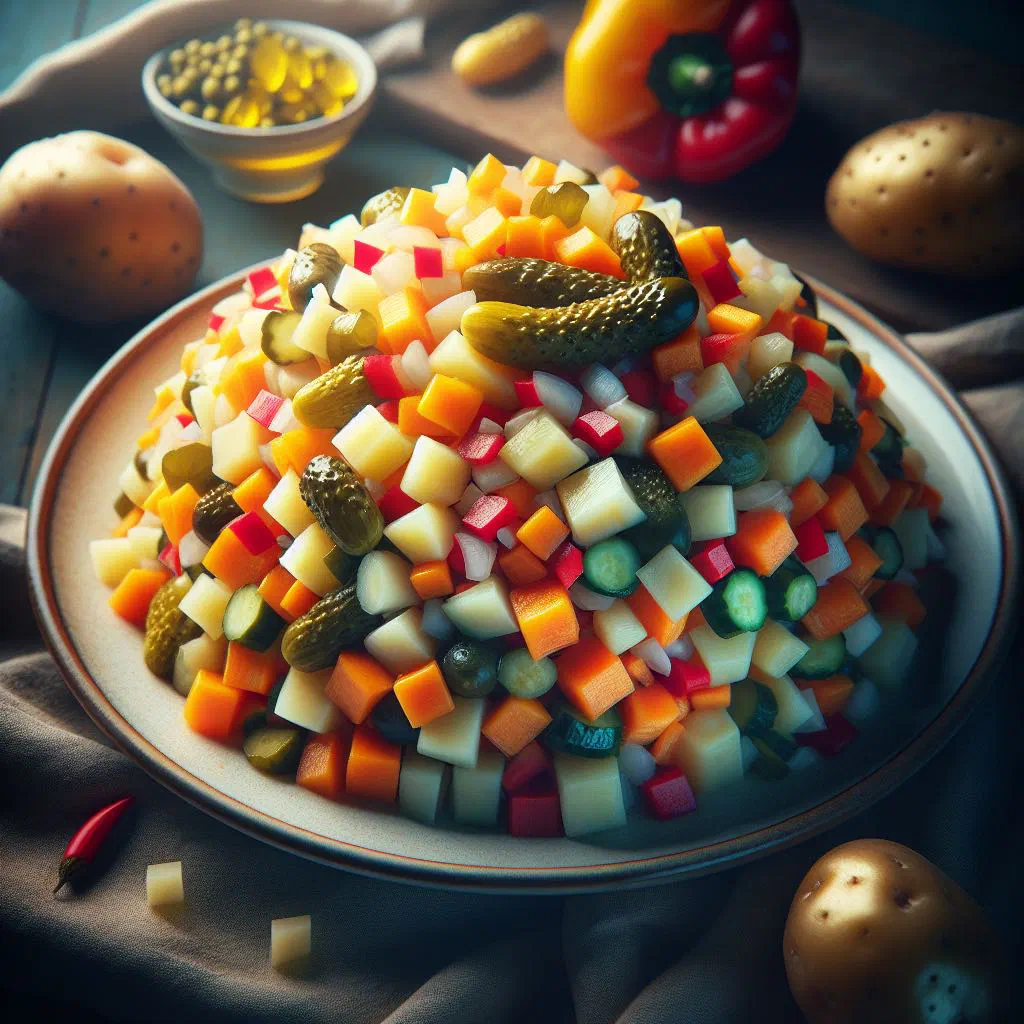
Meet Vinegret, the jewel-bright beetroot salad that has graced Russian tables for generations. With its glowing ruby hue and refreshing tangle of earthy roots and tangy pickles, it is as much a feast for the eyes as for the palate. Simple, wholesome and endlessly adaptable, this colourful dish brings a genuine taste of Russian home cooking to your kitchen. Perfect as a light starter, a side or a humble main.
About Vinegret
Vinegret is a much-loved Russian salad, celebrated for its colourful, healthy make-up. The dish first grew popular in the days of the tsars and has since settled into the role of a simple yet delicious everyday staple. Its defining ingredient is cooked beetroot, which lends the salad its characteristic deep-red colour. Combined with potatoes, carrots and other fresh ingredients, the result is a dish that looks every bit as good as it tastes. Like the equally homely Okroshka, it shows just how satisfying humble vegetables can be.
Ingredients (serves 1–2)
- 2 medium beetroots
- 2 medium potatoes
- 1 medium carrot
- 1 small onion
- 1 tablespoon vinegar
- 1 tablespoon vegetable oil
- Salt and pepper, to taste
- Fresh herbs, to garnish (such as parsley or dill)
Shopping for the ingredients
To make Vinegret, it is worth seeking out fresh, good-quality ingredients. Beetroots, potatoes and carrots are the main components and are ideally chosen organic for the very best flavour. Onion, vinegar and oil are usually already to hand in any kitchen. Try to buy the vegetables shortly before you cook to make sure everything is as fresh as possible.
Preparing the dish
Before you start making Vinegret, wash and peel all the vegetables thoroughly. The beetroots, potatoes and carrots need to be boiled until soft enough to dice neatly. This can take a little while, so it is sensible to get the cooking going while you prepare everything else. Meanwhile, finely chop the onion so it is ready to season the salad later on.
Step-by-step instructions
- Boil the beetroots, potatoes and carrots in a large pan until soft.
- Let the vegetables cool, then peel them.
- Cut the beetroots, potatoes and carrots into small cubes.
- Mix the diced vegetables together in a large bowl.
- Add the chopped onion, vinegar, oil, salt and pepper.
- Stir everything well and let the salad rest for a few minutes.
- Garnish with fresh herbs just before serving.
Gluten-free / lactose-free version
Vinegret is naturally gluten-free and lactose-free, as it contains neither dairy nor any gluten-bearing ingredients. This makes the salad an ideal choice for anyone with food intolerances. Simply double-check that the ingredients you use, such as the oil and vinegar, are gluten-free too.
Tips for vegans and vegetarians
Vegans and vegetarians can enjoy Vinegret with ease, since the recipe is already built entirely on plant-based ingredients. You can swap in different vegetable oils if you fancy experimenting with new flavours. Add further vegetables such as cucumber or peppers for extra aromas and textures. In this way the salad can be varied however you like and stays interesting every time.
More tips and tricks
To deepen the flavour of Vinegret, let the salad rest in the fridge for a while before serving so the aromas can mingle and develop. You might also try alternative dressings to give the salad a fresh twist. Experiment with different herbs or spices you have at home to create entirely new flavour combinations.
Adapting the recipe to your taste
Vinegret is wonderfully flexible, which means you can easily adjust the ingredients to suit your personal taste. If you prefer something with more heat, add a little chilli or paprika. For a creamier consistency, stir in some vegan yoghurt or a light mayonnaise. Remember that the salad is yours to vary as you please. Keep trying new ingredients until it is just right.
Ingredient substitutions
If you are allergic to certain ingredients in Vinegret, or simply do not care for them, there are plenty of alternatives. Courgette can stand in for beetroot, while sweet potatoes add a gentler, sweeter note. You could also try fresh radishes for an extra crunch. Touches like these keep the recipe exciting and let you tailor it to your own preferences, much as you might with a hearty Olivier Salad.
Drink pairing ideas
To enjoy Vinegret at its best, light, refreshing drinks make fine companions. A glass of cold sparkling water with lemon slices or a fruity fruit tea pairs beautifully. A dry white wine also harmonises splendidly with the salad.
Serving and presentation ideas
The presentation of Vinegret can lift the whole impression of the dish. Serve the salad in a decorative bowl and garnish generously with fresh herbs or edible flowers. A few slices of lemon or lime around the rim make it look even more inviting. Pay attention to the colours of your ingredients and make sure the finished dish looks fresh and appetising.
A bit of history
Vinegret has its roots in Russian culture, where vegetable dishes have been cherished for centuries. It was originally served in the days of the tsars as a nourishing, wholesome dish and remains a popular side in many Russian households to this day. Its simple preparation and versatility made it a staple for countless families. In recent years the salad has also gained an international following, enjoying great popularity in restaurants worldwide, a fine ambassador for Russian cuisine alongside classics like Poltavsky Borscht.
More recipe ideas
Summary: Vinegret
In this summary we want to gather up the merits of Vinegret. It is a nourishing, colourful salad that comes together quickly and easily. With its many possibilities for adaptation and its reliance on fresh ingredients, it is not only a healthy choice but a genuine explosion of flavour. Try this traditional dish for yourself and bring a piece of Russian culture into your own kitchen.