National Dish Rwanda: Isombe (Recipe)
In this article
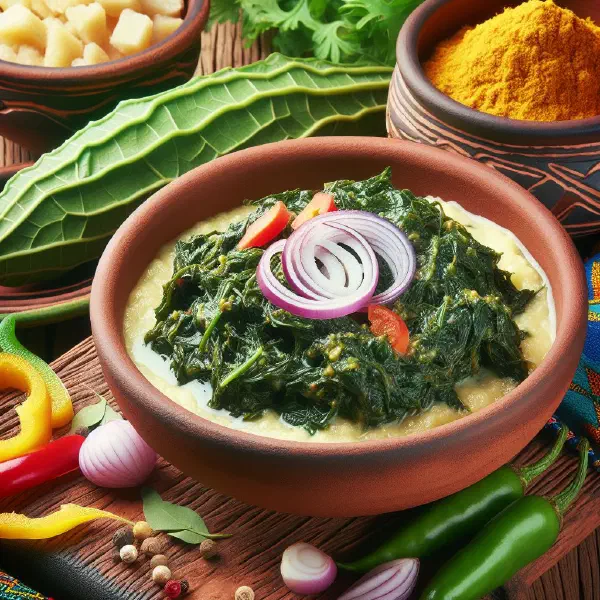
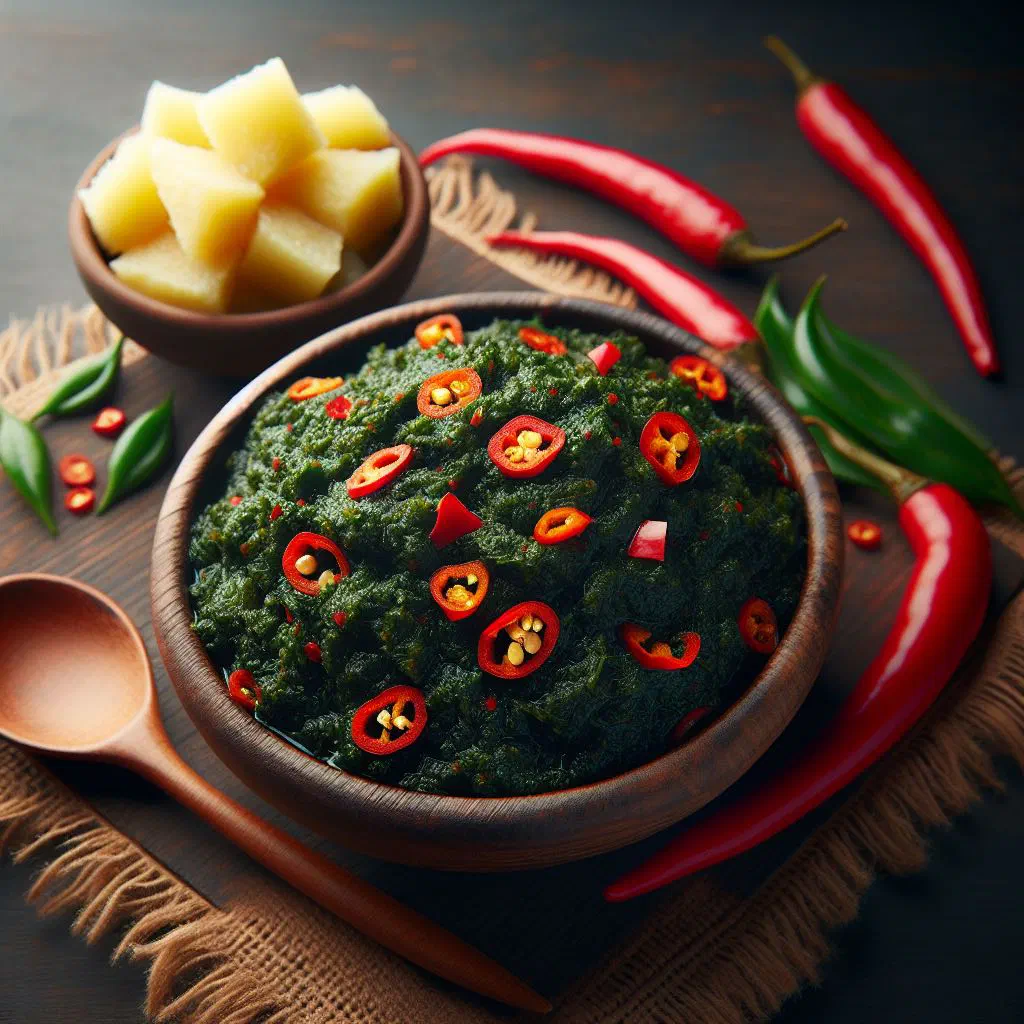
Isombe is cassava leaves pounded and cooked slowly with peanut butter. The leaves need real cooking time, both for texture and because raw cassava leaf is not safe. Rwanda eats it with ubugali, the cassava or maize porridge.
About Isombe
Isombe is Rwanda’s national dish. Young cassava leaves are pounded, boiled, then simmered with onion, peanut butter and often aubergine or dried fish. The peanut thickens it and takes the edge off the leaves’ slight bitterness.
Cassava gives twice: the root as flour for ubugali, the leaves for this.
Ingredients (serves 1–2)
- 500 g cassava leaves, fresh or frozen
- 2 tablespoons peanut butter
- 1 onion, chopped
- 2 garlic cloves, crushed
- 1 teaspoon palm oil or another vegetable oil
- 500 ml water or vegetable stock
- Salt and pepper, to taste
- A pinch of chilli powder (optional)
Shopping for the ingredients
Frozen pounded cassava leaves are sold in African and Brazilian shops and are the practical form; they are already prepared and safe. Unsweetened peanut butter, or grind roasted peanuts. Palm oil gives colour and is traditional.
Preparing the dish
If starting with fresh leaves, strip them from the stalks, pound them and boil for at least twenty minutes. Slacken the peanut butter with warm water before it goes in, or it clumps and never disperses.
Step-by-step instructions
- Bring the water or vegetable stock to the boil in a pan. Add the cassava leaves and let them simmer for at least 20 minutes.
- Meanwhile, heat the oil in a frying pan and sauté the chopped onion and crushed garlic until soft and golden brown.
- Add the sautéed onions and garlic to the cassava leaves.
- Slacken the peanut butter with a little warm water and stir it in.
- Reduce the heat and let the isombe simmer for a further 30 to 40 minutes, until it thickens. Season with salt, pepper and chilli powder to taste.
- Make sure the cassava leaves are completely tender before taking the dish off the heat.
Gluten-free / lactose-free version
Isombe contains no gluten and no dairy. Served with ubugali it is suitable for both restrictions without adaptation.
Tips for vegans and vegetarians
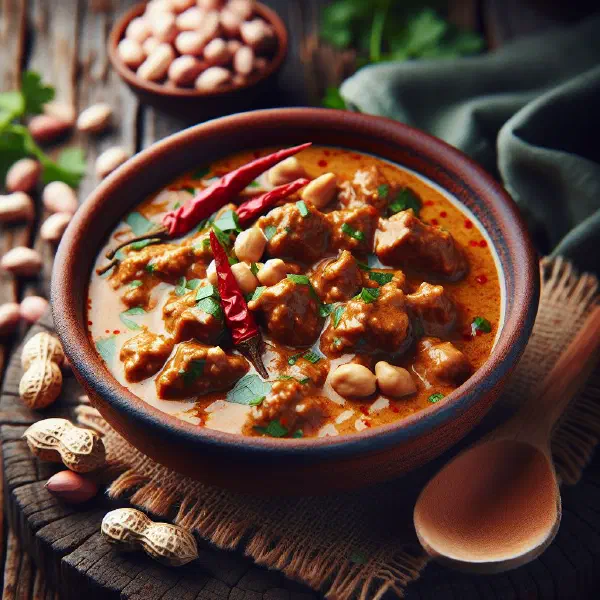
Isombe is vegan as written and is eaten that way most of the time. Cassava leaves and peanuts together are nutritionally substantial, which is why the combination is a staple rather than a side. Ubunyobwa, the peanut sauce, is the related dish.
More tips and tricks
Cook the leaves thoroughly, which is a safety point as much as a texture one. Slacken the peanut butter first. And do not let it boil hard once the peanut is in, since the oil separates and the sauce splits.
Adapting the recipe to your taste
Aubergine and green pepper cooked in are common. Dried fish or smoked fish adds depth for anyone not keeping it vegan. Chilli to taste, though Rwandan cooking is generally mild.
Ingredient substitutions
Spinach or chard replace cassava leaves with a milder result and no safety concern. Cashew paste for peanut. Vegetable oil for palm oil, at some cost to colour.
Drink pairing ideas
Ikivuguto, the fermented milk, is the traditional Rwandan drink. Urwagwa, banana beer, at gatherings. Tea otherwise.
Serving and presentation ideas
Serve it beside a mound of ubugali or with rice and ibijumba, the sweet potatoes. Eaten with the right hand, using the porridge to scoop.
A bit of history
Cassava arrived in the Great Lakes region through Portuguese trade and became a staple because it tolerates poor soil and stores in the ground. Its leaves are eaten across Central Africa under many names, saka saka in Congo, matapa in Mozambique, isombe here. It anchors Rwandan cuisine.
More recipe ideas
Summary: Isombe
Isombe is pounded cassava leaves simmered with onion, garlic and peanut butter. Cook the leaves at least twenty minutes, slacken the peanut butter first, and keep the simmer gentle.