National Dish São Tomé and Príncipe: Calulu (Recipe)
In this article
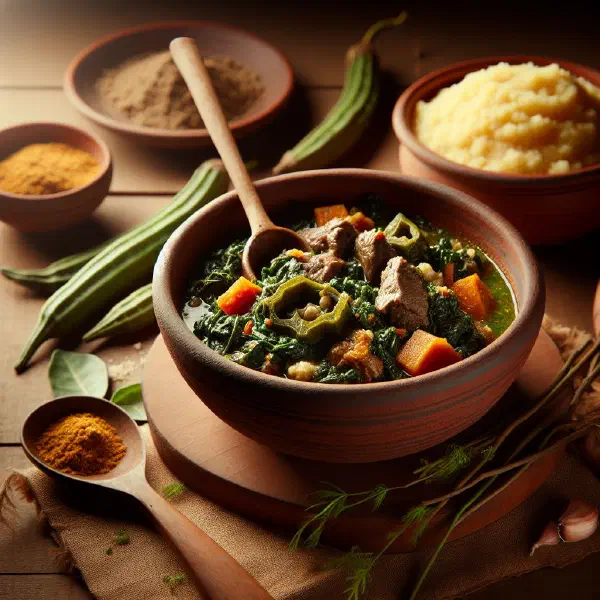
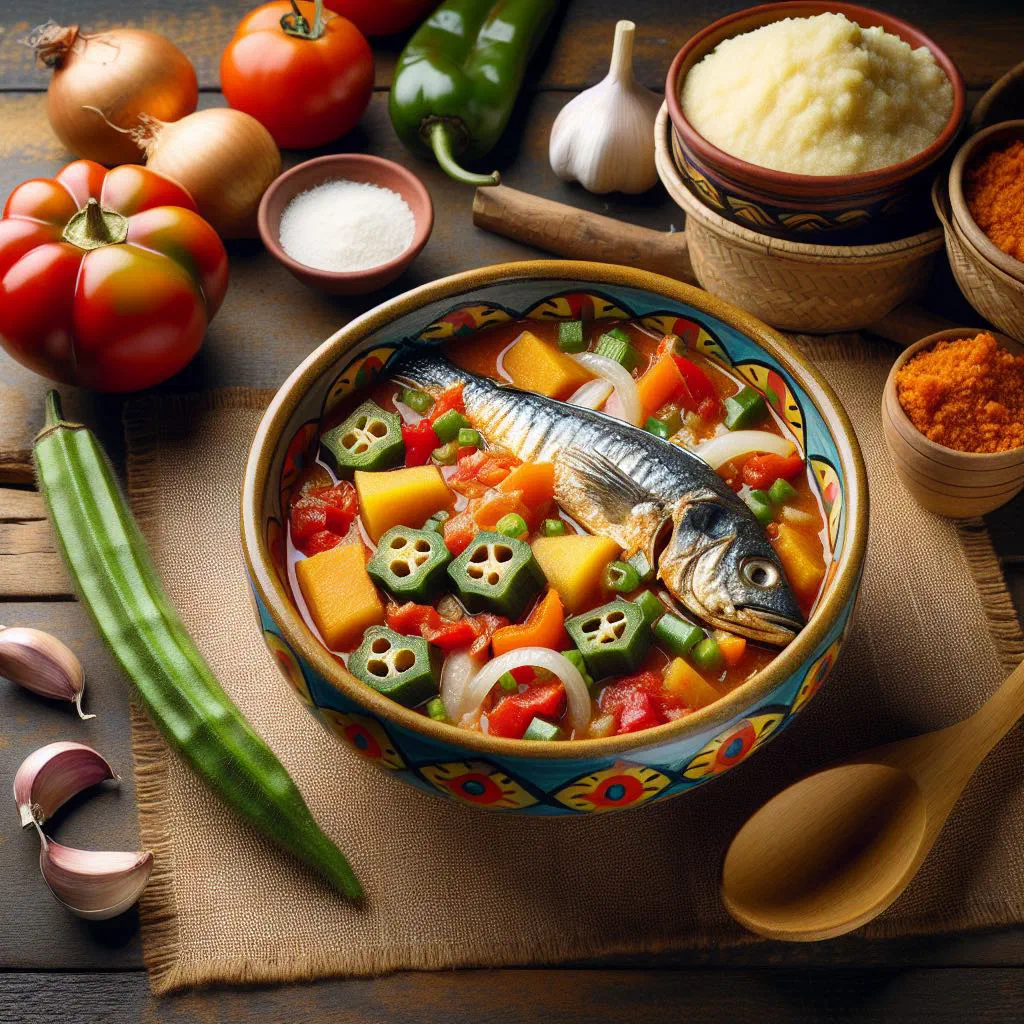
Calulu is fish or meat stewed with leafy greens, okra and a great deal of red palm oil, and it is shared with Angola. On São Tomé the fish version is usually dried and smoked rather than fresh, which gives the stew its depth.
About Calulu
São Tomé and Príncipe is two volcanic islands off the Gulf of Guinea with a population under a quarter of a million. The cooking is Portuguese-African Creole: palm oil, greens, fish, and the cocoa and coffee the islands were planted with.
Calulu combines smoked fish with fresh, several kinds of leaf, okra and aubergine, all cooked down in palm oil. It is served with funge, the cassava porridge.
Ingredients (serves 1–2)
- 300 g fresh fish or chicken
- 2 handfuls leafy greens (spinach or cassava leaves, for example)
- 2 tomatoes, diced
- 1 onion, finely chopped
- 3 garlic cloves, chopped
- 1 pepper, cut into strips
- 200 ml palm oil or another vegetable oil
- 400 ml fish or chicken stock
- 1 chilli (according to taste)
- Salt and pepper to taste
Shopping for the ingredients
Red palm oil, sold as dendê, is what gives calulu its colour and character. Dried or smoked fish alongside the fresh is traditional and worth including. Okra and aubergine both belong even though the recipe omits them.
Preparing the dish
Soak any dried fish for a few hours and flake it. Cook the onion, garlic and tomato down properly in the palm oil before liquid goes in. The greens go last and need only a few minutes.
Step-by-step instructions
- Heat the oil in a large pot or deep pan over a medium heat.
- Add the onions, garlic and pepper and sauté until softened.
- Add the fish or chicken and fry gently to seal.
- Stir in the tomatoes and the chilli and cook until the oil separates, about 8 minutes.
- Reduce the heat and pour in the fish or chicken stock.
- Add the leafy greens and simmer for 10 minutes until they wilt and the flavours come together.
- Season with salt and pepper to your taste.
- Continue to simmer until the stew reaches the consistency you like.
Gluten-free / lactose-free version
Calulu contains no gluten and no dairy. Served with funge, made from cassava flour, the whole meal is naturally suitable.
Tips for vegans and vegetarians
The palm oil, greens and okra base works without fish. Aubergine, beans and mushrooms carry it, and a piece of dried seaweed restores some of the marine note. The greens are the substance of the dish in any case.
More tips and tricks
Use real red palm oil. Cook the tomato base until the oil separates and rises, which is the West African marker. And add the greens late so they keep some colour and texture.
Adapting the recipe to your taste
Okra and aubergine both belong and thicken the stew. Smoked fish alongside fresh gives real depth. Calulu de peixe and calulu de carne are the fish and meat versions by name.
Ingredient substitutions
Spinach, chard or cassava leaves all work as the greens. Sunflower oil with paprika approximates palm oil’s colour only. Any firm fish.
Drink pairing ideas
Palm wine, which is made on the islands. Fresh cocoa or coffee afterwards, since São Tomé grows both and the cocoa is exceptional. Cold beer with the meal.
Serving and presentation ideas
Serve it with funge or boiled cassava, spooned alongside rather than over. Chilli sauce on the table. It is family food and comes to the table in the pot.
A bit of history
The islands were uninhabited before Portuguese settlement in the 1470s and became a sugar and later cocoa colony worked by enslaved and indentured labour. The cooking is Creole in the exact sense, and calulu, shared with Angola, is one of the clearest African survivals. It anchors Santomean cuisine.
More recipe ideas
Summary: Calulu
Calulu is fish or meat stewed with leafy greens and okra in red palm oil. Use real dendê, cook the base until the oil separates, and add the greens last.