National Dish São Tomé and Príncipe: Farofa de Coco (Recipe)
In this article
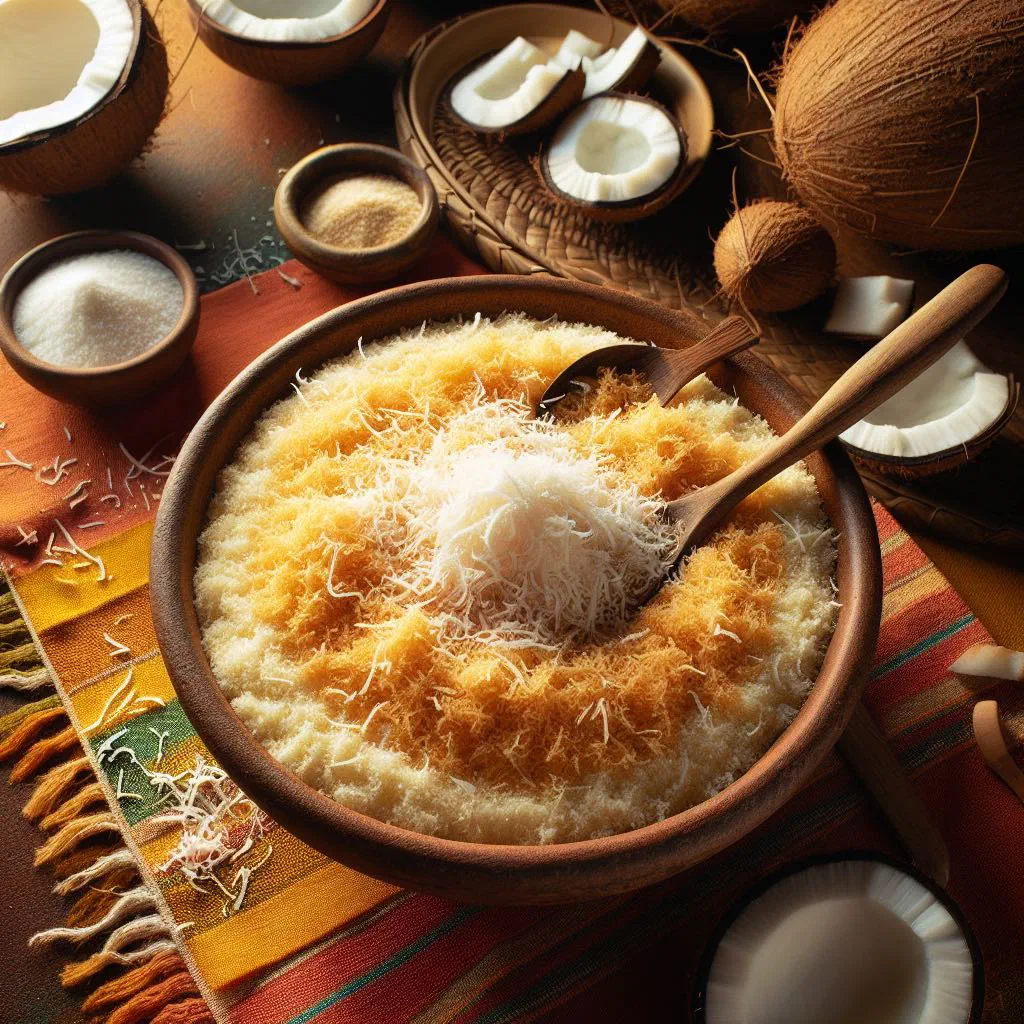
Meet Farofa de Coco, a golden, crumbly side dish that carries the whole tropical character of São Tomé and Príncipe in a single spoonful. Toasted cassava flour meets freshly grated coconut, softened with butter and sweetened onions, for something that sits happily between savoury and sweet. It takes barely fifteen minutes at the stove, yet it turns an ordinary plate of fish or beans into a small celebration. This is island cooking at its most generous.
About Farofa de Coco
Farofa de Coco is far more than a simple side; it is an experience. The pairing of toasted cassava flour with the natural sweetness of coconut creates a harmony that bridges sweet and savoury without ever tipping too far in either direction. It appears regularly at family gatherings and festive occasions, which has made it something of a symbol of hospitality and good cheer. This treasure from the kitchens of São Tomé and Príncipe shows just how rich and varied the islands’ cooking can be.
Ingredients (serves 1–2)
- 200 g cassava flour
- 100 g fresh coconut, grated
- 50 g butter or vegan margarine
- 1 small onion, finely chopped
- 1 garlic clove, chopped
- Salt to taste
- Pepper to taste
- Fresh herbs (parsley or coriander), to garnish
Shopping for the ingredients
The ingredients for farofa de coco should be as fresh and as good in quality as you can manage, since there is nowhere for a tired coconut to hide. Fresh coconuts turn up in well-stocked supermarkets and on market stalls. Cassava flour is sold in African and Asian grocery shops and should always be the unsweetened kind. It is worth picking up organic fresh herbs too, as they add an extra layer of aroma to the finished dish.
Preparing the dish
Before you start cooking farofa de coco, set out everything you need. Chop the onion and garlic finely so they soften properly as they fry. Grate the fresh coconut yourself, or use ready-grated coconut as long as it is not sweetened. Have a suitable frying pan ready as well, ideally a wide one, so the flour toasts evenly and turns pleasantly crisp rather than clumping together.
Step-by-step instructions
- Heat the butter in a frying pan over a medium heat.
- Add the chopped onion and garlic and sweat them until golden brown.
- Tip in the cassava flour a little at a time, stirring vigorously so it toasts evenly.
- After about 5–7 minutes, add the grated coconut and mix thoroughly.
- Season with salt and pepper and toast for a further 2–3 minutes.
- Take off the heat, garnish with fresh herbs and serve.
Gluten-free / lactose-free version
Farofa de coco is naturally gluten-free, since cassava flour contains no wheat at all. For a lactose-free version, simply swap the dairy butter for vegan margarine or coconut oil, neither change costs you anything in flavour. That makes the dish suitable for guests with particular dietary needs and an easy choice when you are cooking for a mixed table.
Tips for vegans and vegetarians
Vegan guests can enjoy farofa de coco without difficulty as long as the butter is replaced with a plant-based option. Beyond that, you can bulk the dish out with extra vegetables such as peppers or carrots to make it more nourishing. These additions bring colour and texture and lead to a more interesting eating experience overall. Farofa de coco makes an excellent base for creative variations tuned to all sorts of dietary preferences, much like the vegetable-forward Caril de Legumes.
More tips and tricks
To get the most out of your farofa de coco, grate the coconut fresh. It makes a considerable difference to the flavour. A little grated nutmeg adds a surprising depth of aroma and is well worth trying. If you prefer a crisper result, raise the heat towards the end and let the farofa caramelise briefly. Stir regularly throughout, as toasted flour catches and burns faster than you might expect.
Adapting the recipe to your taste
The basic recipe for farofa de coco adapts easily to personal preference. Experiment with extra spices or additions such as toasted nuts to bring in a new dimension of flavour. Even dried fruit can be a fantastic inclusion, lending a sweet note that plays nicely against the salt. Make the dish your own by working out which combinations you like best.
Ingredient substitutions
If fresh coconuts are not available where you are, unsweetened desiccated coconut stands in perfectly well. Olive oil can replace the butter, giving the dish a faintly Mediterranean edge. For anyone wanting more protein, adding chickpeas or borlotti beans makes an interesting and tasty option, the same trick that gives Feijão com Óleo de Palma its substance. Variations like these make farofa de coco a flexible dish that suits a wide range of tastes.
Drink pairing ideas
All sorts of drinks work alongside farofa de coco, from fresh juices to tropical cocktails. A classic caipirinha made with plenty of lime juice plays up the dish’s tropical character beautifully. For an alcohol-free option, reach for coconut-based smoothies or well-chilled iced teas, which echo the coconut in the farofa itself. Try a few different pairings until you find the combination that suits you.
Serving and presentation ideas
Presentation can lift the whole farofa de coco experience considerably. Serve it in a brightly coloured bowl or on a handsome plate, garnished with fresh herbs. Another lovely idea is to present the farofa inside a halved coconut shell, which underlines the tropical mood. Fresh fruit scattered around as decoration adds visual appeal and never fails to impress guests, a mango salad such as Salada de Manga alongside makes a fine companion.
A bit of history
Farofa is an essential part of Brazilian cooking and traces its origins to indigenous culture. The dish is not simply a social staple but a reflection of the many cultures that have mingled in the region over the centuries. Farofa de coco in particular is a variation that draws on the resources and distinctive flora of São Tomé and Príncipe. The recipe has been passed down through generations and forms a meaningful part of the country’s gastronomic identity, standing alongside the staples of São Toméan cuisine.
More recipe ideas
Summary: Farofa de Coco
Farofa de coco is a fascinating dish that captures both the flavours and the history of São Tomé and Príncipe. With its distinctive combination of cassava flour and fresh coconut, it offers a delicious way into the tropical tastes of the region. The recipe is endlessly adaptable and works just as well for special occasions as for everyday cooking. Give farofa de coco a try and add something genuinely different to your culinary repertoire.