National Dish Scotland: Haggis (Recipe)
In this article
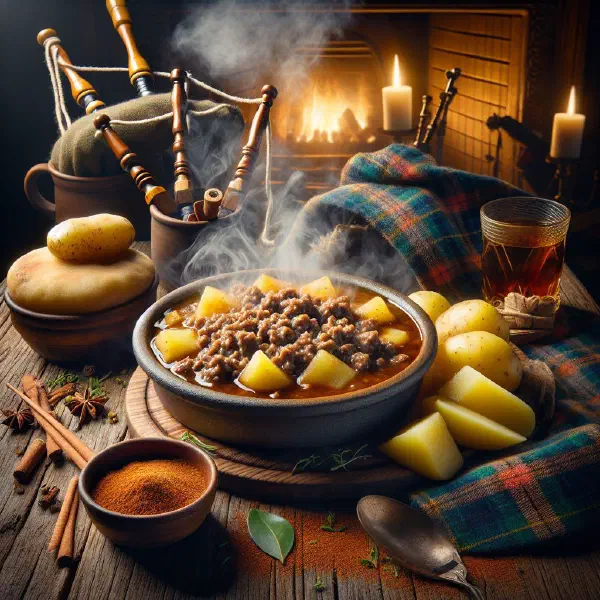
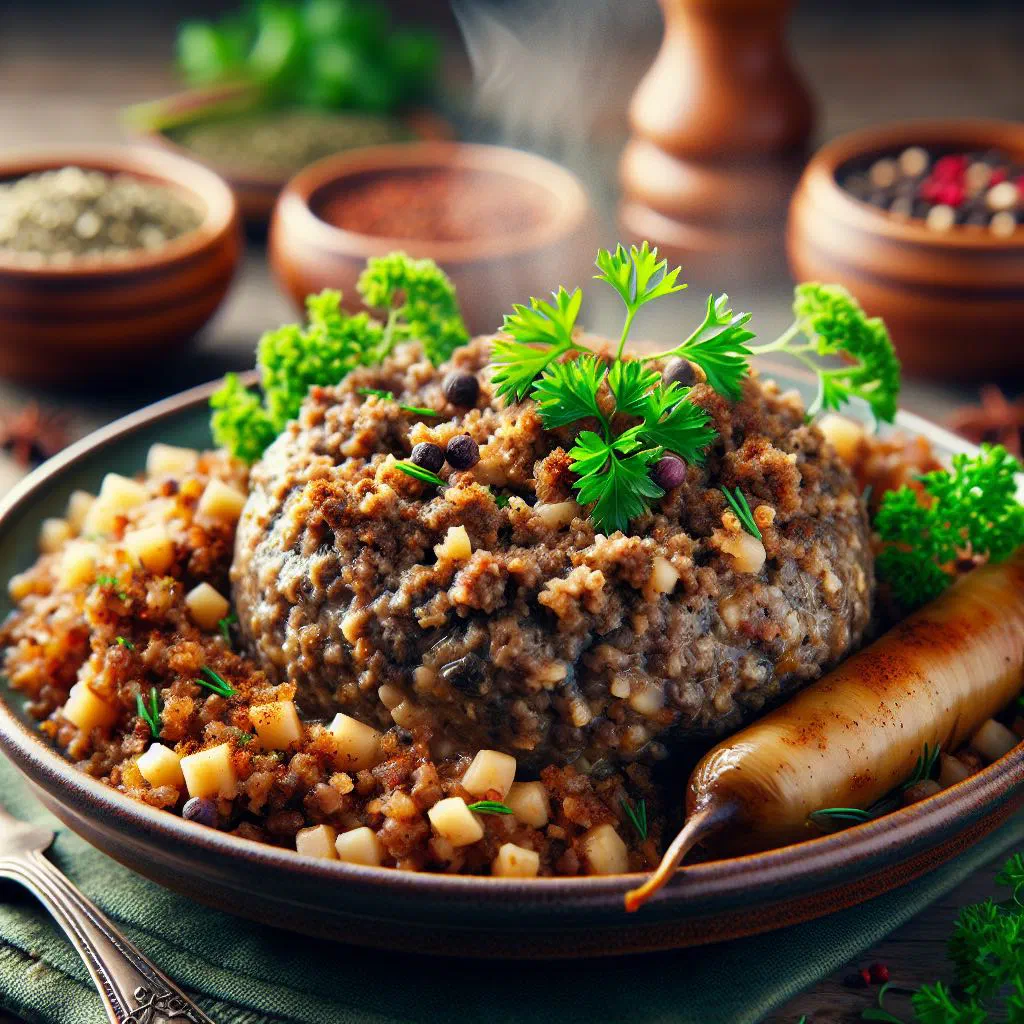
Haggis is sheep’s offal minced with oatmeal, suet and spice, packed into a stomach and boiled. It sounds worse than it tastes. What it actually tastes of is peppery, nutty and rich, and the oatmeal gives it a crumbly texture closer to a coarse pâté than a sausage.
About Haggis
Haggis is eaten year round in Scotland and ceremonially on Burns Night, 25 January, when it is piped in and addressed with Burns’s poem before being cut open.
It is served with neeps and tatties, mashed swede and potato, and a whisky sauce. The lungs are the reason haggis cannot legally be sold in the United States, a ban that has held since 1971.
Ingredients (serves 1–2)
- 200g sheep’s heart
- 200g sheep’s liver
- 200g sheep’s lung
- 200g oatmeal
- 1 large onion
- 100g beef suet
- 1 tsp salt
- 1 tsp pepper
- 1 tsp nutmeg
- 1 tsp allspice
- 1 sheep’s stomach (cleaned and washed)
Shopping for the ingredients
A butcher can order the pluck, the heart, liver and lungs together, though lungs are restricted in some countries. Pinhead or coarse oatmeal, toasted, not rolled oats. Beef suet rather than vegetable, and plenty of black pepper: haggis should be noticeably peppery.
Preparing the dish
Toast the oatmeal in a dry pan until it smells nutty, which takes five minutes and makes a real difference. Simmer the offal, then mince it coarsely rather than finely. Keep some of the cooking liquid to moisten the mixture.
Step-by-step instructions
- Simmer the sheep’s offal in boiling salted water for about 1–2 hours, until tender; keep the liquid.
- Toast the oatmeal in a dry pan until nutty and golden.
- Mince the cooked offal coarsely and combine with the chopped onion, toasted oats, suet and spices in a large bowl.
- Moisten with some of the cooking liquid until the mixture is loose but not wet.
- Fill the sheep’s stomach to around two-thirds full and sew it closed, pricking it a few times.
- Cook the stuffed stomach in a large pot of gently simmering water for 3 hours, topping up as needed.
- Lift the haggis carefully from the water and let it rest for 10 minutes before cutting it open.
Gluten-free / lactose-free version
Oats are naturally gluten-free but are almost always contaminated in milling, so use certified gluten-free oats. There is no dairy in haggis. Most commercial haggis contains wheat rusk, so home-made is the safer route.
Tips for vegans and vegetarians
Vegetarian haggis is genuinely good and widely sold in Scotland: oats, lentils, kidney beans, mushrooms, carrot and the same spicing. Macsween’s version has been made since the 1980s. It is a real dish rather than a grudging substitute.
More tips and tricks
Toast the oatmeal. Fill the stomach only two thirds, because the oats swell and a full one bursts. Prick it a few times. And keep the water at a bare simmer; a rolling boil will split it.
Adapting the recipe to your taste
A sausage casing or even a pudding basin replaces the stomach, which is what most modern butchers use. More pepper is almost always right. A whisky cream sauce is the standard modern accompaniment.
Ingredient substitutions
Lamb’s liver and heart without lung is the common commercial compromise. Vegetable suet works. Pinhead oats or coarse oatmeal, never rolled.
Drink pairing ideas
Scotch whisky, and a peated Islay stands up to it best. A dram is poured over the haggis in some households. Ale works.
Serving and presentation ideas
Serve it with mashed swede and potato in three separate mounds, whisky sauce poured over. On Burns Night it is piped to the table and cut open with a knife on the line about the trenching of the gushing entrails, which is exactly as dramatic as it sounds.
A bit of history
Sausages made from offal in a stomach are ancient and appear across Europe; the Scottish version is first recorded in the fifteenth century. Burns wrote Address to a Haggis in 1786 and effectively made it a national symbol. It anchors Scottish cuisine.
More recipe ideas
Summary: Haggis
Haggis is sheep’s offal minced with toasted oatmeal, suet and pepper, boiled in a stomach. Toast the oats, fill it two thirds full, prick it, and keep the water below a boil.