National Dish Senegal: Ndambé (Recipe)
In this article
Ndambé is what Dakar eats for breakfast: black-eyed peas stewed soft with onion and chilli, spooned into a length of baguette and handed over in paper. It is cheap, filling and entirely plant-based, and it has been fuelling Senegalese mornings for as long as anyone can remember.
About Ndambé
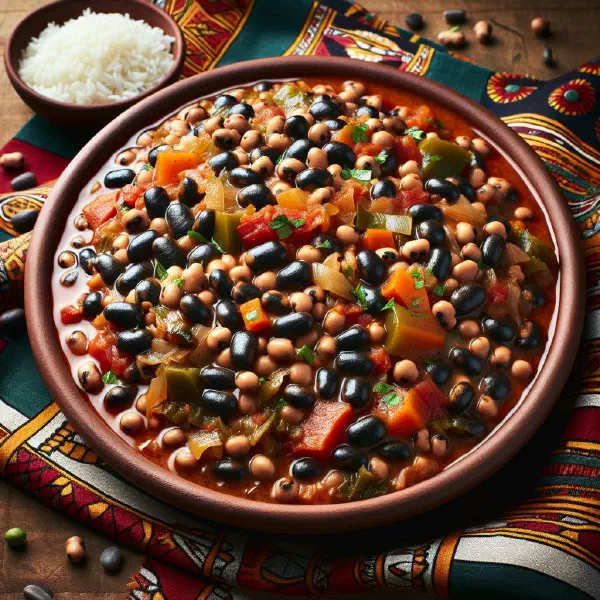
Ndambé is a Senegalese stew of black-eyed peas (niébé), cooked until soft and served with a generous tangle of onions. It is above all a breakfast and street food dish, sold from small stalls and eaten in a split baguette, a legacy of the French colonial bread that Senegal thoroughly made its own. Simple, cheap and satisfying, it belongs to the everyday rather than the ceremonial side of Senegalese cooking.
Ingredients (serves 1–2)
- 200 g dried black-eyed peas (niébé)
- 2 tablespoons groundnut oil or vegetable oil
- 1 large onion, sliced into rings
- 1 small onion, finely chopped (for the sauce)
- 1 tablespoon vinegar or lemon juice
- 1 chilli, or cayenne pepper to taste
- 1 bay leaf
- Salt, to taste
- Baguette, to serve
Shopping for the ingredients
Dried black-eyed peas are widely sold and far better here than tinned, since the cooking liquid becomes part of the dish. Groundnut oil is the authentic choice in Senegal and adds a subtle nuttiness. A proper baguette matters more than you might expect, Senegalese bread is excellent, and the dish is built around it.
Preparing the dish
Soak the peas for at least four hours, or overnight, which shortens the cooking considerably. Slice the large onion into rings for the topping and chop the small one finely for the stew itself. Have the vinegar ready, a splash at the end lifts the whole dish and is what distinguishes ndambé from a plain bean stew.
Step-by-step instructions
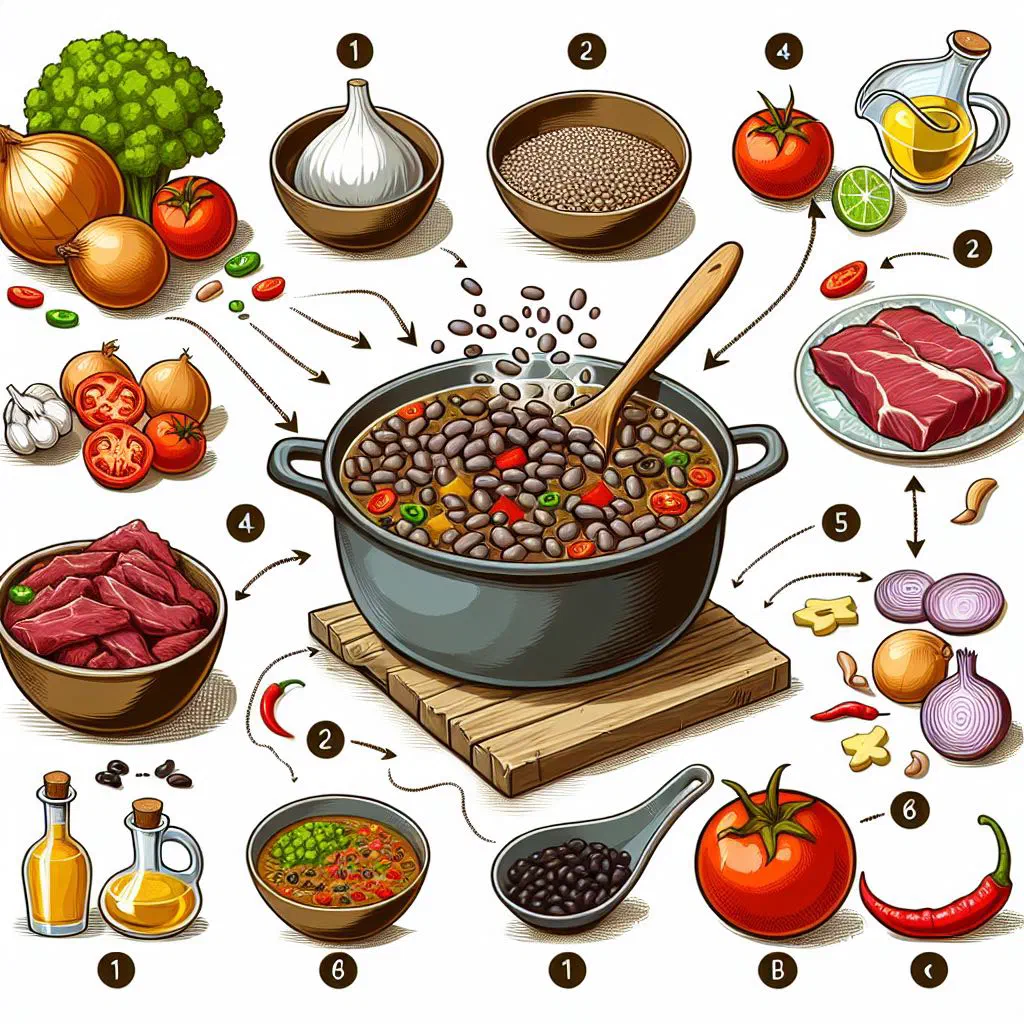
- Soak the black-eyed peas for at least 4 hours, then drain.
- Simmer in fresh water with the bay leaf for 40–50 minutes, until soft.
- Meanwhile, fry the sliced onion rings slowly in oil until deeply golden; set aside.
- In the same pan, soften the chopped onion with the chilli.
- Add the cooked peas with a ladle of their liquid and simmer 10 minutes to thicken.
- Season with salt and stir in the vinegar or lemon juice.
- Split the baguette, spoon in the stew and top with the fried onion rings.
Gluten-free / lactose-free version
The stew itself is naturally free from both gluten and lactose. Serve it over rice or with a gluten-free roll instead of baguette and the whole meal stays suitable, in Senegal it is also eaten simply with a spoon, without bread at all.
Tips for vegans and vegetarians
Ndambé is vegan exactly as written, and it is a genuinely substantial plant-based breakfast, with plenty of protein from the peas. Some versions add sausage or meat, but the original street food version is meat-free, and better for it, since the onions and chilli carry all the flavour needed.
More tips and tricks
Fry the onion rings slowly and patiently until they are properly caramelised; rushing them is the most common mistake. Keep some of the bean cooking liquid to loosen the stew, as it carries flavour that plain water does not. And do not skip the vinegar. That sharp note is the signature of the dish.
Adapting the recipe to your taste
Diced tomato or a spoonful of tomato paste is a common addition and gives a redder, sweeter stew. Some cooks add mustard, which is very Senegalese and works beautifully. More chilli is entirely traditional, and a scattering of fresh parsley at the end brightens everything.
Ingredient substitutions
Other beans work, pinto, borlotti or even chickpeas, though the texture changes. Tinned black-eyed peas cut the cooking time to minutes if you are in a hurry; rinse them and add a little stock. Any neutral oil substitutes for groundnut oil.
Drink pairing ideas
Café Touba, Senegalese coffee spiced with grains of selim, is the classic breakfast companion and cuts through the richness beautifully. Bissap (hibiscus juice) or ginger juice are the cold alternatives. Strong sweet tea (attaya) usually follows rather than accompanies.
Serving and presentation ideas
Serve ndambé in a split baguette, wrapped in paper, exactly as it is sold on the street in Dakar. It is meant to be eaten with your hands, standing up if necessary. In a bowl, top it with the fried onions and a wedge of lime. Extra chilli sauce on the side is expected.
A bit of history
Black-eyed peas are indigenous to West Africa and have been cultivated there for thousands of years, long predating the arrival of the French baguette that now carries them. Ndambé is a small monument to that meeting: an ancient staple served in a colonial import, sold on every corner and utterly Senegalese. It offers a genuine window onto Senegalese cuisine.
More recipe ideas
Summary: Ndambé
Ndambé is black-eyed peas stewed soft, sharpened with vinegar and piled into a baguette under a tangle of fried onions. It costs very little, feeds you properly and happens to be entirely plant-based. Senegal’s breakfast, and a very good argument for beans in the morning.