National Dish Sierra Leone: Cassava Leaves (Recipe)
In this article
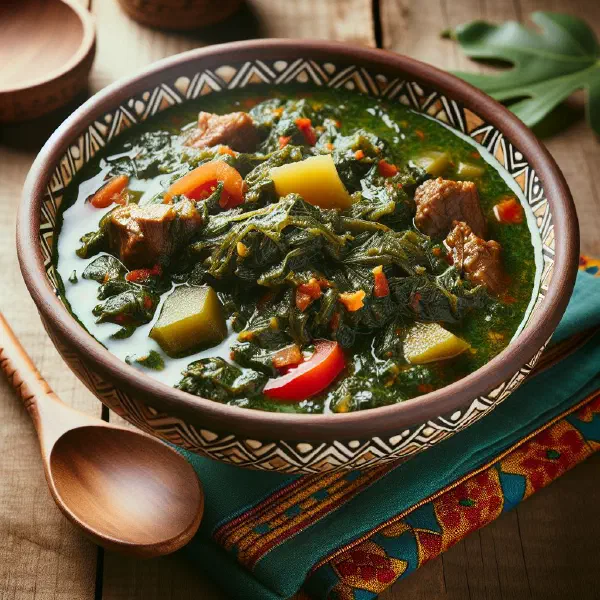
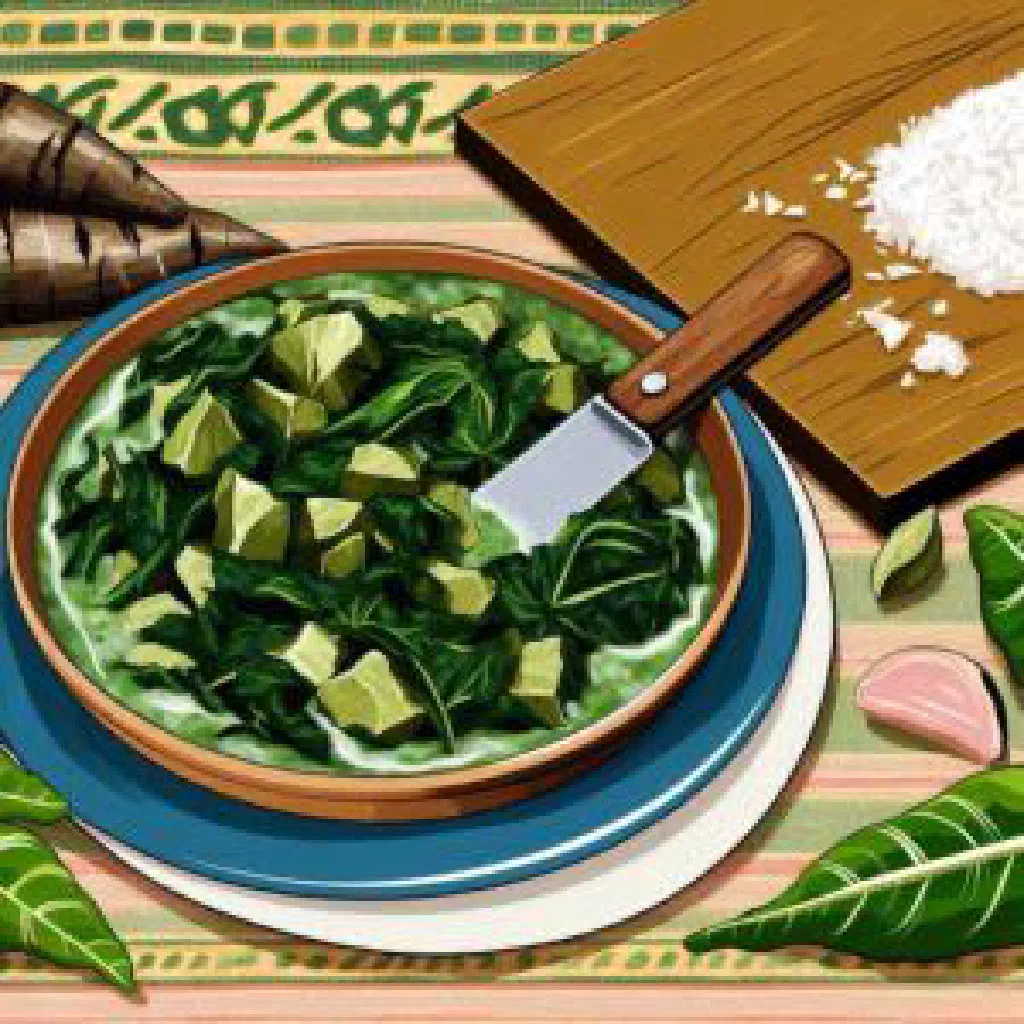
Cassava Leaves is the everyday dish of Sierra Leone: pounded cassava leaves cooked slowly with palm oil, peanut butter and whatever smoked fish or meat is available. It cooks for at least forty minutes and it is done when the oil rises to the surface.
About Cassava Leaves
Also called plasas, from the Krio for palaver sauce, the dish is leaves cooked down with oil and protein and served over rice. Cassava leaves must be cooked thoroughly: raw, they contain cyanogenic compounds.
Palm oil and groundnuts are the two other pillars, and the combination of all three is what makes West African leaf stews so substantial.
Ingredients (serves 1–2)
- 200g fresh cassava leaves, finely ground
- 100g smoked meat (optional)
- 50g smoked fish (optional)
- 1 onion, finely chopped
- 2 cloves garlic, crushed
- 1 chilli, finely chopped (to taste)
- 3 tablespoons peanut butter
- 2 tablespoons palm oil
- 500ml chicken or vegetable stock
- Salt and pepper to taste
Shopping for the ingredients
Frozen ground cassava leaves are sold in African shops and are already prepared, which removes both the labour and the safety question. Red palm oil, not refined. Unsweetened peanut butter. Smoked fish adds a great deal and is worth including.
Preparing the dish
Slacken the peanut butter with warm stock before it goes in. If using fresh leaves, they must be pounded and boiled for at least twenty minutes before anything else. The dish needs a long, slow cook and cannot be rushed.
Step-by-step instructions
- Heat the palm oil in a medium pan and sauté the onions, garlic and chilli until softened and translucent.
- Add the smoked meat and fish and let them brown for a few minutes.
- Stir in the ground cassava leaves and mix well.
- Pour in the stock, slacken the peanut butter with a little of it, and stir everything together.
- Simmer gently over low heat for about 30 to 45 minutes, until the leaves are tender and the oil rises to the surface. Stir occasionally to prevent sticking.
- Season with salt and pepper to taste and serve warm over rice.
Gluten-free / lactose-free version
The dish contains no gluten and no dairy. Check a stock cube, since West African brands frequently contain wheat. Served with rice it is suitable throughout.
Tips for vegans and vegetarians
Without the smoked meat and fish it is vegan, and leaves with peanut and palm oil is a complete plate. A little smoked paprika or a dried mushroom restores some of the depth the fish gave it. Groundnut stew is the other established option.
More tips and tricks
Cook the leaves long enough. The visual marker is the oil rising to the surface, and that is when it is done. Slacken the peanut butter first. And stir occasionally, because the leaves catch on the base readily.
Adapting the recipe to your taste
More chilli is standard; Sierra Leonean food is hot. Sweet potato leaves or krain krain, jute leaves, make the related plasas variations. Palm butter soup uses palm nut pulp instead.
Ingredient substitutions
Spinach or chard replace cassava leaves with a milder result. Cashew paste for peanut. Vegetable oil with paprika for palm oil, at some cost to colour.
Drink pairing ideas
Ginger beer, homemade and fierce, is the local standard. Palm wine in rural areas. Star lager otherwise.
Serving and presentation ideas
Serve it over plain white rice, spooned generously, with extra chilli on the table. It comes to the table in the pot and everyone helps themselves. Often eaten with the right hand.
A bit of history
Cassava came from Brazil through Portuguese trade and became the crop that feeds much of West Africa. Sierra Leone’s Krio culture, descended from freed and returned Africans settled at Freetown from 1787, gave the dish its other name, plasas. It anchors Sierra Leonean cuisine.
More recipe ideas
Summary: Cassava Leaves
Cassava leaves is pounded leaves cooked slowly with palm oil, peanut butter and smoked fish. Cook them until the oil rises, slacken the peanut first, and serve it over rice.