National Dish Singapore: Kueh Dadar (Recipe)
In this article
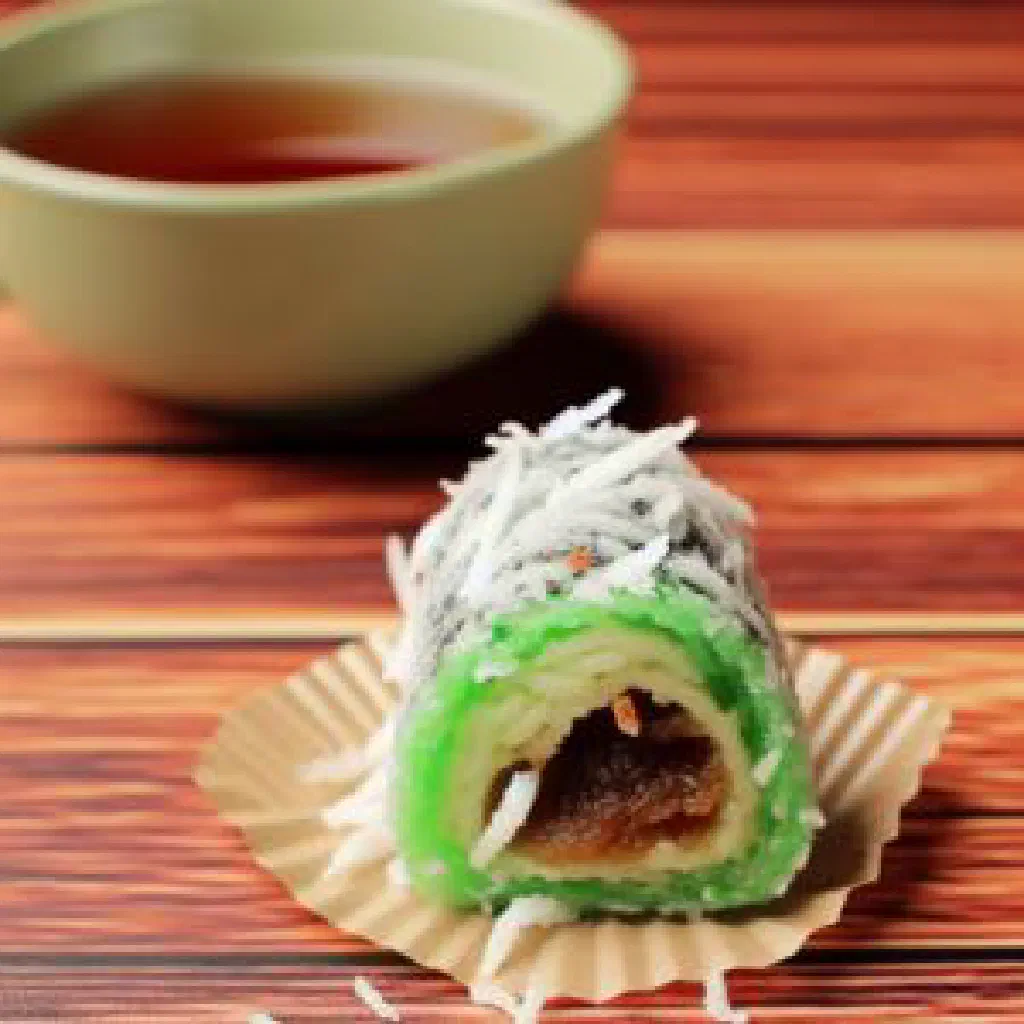
Meet Kueh Dadar, one of Singapore’s most charming sweet treats. These tender, jade-green pancakes are scented with fragrant pandan and wrapped around a warm, sticky filling of sweetened coconut. Delicate yet deeply satisfying, they make a lovely afternoon snack or a light dessert to round off a meal. With their pretty colour and gentle tropical aroma, they bring a taste of the region’s rich Nyonya heritage straight to your kitchen.
About Kueh Dadar
Kueh Dadar is a much-loved sweet speciality from Singapore, celebrated for its striking green colour and its wonderfully soft, thin pancake. The batter draws both its hue and its distinctive fragrance from pandan leaves, which lend the dish an unmistakable aroma. Tucked inside is a filling of sweet grated coconut, offering a lovely contrast to the lightly savoury pancake. Enjoyed at any time of day, as a between-meal snack or a gentle dessert, Kueh Dadar is a small bite that feels genuinely special.
Ingredients (serves 1–2)
- 100 g rice flour
- 200 ml coconut milk
- 75 ml water
- 50 g sugar
- 2–3 pandan leaves (for the green colour)
- 100 g fresh grated coconut
- A pinch of salt
Shopping for the ingredients
The ingredients for Kueh Dadar are easy to find in most Asian supermarkets. Pandan leaves, which are essential for the characteristic aroma and colour, are often available either fresh or frozen. It is also worth seeking out fresh coconut to guarantee the best possible flavour. If you are following a recipe that calls for sugar, reach ideally for cane sugar, as it gives the pancakes a particularly rounded sweetness. Many of these items are staples of Singaporean cuisine and turn up in all sorts of local sweets.
Preparing the dish
Before you start making Kueh Dadar, it is worth preparing your ingredients well. The pandan leaves should be washed and cut into small pieces so they release their aroma more readily. The grated coconut benefits from a light toasting, which makes it more fragrant before it goes into the filling. Measuring the ingredients accurately matters too, as precision here has a real bearing on how well the recipe turns out.
Step-by-step instructions
- Blend the pandan leaves with the water to extract a fragrant green juice.
- Combine the rice flour with the coconut milk, sugar, salt and pandan juice in a bowl and mix well.
- Heat a non-stick pan and pour in a small amount of batter, swirling to form a thin layer that cooks briefly.
- For the filling, mix the grated coconut with sugar and a pinch of salt, then toast lightly.
- Spoon the coconut filling onto the cooked pancakes and roll them up.
- Serve the Kueh Dadar warm or at room temperature.
Gluten-free / lactose-free version
The recipe for Kueh Dadar is easily made without gluten-containing ingredients, since rice flour is naturally gluten-free. Alternatively, a little cornflour can be added to improve the texture. The coconut milk is already lactose-free, which makes this recipe an excellent choice for anyone with a lactose intolerance. When shopping, simply check that none of the ingredients contain hidden additives that might include gluten or lactose.
Tips for vegans and vegetarians
To make a vegan version of Kueh Dadar, you need only ensure that the sugar you use is vegan, as some sugars are refined using bone char. Otherwise the recipe is already entirely plant-based, since it calls for no animal products at all. You could also introduce extra flavour with a touch of vanilla extract or cinnamon to give the pancakes an interesting note. Vegetarians will equally enjoy the pairing of coconut and pandan, and can vary the dish however they like.
More tips and tricks
To make preparing Kueh Dadar easier, you can mix the batter in advance and keep it in the fridge until you are ready to use it. Make sure the batter is well combined and free of lumps before it goes into the pan. A non-stick pan is a real advantage, as it stops the delicate pancakes from sticking. Feel free to experiment with different fillings, chocolate or another fruit filling, for instance, to broaden the repertoire.
Adapting the recipe to your taste
If you are not especially keen on the taste of coconut, you can swap the filling for fresh fruit instead. Mango or pineapple go beautifully with the lightly sweet pancake batter. You also have the option of adjusting the sweetness to suit your palate if you prefer things less sugary. Experimenting with different spices can likewise lend the dish an interesting and personal touch.
Ingredient substitutions
If pandan leaves are hard to come by, you can use food colouring to achieve the green shade, though the aroma will not be quite the same. For the coconut filling, desiccated coconut also works well and should be lightly moistened before use. If you want the filling to be even more aromatic, try adding a little cardamom. Adaptations like these help you tailor the recipe to whatever local ingredients you have on hand, much as you might with a bowl of Chendol.
Drink pairing ideas
A cup of green tea traditionally goes very well with Kueh Dadar, as it pleasantly balances the sweetness of the pancake. A hot coffee or a spiced chai can make an excellent companion too. For an alcohol-free option, freshly pressed fruit juices are a good choice. Try grapefruit juice or even coconut water to underline the tropical character of the dish.
Serving and presentation ideas
The presentation of Kueh Dadar can be made especially appealing by arranging the pancakes on a decorative plate and garnishing them with fresh fruit. A light dusting of icing sugar on top can also look lovely. Small leaves of pandan or mint make a pretty finishing touch. Cutting the rolled pancakes into small, bite-sized pieces makes them charming for gatherings or parties.
A bit of history
Kueh Dadar has its origins in Malay cuisine and is popular throughout many parts of Southeast Asia. In Singapore it is held in particularly high regard and is a fixture at festivals and celebrations. The use of pandan leaves is a hallmark deeply rooted in the region’s culinary culture. Once regarded as something of a festive treat, this sweet is today enjoyed with great affection in many households.
More recipe ideas
Summary: Kueh Dadar
To sum up, Kueh Dadar offers a captivating taste experience and represents the diversity of Singaporean cooking. These tender green pancakes with their sweet coconut filling are not only simple to make but a genuine pleasure to eat. The interplay of aromas and textures makes them an ideal snack or dessert for any occasion. Let the traditional culinary craft of Singapore inspire you, and enjoy this delicious treat.