National Dish Singapore: Laksa (Recipe)
In this article
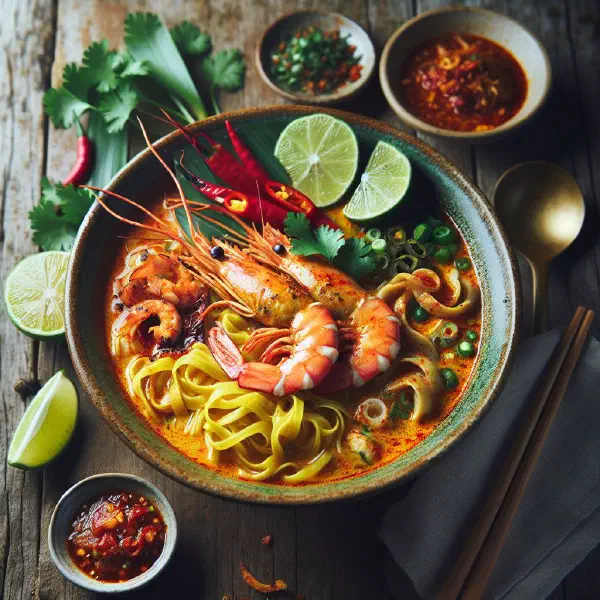
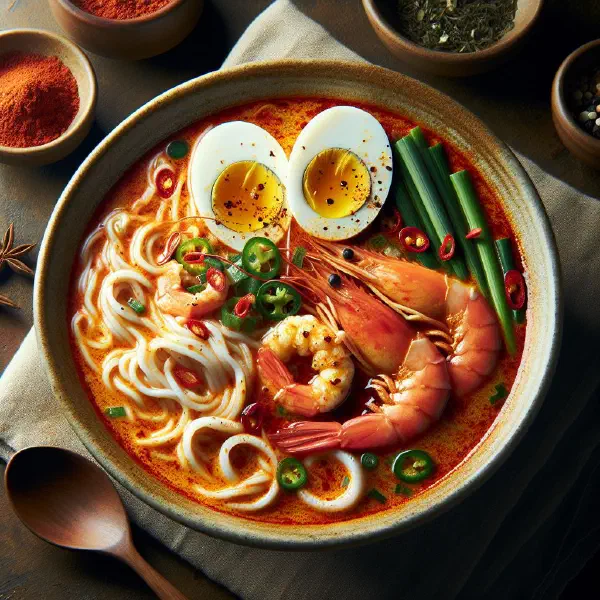
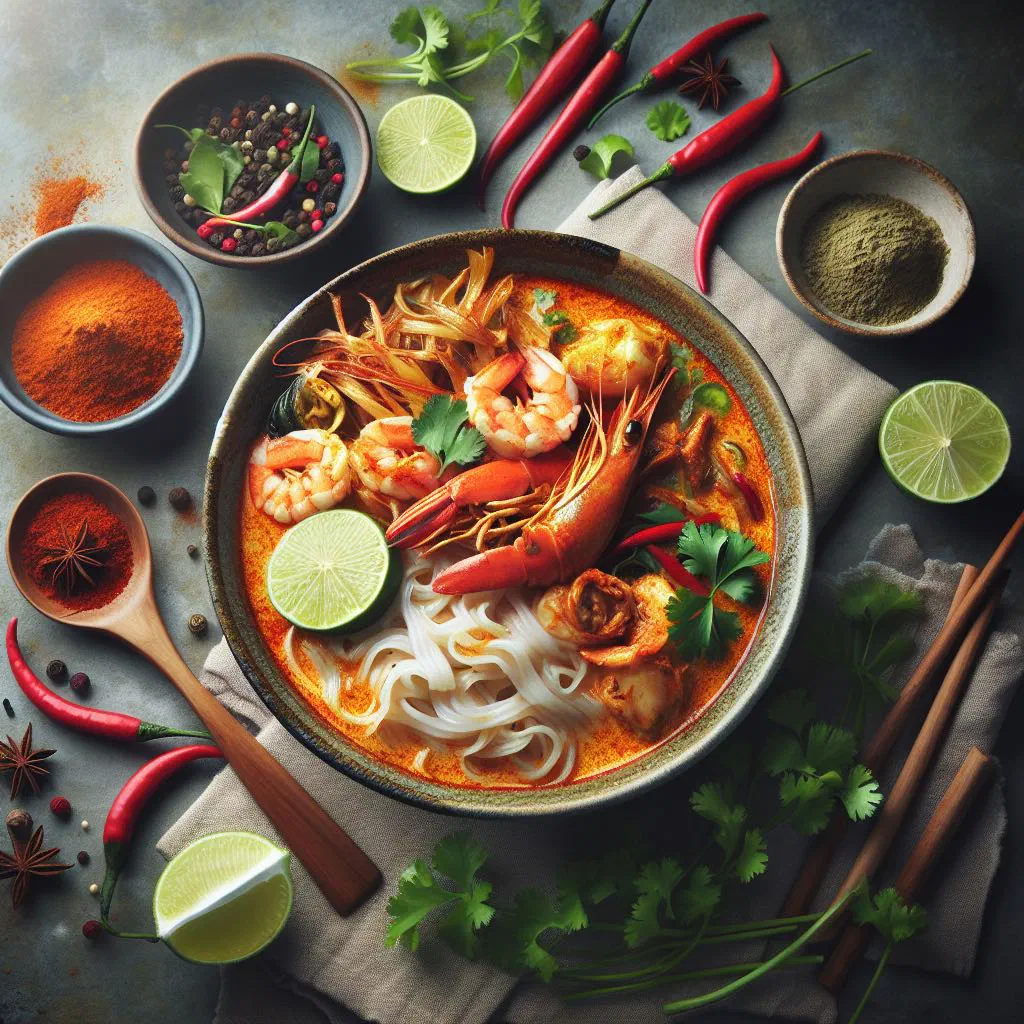
Meet Laksa, a fragrant noodle soup that captures the soul of Singapore in a single bowl. This rich, spicy dish brings together silky coconut milk, a bold laksa paste and springy rice noodles, all crowned with plump prawns, crunchy bean sprouts and a scattering of fresh herbs. Blending Malay and Chinese traditions, it is the sort of soul-warming comfort food that works just as well for a quick lunch as for a leisurely dinner. Bring the buzz of a Singapore hawker centre straight to your own kitchen.
About Laksa
Laksa is a traditional dish from Singapore, prized for its aromatic broth and its generous use of fresh ingredients. It brings together influences from both Malay and Chinese cooking, delivering a flavour that is impossible to mistake for anything else. Coconut milk and a spicy laksa paste form the base of the soup, which is typically served with rice noodles, fresh vegetables and shellfish. Laksa is always an excellent choice.
Ingredients (serves 1–2)
- 200 g rice noodles
- 400 ml coconut milk
- 2 tablespoons laksa paste
- 200 ml vegetable or chicken stock
- 150 g prawns or firm tofu
- 1 handful mung bean sprouts
- Fresh herbs (such as coriander or mint)
- Lime juice, to taste
Shopping for the ingredients
When shopping for laksa, it is worth paying close attention to the freshness and quality of your ingredients. Rice noodles are available in most supermarkets and Asian grocery stores. Be sure to choose a good-quality coconut milk, as it has a decisive influence on the dish’s distinctive taste. Laksa paste can likewise be found in Asian shops or a well-stocked supermarket, and it comes in several varieties ranging from mild to fiercely hot.
Preparing the dish
Preparing laksa is refreshingly straightforward and takes only a few steps. First, cook the rice noodles according to the packet instructions. While the noodles simmer, warm the stock and coconut milk together in a large pan and stir in the laksa paste. It is important to stir the broth well to make sure the aromas are evenly distributed. Fresh vegetables and proteins such as prawns or tofu can also be prepped in advance to keep the cooking process quick and smooth.
Step-by-step instructions
- Cook the rice noodles according to the packet instructions and drain.
- Heat the coconut milk and stock together in a large pan.
- Add the laksa paste and stir well until it is fully blended.
- Add the prawns or tofu to the broth and simmer for a few minutes until cooked through.
- Divide the prepared rice noodles between bowls and pour the laksa broth over the top.
- Garnish with mung bean sprouts and fresh herbs.
- Drizzle over a little lime juice to taste.
Gluten-free / lactose-free version
For a gluten-free version of laksa, use rice noodles, which are naturally free from gluten. Take care to choose a laksa paste that contains no gluten-based ingredients. Coconut milk is usually lactose-free, which makes this dish a great option for anyone with a lactose intolerance. Relying on fresh vegetables and protein-rich alternatives such as tofu keeps the nutritional value high and the flavour full.
Tips for vegans and vegetarians
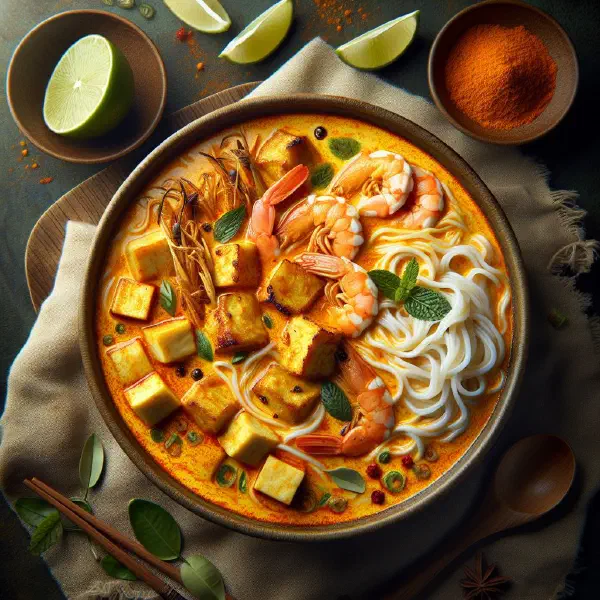
Vegans and vegetarians can easily adapt laksa by leaving out the animal products. Instead of prawns, use firm tofu cubes, which offer a similar texture and a good hit of protein. Swap in vegetable stock for the broth to keep the dish fully vegan. Another option is to add more fresh vegetables, such as broccoli or peppers, to turn it into a nourishing and aromatic meal. If you enjoy this route, a soybean-based Tahu Goreng makes a lovely plant-based companion.
More tips and tricks
To make laksa even more delicious, you can add a variety of spices and aromatics. A touch of chilli or fresh ginger lifts the dish and lends an extra kick of heat. Experiment with different proteins or vegetables to find your favourite combinations. The right garnishes, think chopped peanuts or sliced chillies, can improve both the aroma and the texture while making the bowl look more inviting.
Adapting the recipe to your taste
The beauty of laksa is that you can adjust the ingredients to suit your own palate. If you prefer it milder, reduce the amount of laksa paste or add more coconut milk to balance the heat. The choice of vegetables can vary too, depending on personal preference or what is in season. Use whatever you have to hand and make the recipe your own, much as you might tailor a Mee Goreng to your own liking.
Ingredient substitutions
If certain ingredients are not to hand, there are plenty of alternatives to fall back on. In place of coconut milk you can use other plant-based milks such as almond or soya milk, though this will shift the flavour slightly. The laksa paste can be replaced with a combination of curry powder, chilli and spices if the specific paste is unavailable. You can also reach for other noodles, such as udon or soba, depending on your preference, the same flexibility that makes Mee Rebus so easy to vary.
Drink pairing ideas
Choosing the right drink can considerably enhance your laksa experience. For something refreshing, a cold, fruity drink such as coconut water or a homemade lemonade is ideal. Alternatively, a light, crisp wine or an Asian beer pairs beautifully with this dish. For an alcohol-free option, green teas or sparkling drinks are well worth a look, offering a wonderful sense of refreshment. A frothy Teh Tarik is another classic local match.
Serving and presentation ideas
Presentation plays an important part in the enjoyment of laksa. Serve the soup in deep, colourful bowls to emphasise the contrast between the creamy broth and the bright herbs and vegetables. A squeeze of fresh lime and a few chopped nuts can lift the dish further. Don’t forget to decorate with fresh herbs, which improve the look and the aroma of the finished bowl.
A bit of history
Laksa has its roots in Malay and Chinese cooking and most likely arose through the cultural exchange that has long defined the region. The dish is often served as part of the hawker cuisine of Singapore and is prepared in countless regional variations. While some versions of laksa lean on fish and seafood, there are also delicious vegetarian takes that deliver the same intense flavour. This variety of ingredients and methods makes laksa a timeless classic of Singaporean cuisine.
More recipe ideas
Summary: Laksa
Laksa is a captivating dish, offering a combination of coconut milk, spice and fresh ingredients in every spoonful. It is simple to make and endlessly adaptable to different dietary needs. Gluten-free or extra-spicy version, laksa delivers a unique flavour that appeals to every palate. Give the recipe a try and let the aromas of Southeast Asian cooking work their magic.