National Dish Somalia: Canjeero (Recipe)

In this article
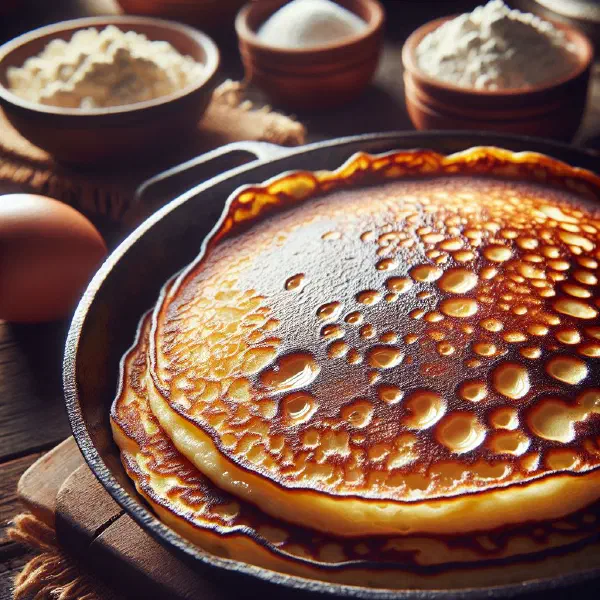
Discover Canjeero, the spongy flatbread at the very heart of Somali cooking. Known also as anjero or laxoox, it is baked on one side only until its surface breaks into hundreds of tiny bubbles. Gently sour, feather-light and endlessly useful, it is plate, spoon and staple all at once, the foundation of breakfast, lunch and supper alike across Somalia.
About Canjeero
Canjeero is the cornerstone of the Somali table, a traditional flatbread also called anjero or laxoox, and closely related to the injera of neighbouring Ethiopia. What makes it so distinctive is the combination of a light sourness from the fermented batter and a soft, airy texture riddled with small holes. It works as an edible spoon and as a base for all manner of accompaniments, from spiced meat sauces to sweet toppings such as honey and sesame oil. Few dishes capture the communal spirit of Somali dining quite as well.
Ingredients (serves 1–2)
- 1 cup sorghum flour or millet flour
- 1 cup plain wheat flour
- 1/2 teaspoon baking powder
- 1/4 teaspoon salt
- 2 cups water, at room temperature
- 1/2 cup lukewarm water (for the yeast)
- 1 teaspoon dried yeast
- A pinch of sugar, to activate the yeast
Shopping for the ingredients
To recreate an authentic canjeero at home, it pays to choose good-quality flours. Sorghum or millet flour is usually easy to find in African grocers or from online speciality suppliers, and both give the bread its characteristic gentle tang. Make sure your yeast is fresh, as this is what guarantees a properly risen, well-bubbled result. The same flours turn up in other Somali staples such as Muufo, so a larger bag rarely goes to waste.
Preparing the dish
Allow yourself plenty of time when making canjeero, because the batter needs a long rest to develop the tiny bubbles that define it. Measure out and assemble every ingredient before you begin. It makes the process far smoother. A warm, draught-free corner of the kitchen is the ideal spot for the batter to work, and a ladle of a consistent size will help you turn out evenly sized breads.
Step-by-step instructions
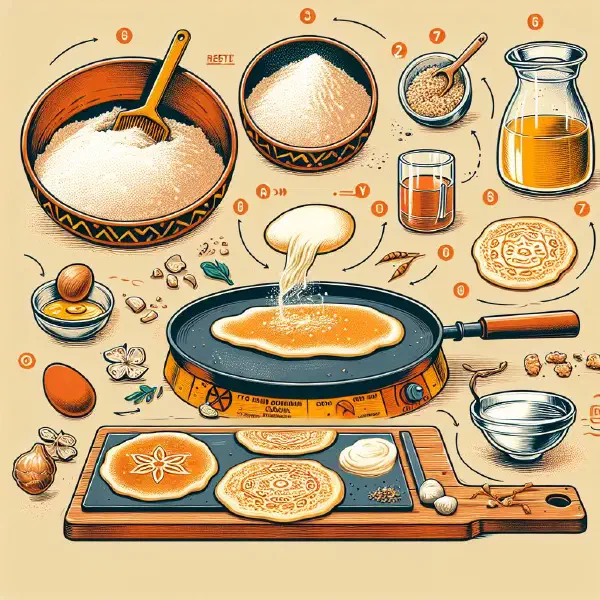
- In a small bowl, mix the yeast with the lukewarm water and a pinch of sugar and leave to stand for 5 to 10 minutes, until the mixture foams.
- Combine the sorghum and wheat flours in a large bowl, then add the salt and baking powder.
- Pour in the yeast mixture along with the room-temperature water and whisk everything to a smooth batter.
- Cover the bowl with a cloth and leave the batter to rest in a warm place for 1 to 3 hours.
- After resting, stir the batter and heat a non-stick pan over a medium heat.
- Pour in a ladleful of batter and spread it outwards in a circular motion.
- Cook until bubbles form across the surface and the edges lift away slightly, then remove from the pan. There is no need to turn it.
Gluten-free / lactose-free version
Canjeero is naturally lactose-free, since the batter contains no dairy at all. For a gluten-free version, replace the wheat flour with buckwheat or rice flour and keep the sorghum, which contains no gluten of its own. The bread will be a little more delicate to handle but loses none of its flavour, so guests with a gluten intolerance can share the same platter as everyone else.
Tips for vegans and vegetarians
As written, canjeero is entirely vegan, flour, water, yeast and salt, with nothing of animal origin. Care is only needed with what you serve alongside it: choose vegetable stews or pulses rather than meat sauces if you are keeping the meal plant-based. A bowl of Somali Lentil Stew makes an excellent partner, as does a drizzle of sesame oil with a spoonful of sugar for a simpler breakfast.
More tips and tricks
For even heat and the best possible bubbling, use a heavy, well-seasoned pan. Canjeero is traditionally baked on one side only, so resist the temptation to flip it, turning the bread destroys the delicate, porous texture that makes it special. If the batter seems too thick after resting, loosen it with a splash of water until it pours easily from the ladle.
Adapting the recipe to your taste
Prefer something more savoury? Work finely chopped onions or fresh herbs into the batter before cooking. If you have a sweet tooth, stir a little sugar or honey into the mixture, or simply finish the cooked bread with sweet toppings, much as in the classic Anjero With Honey. A longer fermentation, overnight in a cool room, will also give you a pronounced sourness.
Ingredient substitutions
- If you cannot find sorghum flour, wholemeal wheat flour or teff flour both work well.
- For a gluten-free variation, swap the wheat flour for buckwheat or rice flour.
- Fresh yeast can be used in place of dried yeast.
Drink pairing ideas
A refreshing mint tea or a glass of camomile tea rounds off a plate of canjeero perfectly, aiding digestion and complementing the savoury notes of the bread. Spiced Somali Tea with cardamom and cinnamon is the classic breakfast choice, while a strong, unsweetened coffee suits those who like a sharper contrast to the bread’s mild tang.
Serving and presentation ideas
Lay the canjeero out on a large, flat platter and arrange the various accompaniments around it. Traditionally the dish is eaten with the hands: you tear off a piece of bread and use it to scoop up whatever is served alongside. Rolling the breads loosely and stacking them makes for an attractive presentation, and a scattering of fresh herbs adds welcome colour.
A bit of history
The origins of canjeero lie in the shared Ethiopian and Somali tradition, bound up with the communal eating culture of the wider Horn of Africa. It reflects the central place of grains in East African diets and forms part of the living cultural heritage of Somalia. More than a bread, it is a symbol of togetherness, a single platter shared by a whole family. It remains the backbone of Somali cuisine to this day.
More recipe ideas
Summary: Canjeero
Canjeero is a versatile, flavourful bread whose straightforward preparation and scope for personalisation make it a genuine kitchen treasure. It carries a piece of Somalia into every kitchen. Give the batter the time it needs, keep the pan hot and the bread unturned, and you will be rewarded with a spongy, gently sour flatbread that everyone at the table will want to share.