National Dish South Africa: Bobotie (Recipe)
In this article
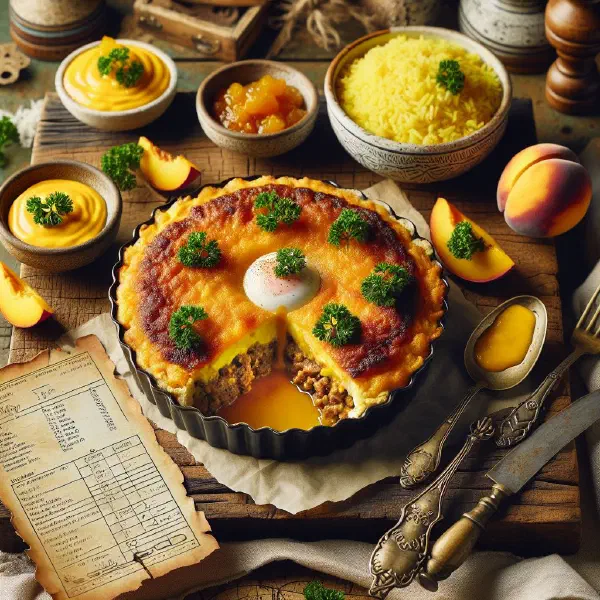
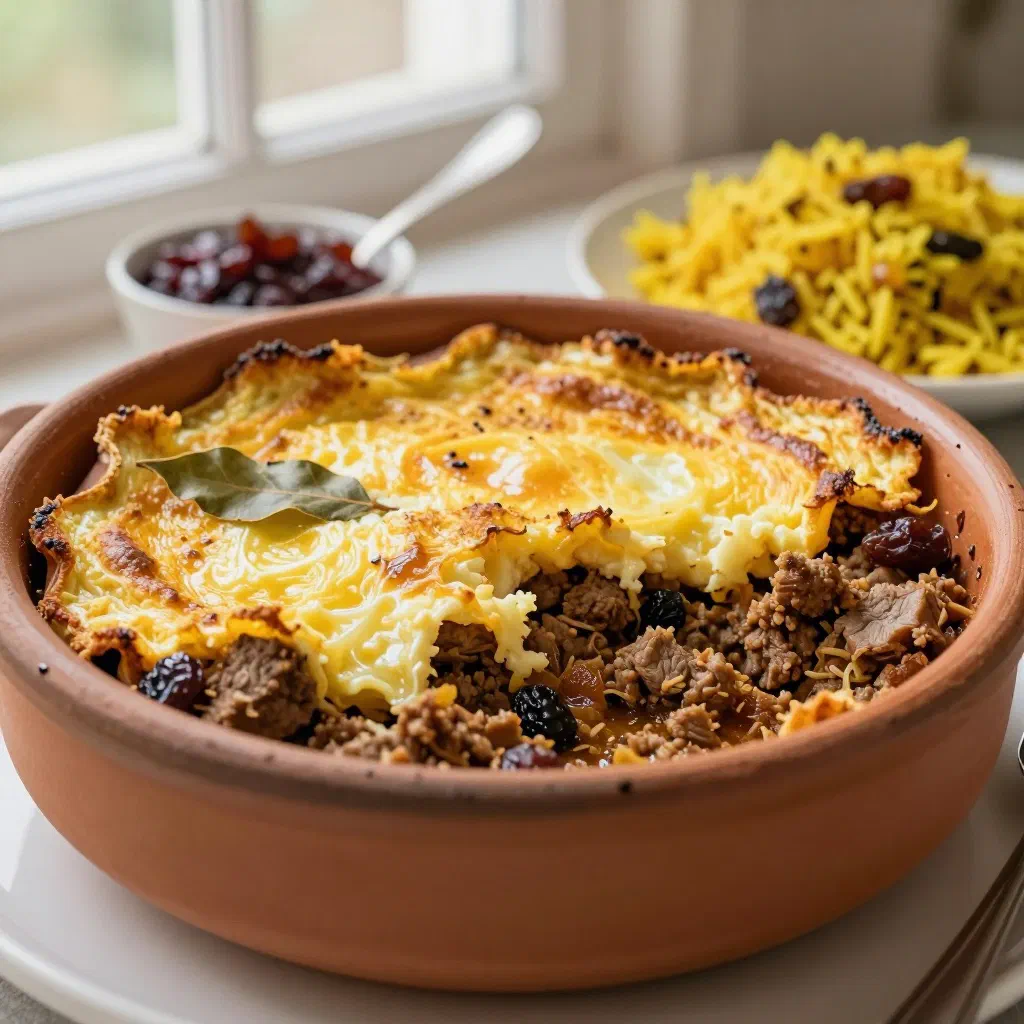
Bobotie is spiced mince under a baked egg custard, with dried fruit and almonds in it and bay leaves standing up out of the top. The sweet-savoury combination comes from Cape Malay cooking, brought by enslaved people from Indonesia and Malaysia in the seventeenth century.
About Bobotie
The mince is seasoned with curry powder, turmeric, lemon and chutney, mixed with soaked bread, and studded with raisins and almonds. An egg and milk custard goes over it and sets in the oven.
Bay or lemon leaves are pushed into the custard before baking. They perfume it and they look like they belong there.
Ingredients (serves 1–2)
- 500g mixed minced meat
- 1 medium onion, chopped
- 2 tablespoons oil
- 1 tablespoon curry powder
- 1 tablespoon ground coriander
- 1 teaspoon ground cumin
- ½ teaspoon ground ginger
- ½ teaspoon ground allspice
- 1 teaspoon salt
- ½ teaspoon pepper
- ½ teaspoon sugar
- 1 teaspoon lemon zest
- 1 tablespoon lemon juice
- 1–2 tablespoons raisins
- 2 tablespoons almonds, chopped
- 2 tablespoons ketchup
- 1 tablespoon Worcestershire sauce
- 2 eggs
- 200ml milk
- 2 tablespoons breadcrumbs
Shopping for the ingredients
Minced lamb or a lamb-beef mix is more traditional than pure beef. Mrs Ball’s chutney is the South African standard and a spoonful belongs in the meat. Fresh bay leaves for the top if you can get them.
Preparing the dish
Soak a slice of white bread in the milk, squeeze it out and work it into the meat; that is the traditional binder and keeps the mince from setting hard. Keep the milk for the custard. Do not overcook the meat before it goes in the dish, since it bakes for half an hour more.
Step-by-step instructions
- Heat the oil in a pan and fry the onions until soft, then add the spices and cook 1 minute.
- Add the minced meat and brown it, breaking it up.
- Stir in the lemon zest and juice, sugar, raisins, almonds, ketchup and Worcestershire sauce.
- Soak a slice of bread in some of the milk, squeeze it out and work it through the meat.
- Spread the meat mixture into an ovenproof dish and press it down level.
- Whisk the eggs with the remaining milk and pour it evenly over the meat.
- Push a few bay leaves into the custard and scatter the breadcrumbs over.
- Bake at 180°C for about 30–35 minutes, until the custard is set and golden.
Gluten-free / lactose-free version
Use gluten-free bread and breadcrumbs, and check the Worcestershire sauce, which contains barley malt vinegar. For lactose-free, a plant milk sets adequately with the eggs.
Tips for vegans and vegetarians
Lentils with the same spicing and dried fruit make a genuinely good version, and the custard can be made with plant milk and chickpea flour. South African restaurants now offer this routinely.
More tips and tricks
Use the soaked bread; it is what keeps the mince tender rather than dense. Do not overcook the meat before baking. And let it stand ten minutes out of the oven so the custard firms enough to cut.
Adapting the recipe to your taste
Dried apricots alongside the raisins. A grated apple in the mince adds sweetness and moisture. More chutney is the usual South African direction.
Ingredient substitutions
Lamb, beef or a mix. Any fruit chutney for Mrs Ball’s. Flaked almonds or none at all.
Drink pairing ideas
A South African Chenin Blanc or a Pinotage. Rooibos tea afterwards. Castle lager works.
Serving and presentation ideas
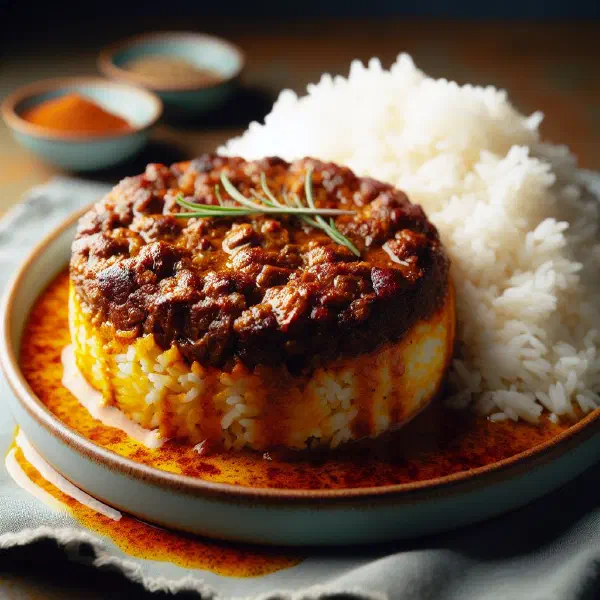
Serve it with yellow rice, cooked with turmeric and raisins, sliced banana, chutney and desiccated coconut. Those accompaniments are standard rather than optional, and the sweet elements are the point.
A bit of history
Bobotie comes from the Cape Malay community, descendants of people enslaved and brought from the Dutch East Indies to the Cape from the 1650s. The spicing, the sweet-savoury balance and the technique are all theirs. It anchors South African cuisine and is the dish most often named as national.
More recipe ideas
Summary: Bobotie
Bobotie is curried mince with raisins and almonds under a baked egg custard with bay leaves. Use soaked bread as the binder, do not overcook the meat, and rest it before cutting.