National Dish South Korea: Andong Jjimdak (Recipe)
In this article
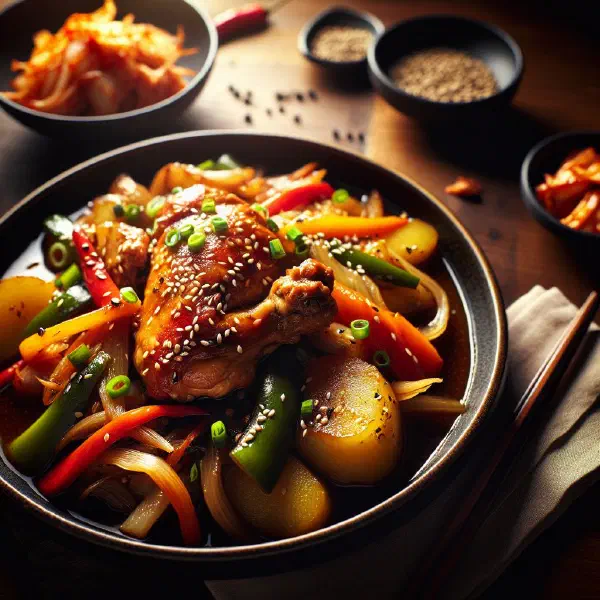
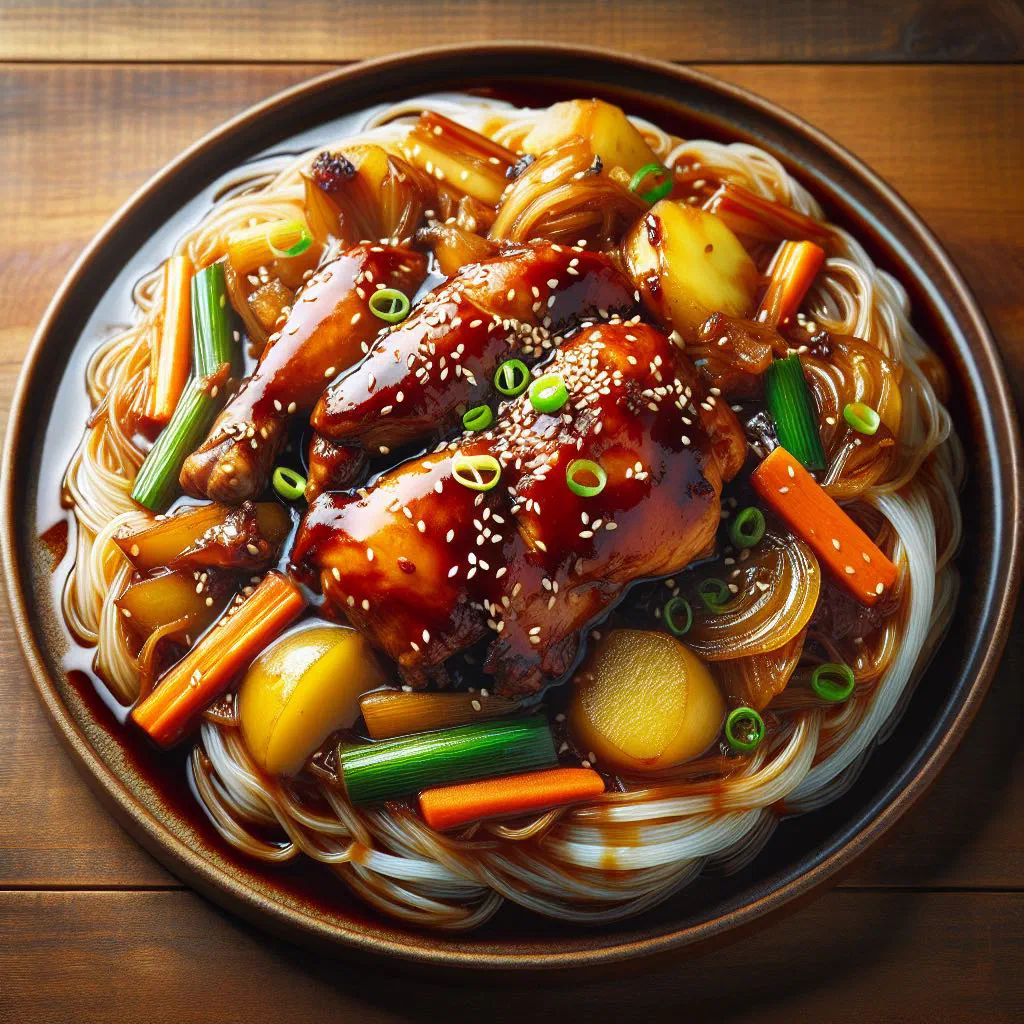
Meet Andong jjimdak, a soul-warming braise that hails from the historic city of Andong in South Korea. Tender chicken simmers gently with potatoes, carrots and silky glass noodles in a glossy, savoury-sweet soy sauce that carries a gentle chilli kick. It is the kind of generous one-pot meal made for sharing, easy to put together, deeply comforting and full of the bold, balanced flavours that Korean cooking does so well.
About Andong Jjimdak
Andong jjimdak is a much-loved traditional dish from the Andong region of South Korea. It is built around tender chicken braised in a fragrant, lightly spiced soy sauce, and is celebrated for the harmonious way it balances flavour and texture. Alongside the chicken, vegetables such as carrots, potatoes and onion are added to deepen the flavour and round the dish out into a satisfying, well-balanced meal. The result is hearty without being heavy, and endlessly comforting.
Ingredients (serves 1–2)
- 500 g chicken (such as drumsticks or breast)
- 1 large onion, sliced
- 2 carrots, cut into chunks
- 2 potatoes, diced
- 200 g glass noodles
- 4–5 tablespoons soy sauce
- 2–3 tablespoons gochugaru (Korean chilli powder)
- 1 tablespoon sugar
- 2–3 garlic cloves, finely chopped
- 1 teaspoon grated ginger
- Fresh spring onions and sesame seeds, to garnish
Shopping for the ingredients
When shopping for andong jjimdak, make sure you use fresh chicken and fresh vegetables, as these are crucial to the flavour and quality of the finished dish. Your best bet is a local market or an Asian grocery, where you will find the authentic ingredients you need. Take care to choose a good-quality gochugaru too, since this Korean chilli powder gives the dish its characteristic warmth and savoury depth.
Preparing the dish
Before you start cooking andong jjimdak, it pays to prepare all your ingredients thoroughly. Cut the vegetables into the sizes you want, and soak or cook the glass noodles according to the packet instructions so they do not turn too soft. Be sure to chop the chicken into bite-sized pieces as well. Careful preparation keeps the cooking running smoothly and helps everything cook evenly.
Step-by-step instructions
- Bring the chicken to the boil in a large pot with water and a pinch of salt, then let it simmer for about 10 minutes.
- Add the prepared potatoes, carrots and onion, and cook for a further 10 minutes.
- In a separate bowl, combine the soy sauce, gochugaru, sugar, garlic and ginger. Pour this marinade into the pot.
- Add the glass noodles and cook for another 5–7 minutes, until everything is well combined and the sauce has thickened.
- Finish with chopped spring onions and toasted sesame seeds, then serve.
Gluten-free / lactose-free version
To make andong jjimdak gluten-free, simply use a gluten-free soy sauce, which is now widely available in supermarkets. Take care to choose glass noodles that are gluten-free as well, since some varieties contain wheat. No changes are needed for anyone with a lactose intolerance, as this dish is naturally lactose-free from the start.
Tips for vegans and vegetarians
Vegans and vegetarians can adapt andong jjimdak with ease by swapping the chicken for tofu or seitan. Both soak up the flavours of the marinade beautifully and offer a good source of protein. The vegetables can be varied to taste too, adding extra nutrients and flavour. Experiment with different vegetables to make the dish your own, much like the flexible approach that works so well in Dubu Kimchi.
More tips and tricks
For the best possible result, keep an eye on the cooking times of the different ingredients. Potatoes and carrots need longer than the chicken, so adjusting the timing is key to getting everything just right. It is a good idea to give the mixture an occasional stir to prevent it catching and to ensure even cooking. You can also make the dish ahead of time, as the flavours only deepen and intensify as it sits.
Adapting the recipe to your taste
Andong jjimdak makes a wonderful base that is easy to tailor to personal preference. To turn up the heat, for instance, add more gochugaru or a few fresh chillies. If you prefer a sweeter note, increase the sugar or stir in a little honey. Dried or fresh herbs can be used to give the dish an extra layer of flavour and make it even more versatile.
Ingredient substitutions
If you do not have certain ingredients to hand, there are plenty of alternatives you can use in your andong jjimdak. In place of chicken, turkey or Quorn will give you a similar result, the same swap that works nicely in a hearty Dakdoritang. When it comes to vegetables, the sky is the limit; broccoli or peppers work beautifully. For the glass noodles, rice noodles make a fine stand-in if needed.
Drink pairing ideas
To round off your andong jjimdak experience, it is worth choosing a drink that suits it well. A light, cool lager pairs beautifully with the savoury sauce. For an alcohol-free option, green tea or an elderflower cordial complements the flavours of the food. Korean rice wine, also known as makgeolli, is another delicious choice for an authentic culinary experience.
Serving and presentation ideas
For an attractive presentation of andong jjimdak, serve the dish in a generous bowl and garnish with fresh herbs. Small dishes of sides such as kimchi or pickled vegetables make a lovely addition. Using traditional Korean tableware further underlines the authentic look. A thoughtfully styled table with subtle Asian touches can also enrich the whole dining experience.
A bit of history
Andong jjimdak has its origins in the city of Andong, known for its rich culinary heritage. The dish was originally prepared by farmers who needed a simple, nourishing and easy-to-cook meal. Today it has grown into a cultural symbol, often served at festivals and celebrations. Andong jjimdak showcases the variety of South Korean cuisine and the care that goes into its traditional dishes.
More recipe ideas
Summary: Andong Jjimdak
In short, andong jjimdak is a flavourful and versatile dish that perfectly reflects the tastes and culture of South Korea. With its hearty ingredients and well-judged spicing, it is ideal for a cosy family meal. Its straightforward preparation and the ease with which the recipe can be adapted to your own preferences make it a brilliant choice for home cooks. Give it a go and bring the flavours of South Korea into your own kitchen.