National Dish South Korea: Bibim Naengmyeon (Recipe)
In this article
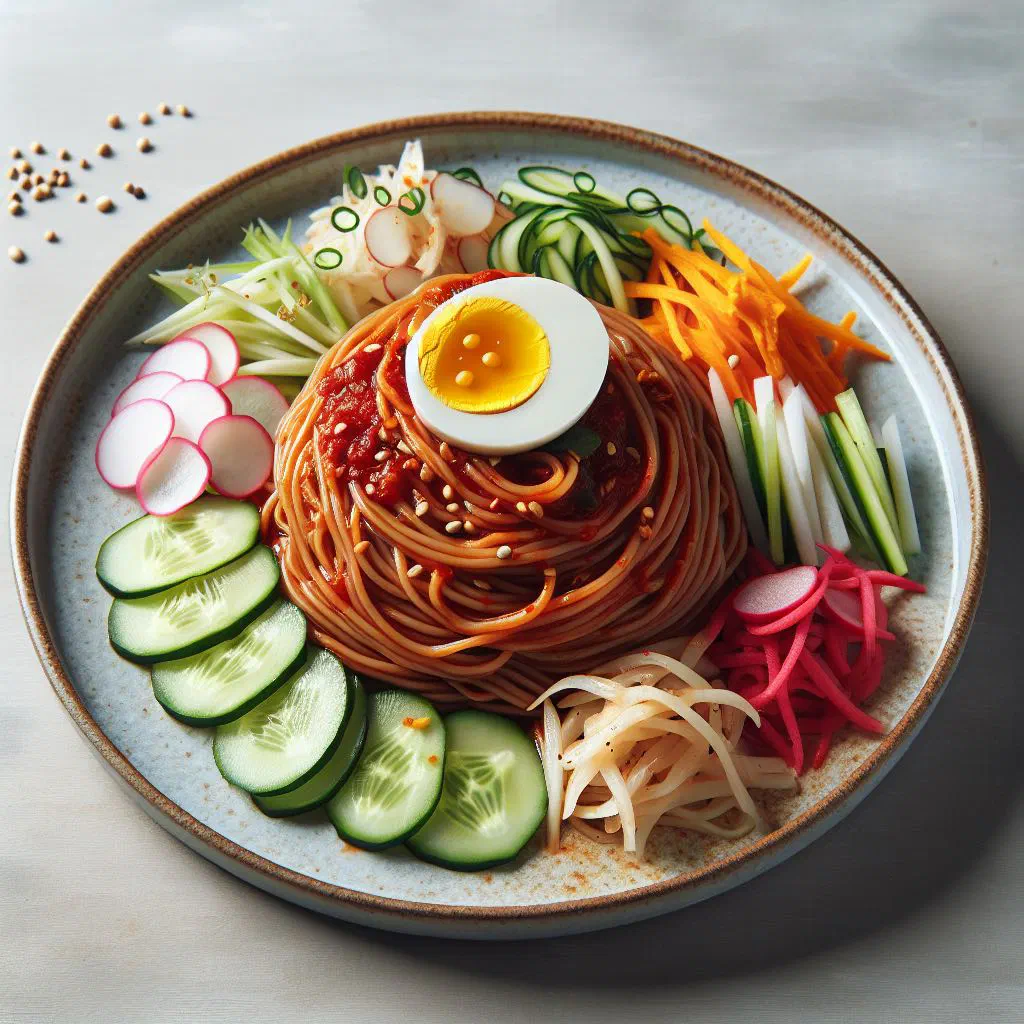
Meet Bibim Naengmyeon, a Korean classic built for the hottest days of the year. Chilled buckwheat noodles are tossed in a glossy, fiery chilli sauce and crowned with crisp vegetables and a halved boiled egg. Refreshing yet thoroughly satisfying, this dish balances heat, tang and a bracing coolness in every mouthful. It is the kind of bowl that revives you on a sticky summer evening and leaves you reaching for one more bite.
About Bibim Naengmyeon
Bibim Naengmyeon is a traditional Korean dish that manages to be both cooling and filling at once. The combination of chilled buckwheat noodles, fresh vegetables and a punchy chilli paste makes it a real highlight when the temperature climbs. Although it has its origins in North Korea, it is now enjoyed right across the peninsula and well beyond. With its lively interplay of textures and flavours, it is sure to win over even the most discerning food lover.
Ingredients (serves 1–2)
- 150 g buckwheat noodles
- 1 cucumber
- 1 carrot
- 2 eggs
- 2–3 tablespoons gochujang (Korean chilli paste)
- 1–2 tablespoons sesame oil
- 1 tablespoon sugar
- 1 teaspoon rice vinegar
- Fresh coriander leaves, to garnish
Shopping for the ingredients
For Bibim Naengmyeon it is well worth seeking out a Korean or Asian grocery to find the ingredients you need. The buckwheat noodles may be sold specifically for naengmyeon and have a distinctive springy texture that is essential to the dish. Gochujang, the key to its signature heat, is often found in the international aisle or directly on the Asian shelf. Fresh vegetables such as cucumber and carrot are easy to come by and should be chosen as fresh as possible to guarantee the best flavour.
Preparing the dish
Before you start cooking Bibim Naengmyeon, get all your ingredients ready so the process runs smoothly. The buckwheat noodles need to be boiled first and then cooled under cold water to preserve their texture. While the noodles cook, slice the cucumber and carrot into fine strips or julienne. It is also a good idea to hard-boil the eggs, as they add an important source of protein and round the dish off nicely.
Step-by-step instructions
- Cook the buckwheat noodles according to the packet instructions, then leave to cool.
- Tip the cooked noodles into a bowl and toss with the sesame oil, sugar and rice vinegar.
- Arrange the cucumber and carrot strips over the noodles.
- Spread the gochujang paste evenly across the noodles and vegetables.
- Halve the hard-boiled eggs and lay them on top.
- Garnish with fresh coriander leaves and serve straight away.
Gluten-free / lactose-free version
For a gluten-free version of Bibim Naengmyeon, you can use gluten-free buckwheat noodles, which are stocked in many supermarkets and specialist shops. Alternatively, quinoa or rice noodles make a good base while keeping the dish free from gluten. The recipe is naturally lactose-free, which makes it an ideal choice for anyone who is lactose intolerant.
Tips for vegans and vegetarians
For a vegan take on Bibim Naengmyeon, simply leave out the eggs or replace them with avocado for a creamy texture. You could also add extra vegetables such as radish or broccoli to boost the nutrients and flavour. Do check the ingredients on your gochujang, as some versions contain fish sauce. A scattering of fresh herbs and a squeeze of lemon will give the dish an extra lift.
More tips and tricks
A crucial tip for Bibim Naengmyeon is not to overcook the noodles, which keeps them from turning mushy. Be sure to plunge them into cold water as soon as they are done so they keep that perfect springy bite. Play with the heat by adding more or less gochujang to suit you. Finally, a handful of roasted peanuts or sesame seeds adds a welcome bit of crunch.
Adapting the recipe to your taste
The flexibility of Bibim Naengmyeon means you can tailor it entirely to your own palate. Add your favourite vegetables, or swap the buckwheat noodles for an alternative type of noodle. For a heartier result you could use marinated tofu in place of the eggs. By switching ingredients in and out you can vary the dish at will and discover new flavour combinations every time.
Ingredient substitutions
If you cannot track down certain ingredients for Bibim Naengmyeon, there are usually tasty alternatives to hand. Replace the cucumber with courgette, or the carrot with peppers, for a different flavour direction, much like the swaps that suit a comforting Kongnamul Guk. The gochujang can also be replaced with another chilli sauce if you prefer a milder taste. Experiment with different oils such as peanut or olive oil for a distinctive note.
Drink pairing ideas
A refreshing dish like Bibim Naengmyeon calls for light, fruity drinks. Asian-inspired cocktails with mango or dragon fruit make a colourful, flavourful partner. Herbal teas or a homemade lemonade with mint and lime work beautifully to balance the heat of the dish. A glass of chilled rice wine or a Korean beer can also showcase the lively flavours of the noodles.
Serving and presentation ideas
An attractive presentation makes Bibim Naengmyeon all the more appetising as well as good to look at. Serve the noodles in a large bowl and take care to layer the vegetables neatly. Use fresh herbs and perhaps a few toasted sesame seeds as a colourful garnish. You might also offer a little dish of extra gochujang on the side so guests can fine-tune their bowl to taste.
A bit of history
Bibim Naengmyeon has its roots in the cuisine of North Korea but has gained enormous popularity in South Korea. It is traditionally served as a cooling summer dish and has evolved steadily over the years. The use of buckwheat is typical of this region, while the marriage of heat and freshness is a tribute to Korean food culture. Today there are countless variations that reflect different regional ingredients and methods, all part of the wider world of South Korean cuisine.
More recipe ideas
Summary: Bibim Naengmyeon
Bibim Naengmyeon is a delicious, refreshing dish that is perfect for warm days. With its mix of bright ingredients and the freedom to adapt it to your own taste, it offers a wonderfully versatile eating experience. Bibim Naengmyeon will give you fresh insight into Korean cooking. Give it a go and let its variety and flavour take you by surprise.