National Dish South Korea: Budae Jjigae (Recipe)
In this article
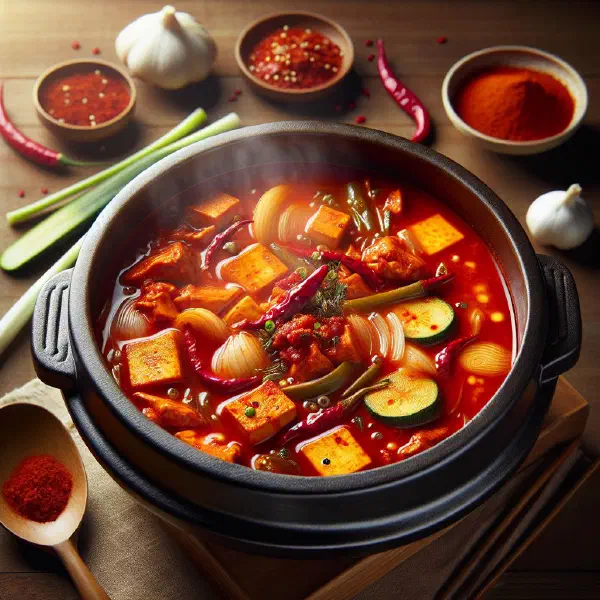
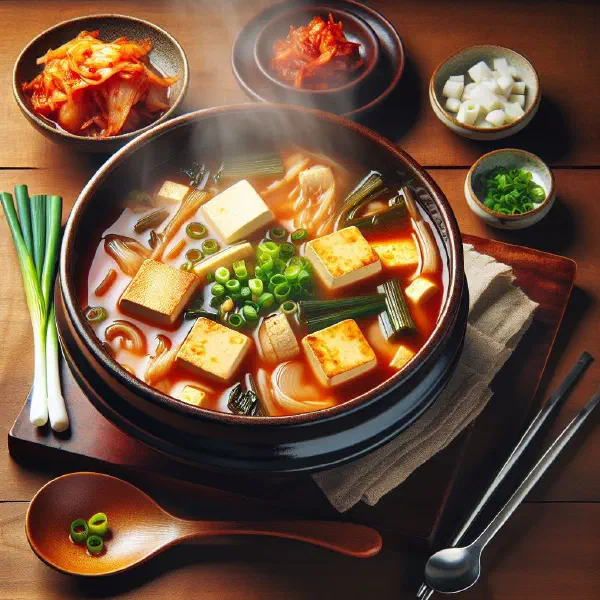
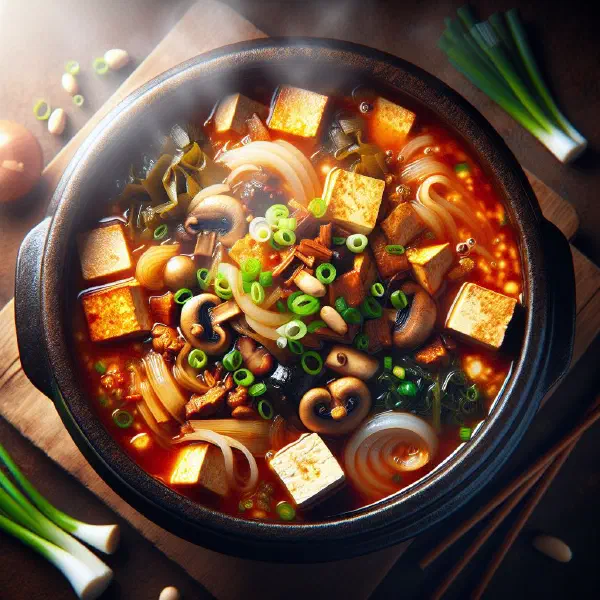
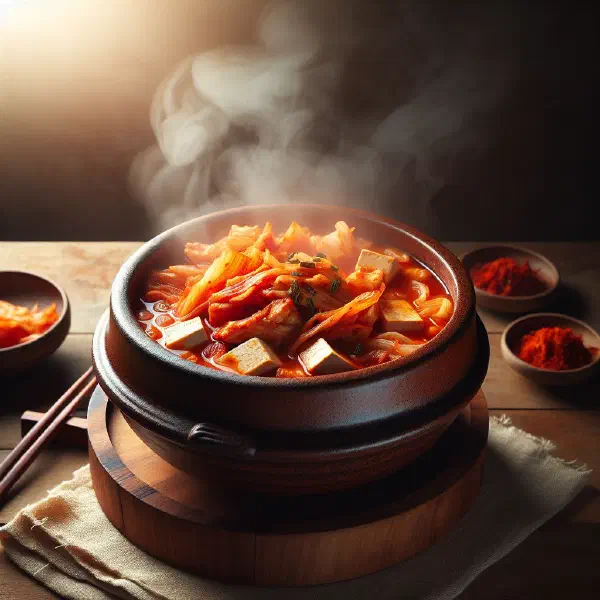
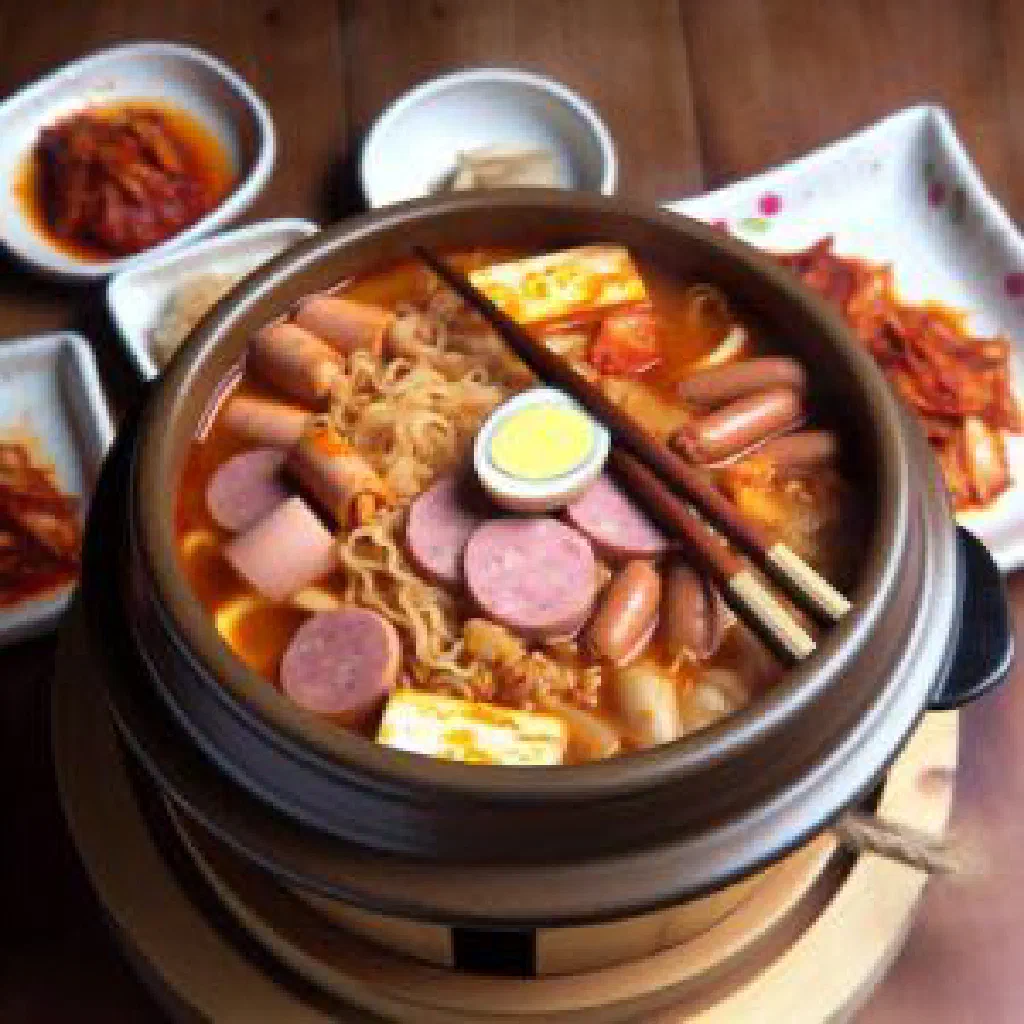
Meet Budae Jjigae, South Korea’s famous “army stew”, a bubbling, soul-warming pot where fiery Korean staples meet unlikely Western newcomers. Ribbons of tangy kimchi, sliced sausage and smoky bacon simmer alongside silky tofu, mushrooms and springy instant noodles in a broth glowing with chilli. Born out of hardship yet endlessly comforting, this is the kind of dish you gather around and share straight from the pan. Bring a taste of Seoul’s back-street eateries into your own kitchen with this hearty one-pot classic.
About Budae Jjigae
Budae Jjigae, which translates as “army stew”, is a much-loved Korean dish with a fascinating story that runs deep through South Korea’s cultural identity. It can fairly be regarded as a national dish. Not because of some long-standing tradition, but because it represents ingenuity and adaptation in a time of need. What makes it so distinctive is its unlikely blend of traditional Korean staples such as kimchi, gochujang and tofu with Western additions like sausages and baked beans. This combination first appeared after the Korean War, when food was scarce and people began repurposing surplus ingredients from US army bases to build a hearty, satisfying stew.
Ingredients (serves 1–2)
- 100g kimchi, roughly chopped
- 1 sausage, sliced
- 50g bacon, cut into strips
- 1/2 onion, diced
- 1 garlic clove, finely chopped
- 1/2 block tofu, cubed
- 1 spring onion, sliced into rings
- 1 tbsp gochujang (Korean chilli paste)
- 1 tsp soy sauce
- 1 tsp sugar
- 500ml chicken or vegetable stock
- 30g shiitake mushrooms, sliced
- 30g enoki mushrooms
- 1 slice of American processed cheese
- 50g instant noodles
- Optional: baked beans, slices of Spam, extra vegetables
Shopping for the ingredients
For budae jjigae it is well worth a trip to an Asian or, ideally, a Korean supermarket. There you will find authentic ingredients such as kimchi, gochujang and Korean instant noodles. When buying kimchi, look for a batch that is properly fermented, as this gives the stew its wonderful depth of flavour. If certain items prove hard to find, they can easily be swapped for local produce, ordinary chestnut mushrooms, for example, stand in nicely for shiitake.
Preparing the dish
Before you start cooking, get all of your ingredients ready. That means chopping the kimchi, slicing the sausage and bacon and cutting the vegetables into your preferred shapes. Laying everything out in an orderly mise en place makes the cooking process far smoother and ensures that each ingredient is close to hand exactly when you need it.
Step-by-step instructions
- Fry the kimchi in a large pot over medium heat until it becomes fragrant.
- Add the bacon and sausage and cook briefly until they take on some colour.
- Stir in the onion, garlic and spring onions and let them simmer for a few minutes.
- Mix in the gochujang, soy sauce and sugar until everything is well combined.
- Pour in the stock and bring to the boil, then let the stew simmer for around 20 minutes.
- Add the tofu, mushrooms and any extra vegetables and cook for a further 10 minutes.
- Add the instant noodles, along with optional baked beans and slices of Spam, and cook according to the packet instructions, usually about 3–5 minutes.
- Finally, lay a slice of cheese over the stew and let it melt in before serving.
Gluten-free / lactose-free version
With a few swaps, budae jjigae adapts well to a gluten-free or lactose-free table. Reach for gluten-free instant noodles or thin rice noodles, and check that your gochujang and soy sauce are certified gluten-free, as many contain wheat, tamari makes a reliable alternative. For a lactose-free version, simply leave out the slice of cheese or use a plant-based one. That way everyone can enjoy this comforting stew without worry.
Tips for vegans and vegetarians
Budae jjigae is easy to turn vegan or vegetarian by leaving out the sausage, bacon and Spam and building the stew on a base of vegetable stock. Add extra tofu, more mushrooms and hearty vegetables to keep it filling, and skip the cheese or choose a dairy-free version. Do double-check that your kimchi is vegan, as some batches are made with fish sauce or salted shrimp. The bold flavours of kimchi and gochujang mean you will never miss the meat.
More tips and tricks
A traditional Korean earthenware pot (ttukbaegi) is ideal for cooking and serving budae jjigae, as it holds the heat beautifully and keeps the stew bubbling at the table. If you do not have one, an ordinary saucepan works perfectly well. Part of the fun is serving the whole pot in the middle of the table so everyone can help themselves.
Adapting the recipe to your taste
Budae jjigae is a wonderfully flexible dish. Vegetarians can leave out the meat products and pile in more tofu or vegetables instead. The heat of the stew is easy to dial up or down through the amount of gochujang you add, if you prefer things milder, reduce the quantity or leave it out altogether. Much like a bowl of Kimchi Jjigae, it rewards a little experimentation.
Ingredient substitutions
If you cannot get hold of Korean ingredients such as gochujang, sriracha or another chilli sauce makes a decent stand-in. Should kimchi prove hard to find, other sour, pickled vegetables can fill the gap, though the flavour will be a little different. These simple swaps let you build the stew around whatever you have to hand.
Drink pairing ideas
A cold Korean beer or a light rice wine such as Makgeolli goes wonderfully with budae jjigae. These drinks help to temper the heat of the stew while complementing its rich, savoury flavours. A cooling barley tea is a good non-alcoholic choice if you would rather skip the alcohol.
Serving and presentation ideas
Serve budae jjigae straight from the earthenware pot or in a large sharing bowl. Garnish with fresh rings of spring onion, a scattering of sesame seeds and, if you can find them, a leaf or two of purple perilla. These finishing touches add colour and freshness and make the dish look every bit as inviting as it tastes.
A bit of history
After the Korean War, food shortages gripped South Korea, and people made a virtue of necessity by using the ingredients available from American military bases, items like hot dogs and beans, to bulk out their stews. This gave rise to budae jjigae, which literally means “army base stew”, and it is a testament to the creative resourcefulness of Korean cuisine. What began as a humble survival dish is now cherished across the country.
More recipe ideas
Summary: Budae Jjigae
Budae jjigae is a hearty, satisfying stew that was born out of hardship and is today celebrated as one of Korea’s best-loved national dishes. It reflects the history and resilience of the Korean people while offering endless scope to tailor it to your own taste. The preparation is simple and the result is a delicious, warming dish that nourishes both heart and soul. Gather your ingredients, share the pot and let this Korean classic win you over.