National Dish South Korea: Galbi Jjim (Recipe)
In this article
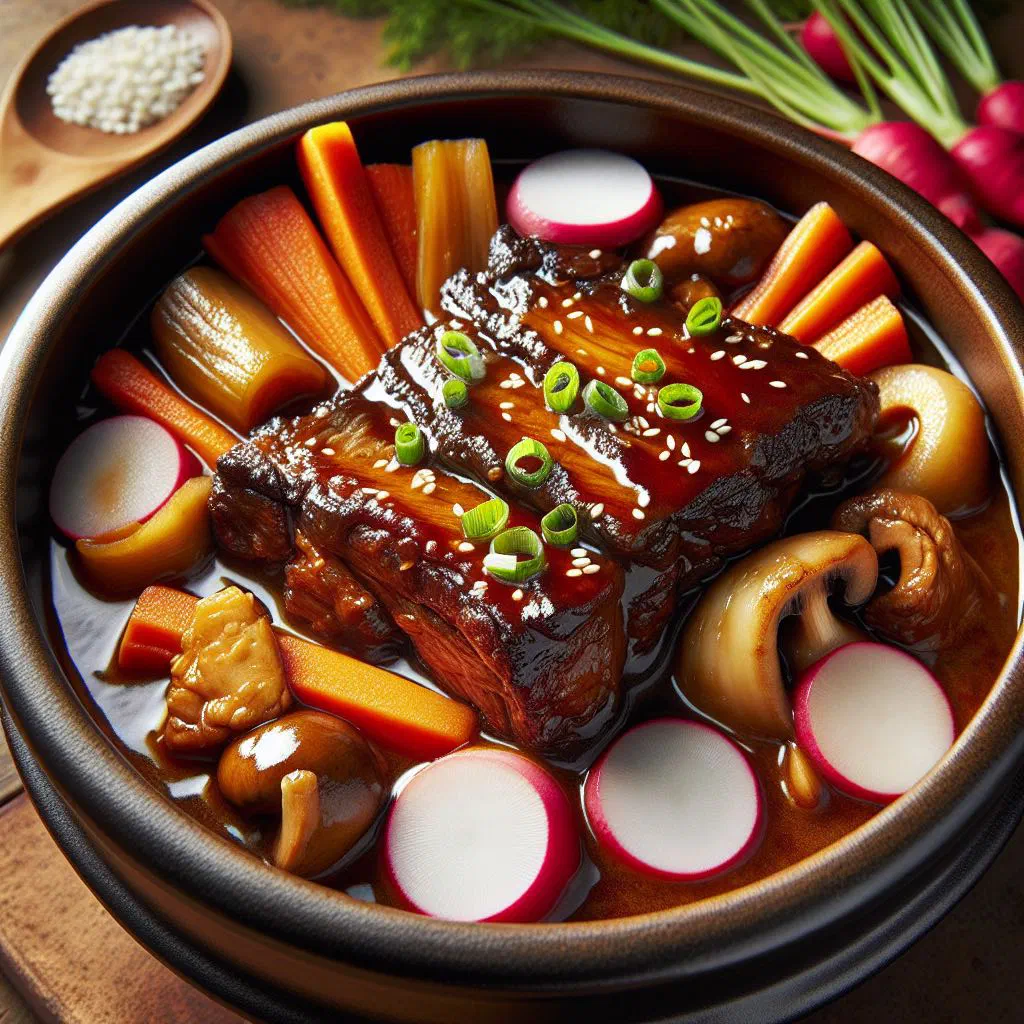
Say hello to Galbi Jjim, the glossy, deeply savoury braise that turns up at Korean tables whenever there is something worth celebrating. Beef short ribs are gently stewed in a sweet-and-salty soy sauce marinade until the meat slips from the bone and soaks up every drop of the rich, garlicky sauce. It is a dish built for sharing, the kind of slow-cooked centrepiece that fills the kitchen with warmth and draws everyone to the table. Bring a taste of a Korean family feast straight into your own home.
About Galbi Jjim
Galbi Jjim is a traditional Korean dish, celebrated above all for its tender, succulent beef short ribs. The ribs are slowly braised in an aromatic marinade of soy sauce, garlic and fresh seasonings, which gives the dish a singular depth of flavour and an unmistakably silky texture. Galbi Jjim is one of those dishes that feels bound up with family ties and shared celebration.
Ingredients (serves 1–2)
- 500 g beef short ribs
- 100 ml soy sauce
- 3 cloves garlic, finely chopped
- 1 onion, sliced
- 2 tablespoons sugar
- 1 teaspoon sesame oil
- 2 spring onions, sliced into rings
- 1 piece of ginger (about 2 cm), finely chopped
- 1 carrot, cut into strips
Shopping for the ingredients
To make Galbi Jjim you will need a handful of fresh ingredients, most of which are easy to find in any Asian grocery or larger supermarket. Take care to choose good-quality beef short ribs that are tender and well marbled with meat. The soy sauce is one of the stars of the dish, so pick a brand you trust. Remember, too, that aromatics such as fresh garlic and ginger are every bit as crucial to the final flavour.
Preparing the dish
A little careful groundwork makes all the difference before you start cooking. Begin by slicing the vegetables and mixing the marinade. Trim the meat of any excess fat to achieve a cleaner, better texture in the finished braise. Combine the soy sauce, sugar, garlic, ginger and sesame oil for the marinade, stirring well so that all the ingredients are fully blended together.
Step-by-step instructions
- Blanch the beef short ribs in a large pan of water for about 10 minutes to draw out any impurities.
- Transfer the blanched ribs to a large pot or deep pan and combine them with the prepared marinade.
- Add the sliced onion and carrot, then bring everything to the boil.
- Reduce the heat and let the dish simmer gently for around 1.5 to 2 hours, until the meat is meltingly tender.
- Stir occasionally and top up with a little water if needed so the dish does not dry out.
- To finish, garnish with sliced spring onions and serve.
Gluten-free / lactose-free version
For a gluten-free version, the regular soy sauce can be swapped for a gluten-free alternative. There are specialist soy sauces made with rice rather than wheat, which makes them suitable for anyone with a gluten intolerance. The sugar can likewise be replaced with an alternative sweetener that contains no gluten. Because the recipe relies on fresh ingredients and avoids shop-bought marinades, it is naturally lactose-free too.
Tips for vegans and vegetarians
Although Galbi Jjim is traditionally made with beef, vegans and vegetarians can reach for some clever alternatives. In place of short ribs, jackfruit or tofu works beautifully to mimic that tender, yielding texture. Both take well to marinating and soak up the flavours of the sauce wonderfully. Just be sure that the other ingredients, the soy sauce included, are also plant-based products with no hidden animal content.
More tips and tricks
A handy extra tip is to let the dish rest overnight before you cook it, allowing the marinade to penetrate the meat, or your chosen plant-based alternative, far more deeply. The right side dish can lift the whole experience too: serve Galbi Jjim with steamed rice to balance the bold seasoning. Add a few fermented side dishes, such as kimchi, to create a very good contrast of flavours.
Adapting the recipe to your taste
Another joy of Galbi Jjim is how easily it lends itself to personalisation. Depending on your preferences, the ingredients and seasonings can be adjusted to suit. Like it hotter? Add chilli paste or fresh chillies to give the dish a real kick. For a sweeter profile, increase the amount of sugar or experiment with honey to round out and refine the recipe.
Ingredient substitutions
If certain ingredients are not to hand, there is always an alternative. Instead of beef you could use chicken or pork, each bringing a completely different character to the braise, much like the rich, slow-cooked comfort of Gamjatang. For vegetarians, seitan makes an excellent meat-free stand-in. The vegetables can be varied too, so you can pick the best options according to the season and what is available.
Drink pairing ideas
A smooth red wine pairs splendidly with Galbi Jjim, complementing the dish’s rich, savoury depth. A fruity Merlot or a Shiraz both make fine choices here. For those who prefer to skip the alcohol, green tea or a fruity lemonade offers a refreshing accompaniment. These drinks support the layered flavours of the dish and bring its aromas beautifully to the fore.
Serving and presentation ideas
Presentation can make all the difference to the enjoyment of Galbi Jjim. Serve the dish in an attractive bowl and garnish it with fresh herbs or a scatter of toasted sesame seeds. Small dishes of sides such as kimchi or pickled vegetables round out the picture nicely. Remember to serve everything with chopsticks or pretty plates to heighten the experience of Korean cuisine.
A bit of history
Galbi Jjim has a long history in Korean cooking and is closely tied to celebration. Traditionally it was a dish reserved for special occasions and festivities, since the time and care it demanded marked it out as a prized feast dish. In modern times, however, it has become a much-loved favourite that many families cook regularly. It embodies the value of community, a central thread running through Korean food culture.
More recipe ideas
Summary: Galbi Jjim
In short, Galbi Jjim is not merely a dish but a cultural experience. It brings together traditional ingredients and loving preparation to capture the very essence of Korean cooking. Whether at a celebration or as part of everyday life, its deep flavours and slow braising method make it a true classic. At your next family dinner, savour its layered aromas and discover a little of Korean culture through Galbi Jjim.